Your digging level
Description
Djanba is a ceremonial-and-social song and dance genre from the Murrinh-Patha–speaking communities of the western Daly region (around Wadeye/Port Keats) in Australia.
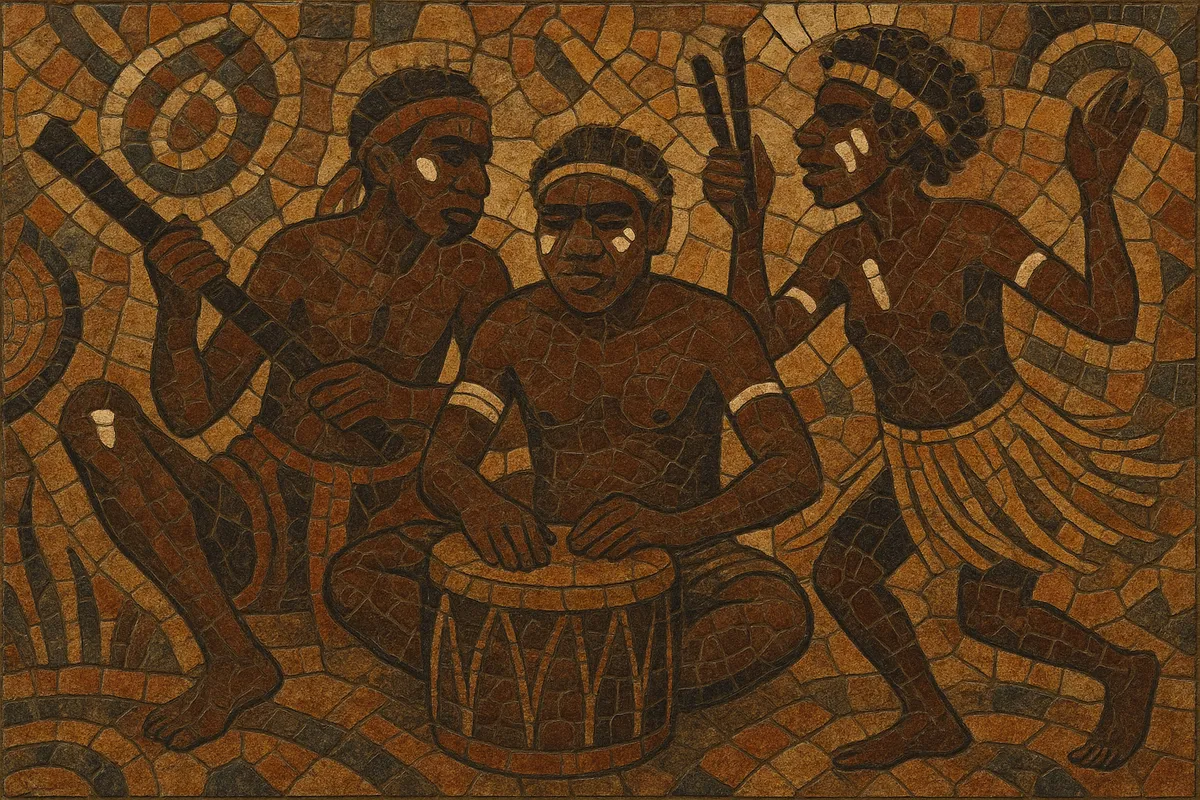
Songs are composed and sung in the Murrinh-Patha language and performed by a mixed group of men and women. The ensemble is accompanied by bilma (clapsticks) and handclaps, typically without didgeridoo, producing a clear percussive groove that supports call-and-response singing and communal dancing.
Melodies are often short, cyclical, and strophic, encouraging participation. Texts can reference places, kin relations, and Dreaming narratives, while also functioning in contemporary community gatherings.
History
Djanba emerged as a distinct public song-and-dance repertory in the mid-20th century among Murrinh-Patha–speaking peoples of the western Daly region in the Northern Territory, Australia (centered on Wadeye/Port Keats). It sits alongside other regional traditions such as wangga and lirrga, but is distinguished by its mixed-gender performance practice, Murrinh-Patha texts, and its preferred use of bilma (clapsticks) and handclaps without didgeridoo.
Djanba performances typically feature a song leader initiating short, memorable melodic phrases answered by a mixed chorus, all set to a steady duple-time clapstick pattern. The percussive texture is created by bilma and handclaps, yielding a tight rhythmic lattice for dancers. Songs are strophic and cyclic, enabling extended dancing and communal participation.
Djanba is used in public ceremonial occasions and community gatherings, reinforcing kinship ties, place-based identities, and intergenerational continuity. Composition and transmission are oral: experienced singers mentor younger community members, who learn texts, melodies, and the appropriate contexts of performance.
Ethnomusicological fieldwork in the Daly region has documented djanba repertories, helping preserve knowledge of language, poetry, and performance practice. Despite social change, djanba remains a living community tradition and a key emblem of Murrinh-Patha cultural identity.