

Your digging level

For this genre
0/8
🏆
Sign in, then listen to this genre to level up

Description

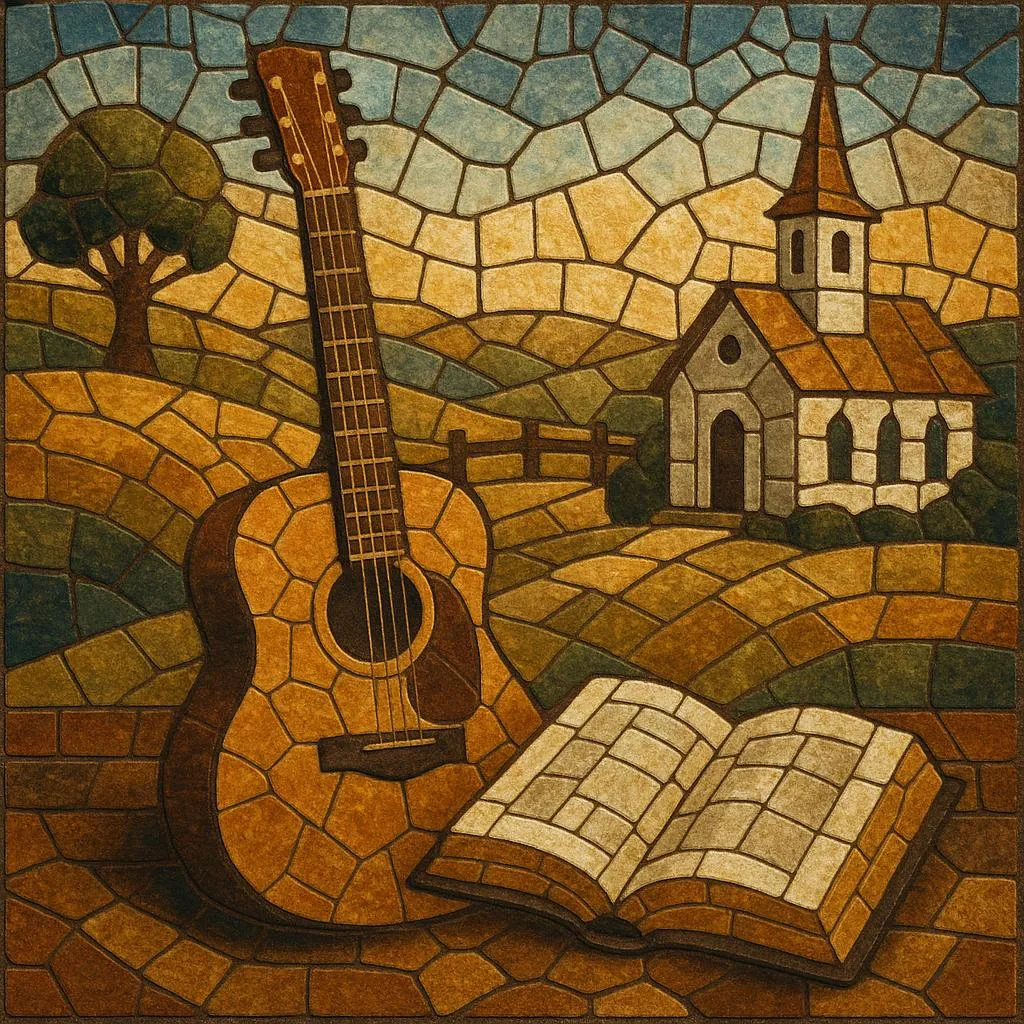
Christian country (often called “country Christian” or, informally, “country gospel”) blends the songcraft, instruments, and vocal twang of country music with explicitly Christian, faith-centered lyrics.

It spans acoustic, hymnlike ballads and radio-ready country-pop anthems, typically featuring close harmonies informed by Southern Gospel and polished Nashville production. Common themes include testimony, grace, redemption, prayer, and everyday discipleship, with storytelling that situates faith in ordinary rural and small‑town life.


Sources: Spotify, Wikipedia, Discogs, Rate Your Music, MusicBrainz, and other reputable online sources

History

Roots and Precursors (1920s–1970s)

Country artists have recorded sacred material since the earliest commercial country sides. The Carter Family, Jimmie Rodgers, and later Johnny Cash all cut hymns and gospel songs, establishing a "country gospel" current that ran in parallel with Southern Gospel quartets and bluegrass gospel. This period normalized faith-forward storytelling within a country idiom, even as most artists remained primarily secular.

Emergence as a Category (1980s)

While sacred country music had long existed, the modern industry term “Christian country” coalesced in the 1980s, as Contemporary Christian Music (CCM) diversified beyond pop/rock and radio programmers and labels recognized a distinct audience for country‑styled Christian content. Independent labels, specialized radio shows, and award bodies began to use the label, giving artists a clearer market lane separate from both mainstream country and Southern Gospel.

Crossover and Mainstream Visibility (1990s–2000s)

The 1990s saw substantial crossover. Mainstream stars such as Randy Travis and Alabama released explicitly Christian projects that charted widely, while CCM infrastructure (festivals, bookstores, Christian radio) embraced country timbres and songwriting. Nashville production values—clean guitars, pedal steel, harmony vocals—became common on Christian country releases, which often shared promotional pipelines with CCM.

Diversification and Worship Infusion (2010s–Present)

In the 2010s, country‑inflected worship and hymn projects from major country names (e.g., Alan Jackson, Carrie Underwood, Josh Turner) broadened the audience. Streaming and playlist culture further blurred lines between Christian country, CCM, Southern Gospel, and Americana. Today the style ranges from intimate, acoustic testimony songs to arena‑sized inspirational anthems, while remaining anchored in country storytelling and Christian devotion.


How to make a track in this genre

Core Harmony and Melody
•   Use diatonic, singable melodies with memorable choruses; common keys favor comfortable vocal ranges (G, A, D, E). •   Rely on simple progressions (I–IV–V, I–V–vi–IV), adding secondary dominants or a borrowed IVm for lift in bridges. •   Employ hymnlike cadences for reflective verses; build to a triumphant, hook‑centric chorus.
Rhythm and Groove
•   Default to 4/4 at medium tempos (72–104 BPM). Use train beats, two‑step feels, or gentle shuffles for rootsy authenticity. •   Ballads can drop to 60–72 BPM with sparse percussion; uptempo inspirational tracks can push 110–128 BPM with a straight backbeat.
Instrumentation and Arrangement
•   Core palette: acoustic guitar, pedal steel or lap steel, fiddle, clean electric guitar, piano, B‑3/organ, bass, and brushed or lightly played drums. •   Layer harmony vocals (often thirds and sixths) inspired by Southern Gospel; add small choir or gang vocals for climactic choruses. •   Keep production warm and polished (Nashville aesthetic): tight rhythm section, tasteful fills, minimal distortion, and clear lead vocal.
Lyrics and Themes
•   Center on testimony, grace, redemption, prayer, scripture allusions, and everyday discipleship (faith at work, family, community). •   Favor concrete imagery (roads, rivers, church pews, front porches) and narrative verses that resolve into an uplifting chorus. •   Maintain a sincere, conversational tone; avoid jargon unless it serves the story. Balance personal storytelling with congregationally relatable hooks.
Performance and Production Tips
•   Prioritize intelligible lead vocals with light compression and subtle plate/spring reverb. •   Use dynamic builds: intimate verse → fuller pre‑chorus → soaring chorus (add pads/organ, harmony stack, cymbal swells). •   Consider a modulated final chorus (+1 or +2 semitones) for classic inspirational lift.

Top tracks

Locked
Share your favorite track to unlock other users’ top tracks
Influenced by
Has influenced
Challenges
Digger Battle
Let's see who can find the best track in this genre
© 2026 Melodigging
Melodding was created as a tribute to Every Noise at Once, which inspired us to help curious minds keep digging into music's ever-evolving genres.
Buy me a coffee for Melodigging
