Your digging level
Description
Corinhos are short, simple Christian choruses in Portuguese, most closely associated with Brazilian Pentecostal and evangelical worship. Typically 8–16 bars long and built on quickly learned refrains, they are designed for congregational participation, often with call-and-response, handclaps, and tambourine (pandeiro).
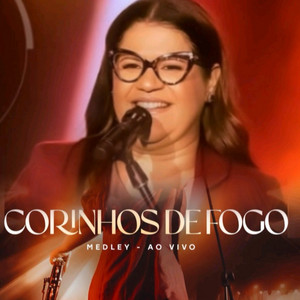
Musically, corinhos favor bright major keys, straightforward I–IV–V or I–V–vi–IV progressions, and march- or samba-like rhythms that make them easy to sing and move to. Lyrically they focus on praise, testimony, spiritual warfare, joy, and collective exaltation—sometimes called “corinhos de fogo” when rendered with extra drive and fervor. Their portability and simplicity made them a core vehicle of revival meetings, street evangelism, and children’s ministry across Brazil.
History
Corinhos emerged in Brazil alongside the rapid expansion of Pentecostal and evangelical churches in the mid-20th century. Seeking songs that were easy to memorize and sing in informal gatherings, believers adapted the global gospel-chorus model to Brazilian rhythms and Portuguese phrasing. Handheld percussion (especially pandeiro), clapping, and unison singing helped project the music in street services and storefront chapels.
As Assembléia de Deus and other Pentecostal denominations grew, corinhos became a standard part of services, youth meetings, and Sunday schools. Many were circulated orally or via mimeographed song sheets, then on cassettes and LPs featuring lively medleys. Their upbeat “marcha” feel, occasional modulations, and repetitive hooks made them ideal for extended worship moments and altar calls.
The rise of evangelical radio, TV, and the Christian recording industry brought corinhos into larger auditoriums and mass events. Artists popularized “corinhos de fogo” with band arrangements, while others set choruses in samba, forró, and pagode grooves. The simplicity of the form also fed children’s ministries and VBS-style releases, ensuring intergenerational familiarity.
Corinhos remain a living repertoire: many congregations still open or energize services with them, and new choruses appear in youth and children’s contexts. On digital platforms, medleys, lyric videos, and updated band arrangements keep the tradition active, while contemporary Brazilian louvor (praise & worship) often weaves classic corinhos into modern worship sets.