Your digging level
Description
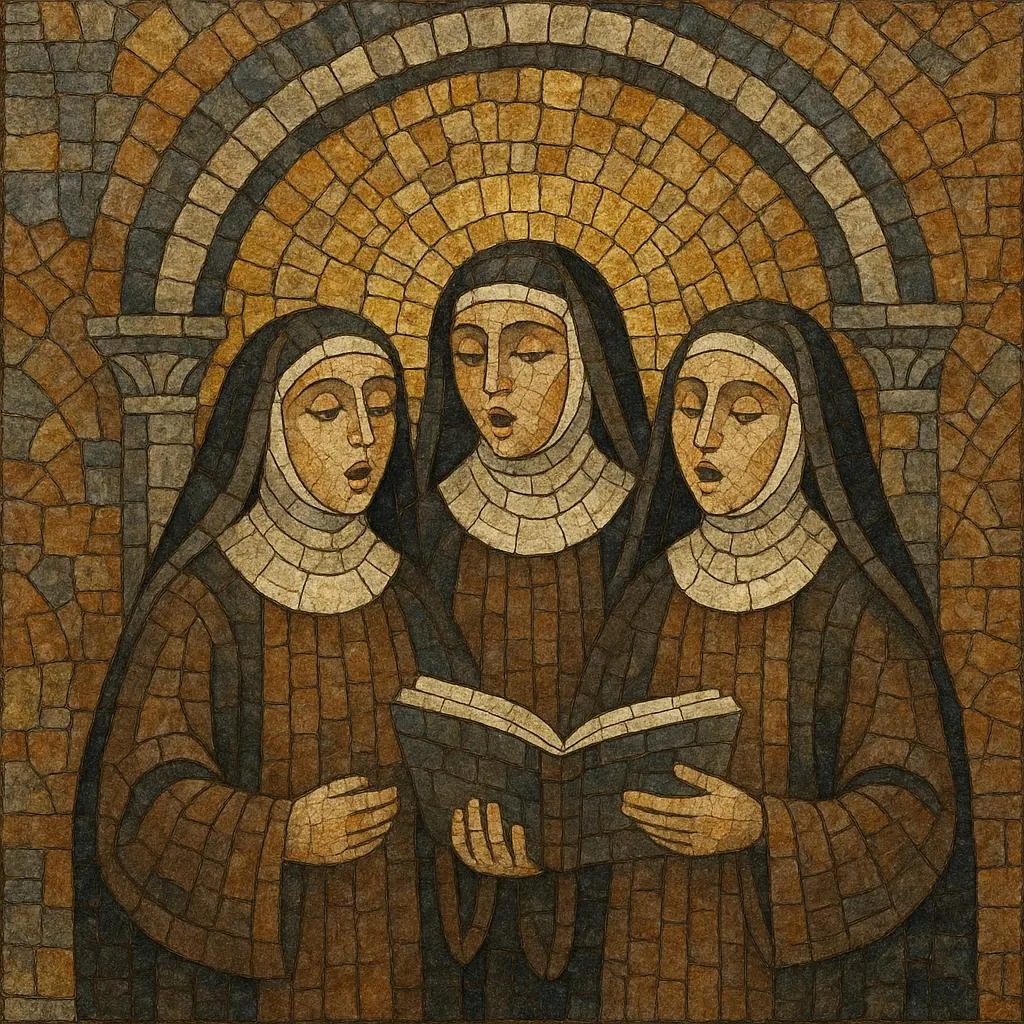
Convent is a sacred vocal tradition centered on music sung by communities of nuns in Roman Catholic (and, at times, Eastern Christian) convents. The core repertoire comprises Gregorian chant and office hymns in Latin, sung in unison without instrumental accompaniment and shaped by the liturgical calendar.
While fundamentally monophonic and modal, the sound world ranges from syllabic psalm tones to highly melismatic antiphons and responsories. From the Renaissance onward, some convents cultivated simple polyphony and, in Baroque Italy, even sophisticated multi-voice music written by cloistered women composers. Modern recordings typically feature a cappella female choirs in resonant chapels, emphasizing clarity of text, steady breath, and a contemplative, prayerful delivery.
History
Women’s monastic communities have sung the Divine Office and Mass since the High Middle Ages. Their practice drew on the codified Gregorian chant tradition—modal, unaccompanied, and text-forward—adapted for female voices within the acoustic of convent chapels. Figures like the Benedictine abbess Hildegard von Bingen (12th century) attest to the flourishing of sacred song within female religious life, combining visionary texts with distinctive chant.
By the 16th and 17th centuries, many Italian convents developed active musical cultures. Cloistered composers such as Chiara Margarita Cozzolani, Isabella Leonarda, and Lucrezia Orsina Vizzana wrote sacred concertos, motets, and psalm settings for women’s voices, often with organ or continuo. This broadened the convent palette from monophony to rich, devotional polyphony, while still serving liturgical and devotional needs.
The 19th-century chant restoration led by Solesmes inspired renewed interest in authentic performance practice (rhythmic nuance, accentuation, and modality). In the 20th century—especially after Vatican II—some convents incorporated vernacular hymnody alongside Latin chant. Advances in recording technology brought cloistered choirs to wider audiences through LPs and CDs, contributing to periodic "chant booms" and an enduring public appetite for contemplative sacred sound.
Today, convent ensembles across Europe and the Americas continue to record chant, office hymns, Marian devotions, and occasionally early polyphony. Digital releases and streaming have amplified this once-enclosed tradition, presenting an intimate, prayer-centered repertoire to global listeners seeking meditative and historically grounded sacred music.