Your digging level
Description
Combos nacionales refers to the wave of electrified dance bands that flourished in Panama during the late 1960s and 1970s. These groups blended Afro-Caribbean rhythms (especially calypso and cumbia) with U.S. soul and funk, Latin boogaloo, early salsa, and rock-and-roll attitude.
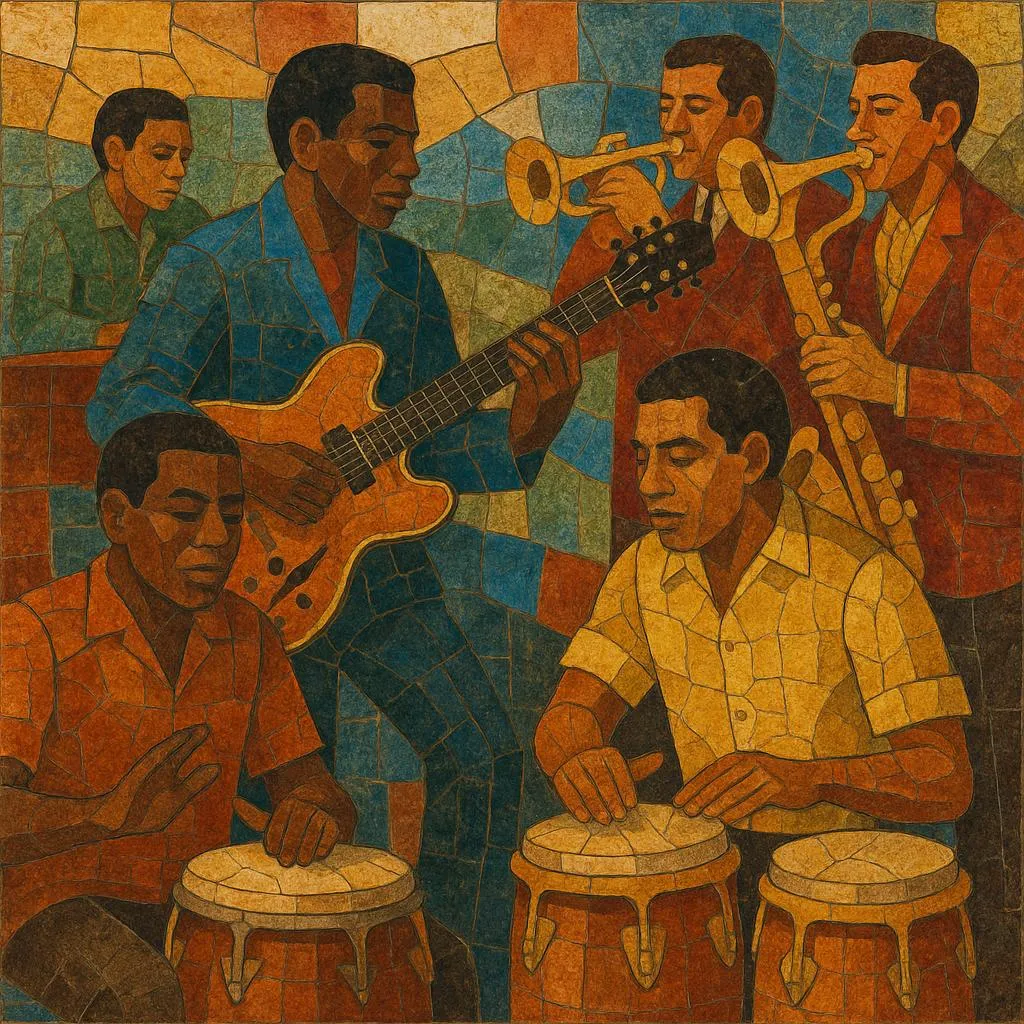
Characterized by tight horn sections, percussive drive (congas, bongó, timbales, cowbell), electric guitar and bass, and organ or electric piano, the sound is party-forward and bilingual, often moving fluidly between Spanish and English. Medleys (“mosaicos”) of popular tunes, call-and-response coros, and catchy, riff-based horn hooks are signature features.
Rooted in the Afro-Panamanian communities of Colón and Panama City and shaped by Canal Zone cultural exchange, combos nacionales captured a distinct urban, coastal identity that was simultaneously Caribbean and cosmopolitan.
History
The movement emerged in Panama’s port cities—especially Colón—where West Indian diasporic culture met U.S. military radio, jukeboxes, and touring bands. Local musicians adapted calypso and cumbia to amplified, club-ready formats and folded in U.S. soul, funk, and rock. The boogaloo craze and the first wave of salsa arriving from New York further catalyzed a modern, hybrid dance sound.
“Combos” were compact, horn-led dance bands that favored high-energy sets, bilingual lyrics, and medleys (“mosaicos”) that stitched together hits and traditional airs at a brisk clip. Arrangements spotlighted crisp horn riffs, hand-in-glove percussion sections, and organ vamps, while bass lines alternated between tumbao-derived Latin figures and syncopated funk.
Local labels and dance halls amplified the scene’s popularity. Groups regularly crossed from calypso to cumbia to boogaloo within a single set, reflecting the mixed audiences of Spanish- and English-speaking Panamanians. The sound became a staple of neighborhood fiestas, carnival seasons, and radio, helping define an urban Panamanian identity that was both Caribbean and modern.
By the late 1970s and 1980s, salsa and then reggae en español rose to dominance, but the combos’ bilingual spirit, electric instrumentation, and horn-driven party ethos set the stage for those genres’ local adoption. Contemporary listeners rediscovered combos nacionales through DJ culture, reissue labels, and archival compilations, recognizing the style’s role as a connective tissue between calypso traditions, Latin dance-band modernity, and Afro-diasporic pop.