

Your digging level
For this genre
0/8
🏆
Sign in, then listen to this genre to level up
Description
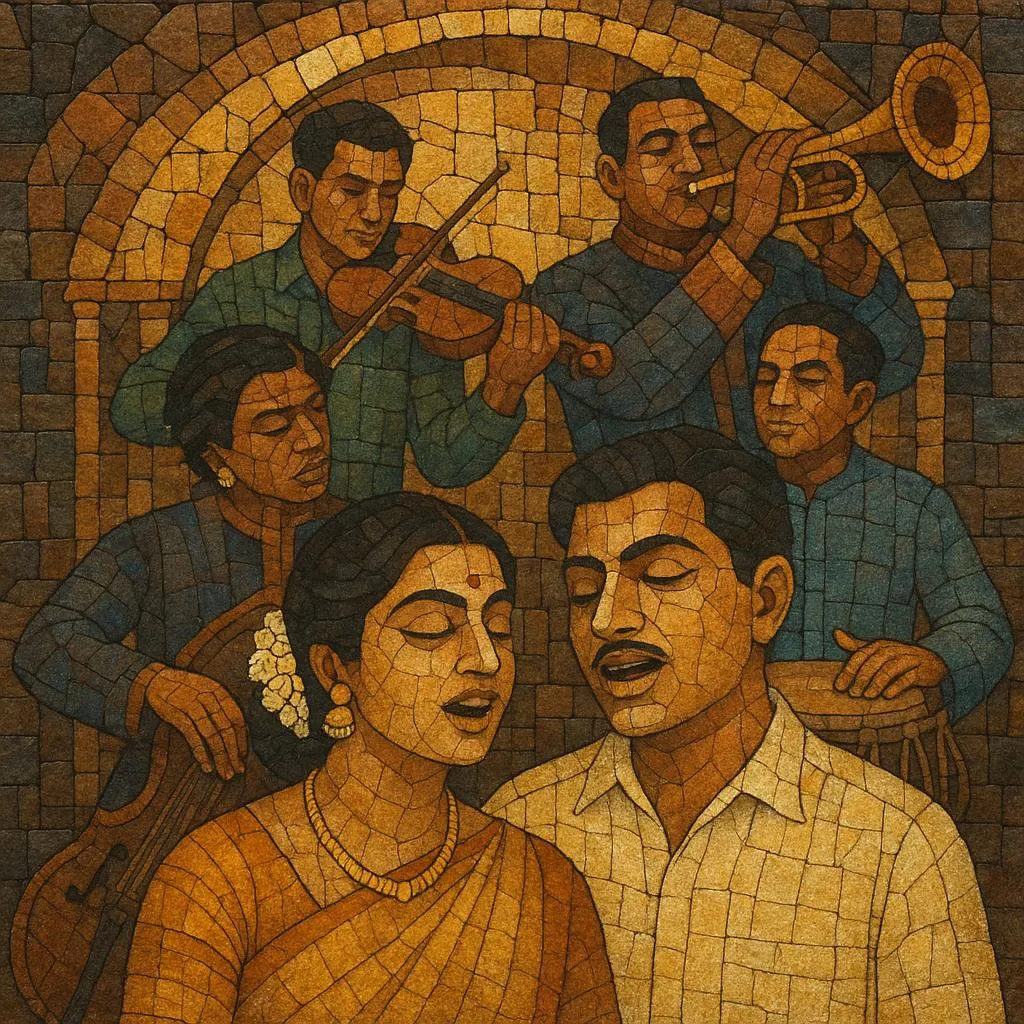
Classic Kollywood refers to the golden-age style of Tamil film music associated with the studio era of Chennai’s Kodambakkam film industry.
It blends Carnatic classical ragas and South Indian folk melodies with Western orchestration (strings, brass, woodwinds), ballroom rhythms (waltz, foxtrot), big-band jazz colors, and poetic Tamil lyricism. Signature features include playback singing, raga-based tunes embellished with gamaka (ornaments), and elegant arrangements that balance melody-first writing with lush, cinematic orchestration.
This sound dominated mid‑20th‑century Tamil cinema and set the template for later Tamil popular and film music.
History
Origins (1930s–1940s)
• With the arrival of Tamil talkies, songs rapidly became central to storytelling. Early film composers and music directors drew primarily on Carnatic classical music, devotional song forms, and Tamil folk traditions.
• Playback singing emerged, separating on-screen acting from recorded vocal performance and enabling specialized singers to shape the sonic identity of films.
Golden Age (1950s–1960s)
• The idiom crystallized as "classic Kollywood": melody-led, raga-informed songs framed by Western-style orchestration and dance-band rhythms. Studio orchestras expanded, and arrangers adopted counter-melodies, sectional writing, and chromatic harmonizations around raga-based tunes.
• Composers such as M. S. Viswanathan (often with T. K. Ramamoorthy), K. V. Mahadevan, and G. Ramanathan collaborated with iconic lyricists (notably Kannadasan and Vaali) and star playback singers, producing evergreen hits that defined the era.
Diversification and Modernization (late 1960s–1970s)
• Jazz, Latin, and light-music influences grew, alongside tighter rhythm sections and more prominent electric instruments.
• By the late 1970s, Ilaiyaraaja’s arrival marked a transitional bridge from the classic style to a more electronically enabled, polyphonic idiom—yet he retained core classic-Kollywood values of raga-centric melody and orchestral craft.
Legacy
• The classic Kollywood template—pallavi–anupallavi–charanam song forms, raga-driven melodies, poetic Tamil lyrics, and refined orchestration—became the foundation for later Tamil film music, Tamil pop, and numerous fusion and indie currents across South India and the diaspora.
Core Materials: Raga, Tala, and Form
• Start with a raga-centered melody (e.g., Kalyani, Mohanam, Shankarabharanam, Kharaharapriya) and shape phrases with gamaka (ornamental inflections) characteristic of Carnatic practice.
• Use common talas and film-friendly meters: Adi (8-beat), Rupaka (6-beat), Misra Chapu (7-beat), Khanda Chapu (5-beat), as well as Western meters like 3/4 (waltz), 4/4, and 6/8.
• Follow the classic Tamil film song form: pallavi (hook/chorus), anupallavi (development), and one or more charanams (verses), often returning to the pallavi.
Orchestration and Arrangement
• Combine Indian instruments (veena, nadaswaram, flute, violin sections, mridangam, ghatam, kanjira) with Western orchestral sections (strings, woodwinds, brass), piano/accordion, vibraphone/glockenspiel for sparkle, and a light drum kit or hand percussion for dance pulse.
• Write counter-melodies for strings/woodwinds under or between vocal phrases. Use sectional call-and-response between melody and countermelody, and add brief instrumental interludes connecting song sections.
• Harmonize sensitively: support the raga with diatonic triads and color chords, but avoid clashes with raga grammar. Pedal points and drones can preserve raga identity amidst Western harmony.
Rhythm and Groove
• For romance or lullaby moods, favor waltz (3/4) or gentle 6/8; for lively sequences, adopt foxtrot/quickstep feels or Latin-tinged syncopation adapted to tala cycles.
• Layer mridangam/kanjira with soft kit drums or brushes to blend Indian groove with cinema-friendly swing.
Lyrics and Vocal Production
• Write in literary yet accessible Tamil, with strong imagery, internal rhyme, and alliteration. Themes commonly include love, devotion, moral reflection, and nature.
• Employ expressive playback singing with controlled vibrato, clear diction, and raga-authentic gamakas. Record vocals prominently, then seat the orchestra around the voice.
Studio Aesthetics
• Aim for warm, analog textures: natural room reverbs, cohesive ensemble takes, and tasteful spot miking. Keep orchestral balance smooth, with melodies forward and accompaniments supportive.
Study and Reference Practices
• Analyze classic arrangements for how they voice raga phrases in strings and winds, how interludes modulate mood without violating raga identity, and how rhythmic cells adapt between tala and Western dance feels.

Best playlists

Top tracks
Locked
Share your favorite track to unlock other users’ top tracks
Upcoming concerts
in this genre
