

Your digging level for this genre

0/8
🏆
Sign in, then listen to this genre to level up

Description

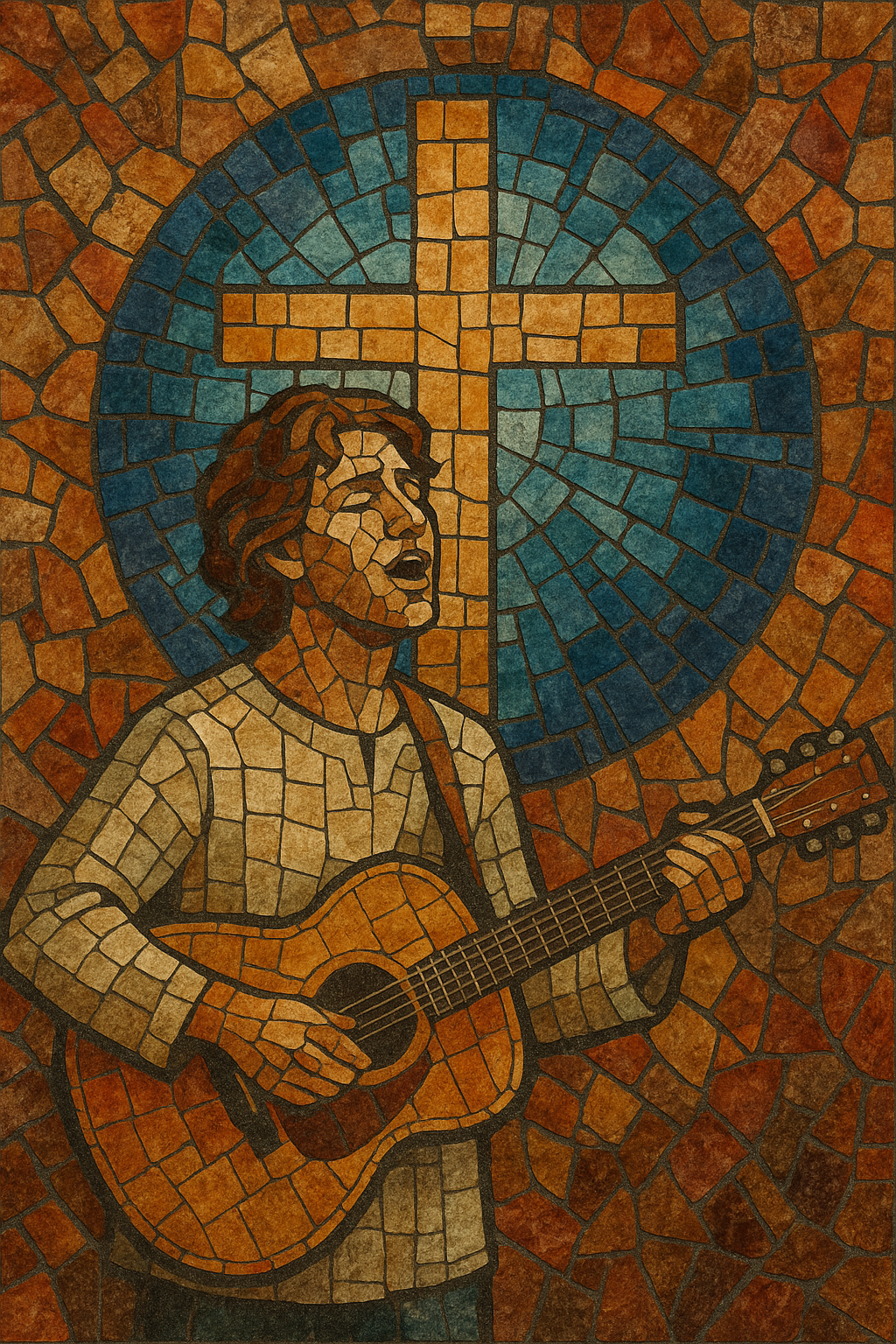
Christian music is a broad market category that encompasses popular styles—pop, rock, folk, gospel, hip hop, country, and worship—whose lyrics explicitly reflect Christian faith, scripture, and devotional themes.

It grew out of the 1960s Jesus Movement and the post-war gospel tradition, combining congregational hymn-writing with the production values and song forms of mainstream popular music. Today it includes radio-friendly contemporary Christian music (CCM), stadium-sized praise & worship collectives, and crossover artists who chart on both Christian and mainstream charts.

History

Origins and the Jesus Movement (1960s–1970s)

Christian music in its modern, industry-recognized sense coalesced during the late 1960s. The "Jesus music" scene married folk-rock and rock songwriting to explicitly Christian lyrics, paralleling the era’s countercultural currents. Independent labels, coffeehouse circuits, and church venues provided an ecosystem for early artists and worship writers, while gospel and hymn traditions supplied theological and melodic foundations.

Professionalization and CCM Boom (1980s–1990s)

By the 1980s, contemporary Christian music (CCM) had a defined industry with dedicated radio, labels (e.g., Sparrow, Word), and retail. Pop and soft-rock balladry, power ballads, and adult contemporary production helped artists reach wider audiences. The 1990s expanded stylistic breadth—alternative rock, pop-country inflections, and worship albums appeared alongside radio singles—as Christian retail and festivals flourished.

Worship Movement and Crossover (2000s–2010s)

Global praise & worship reshaped the genre, emphasizing congregational singing, anthemic choruses, and band-led services. Australian, British, and American ministries (e.g., Hillsong) popularized modern worship songwriting and live-album aesthetics. Simultaneously, Christian hip hop, pop-rock, and singer-songwriter acts achieved mainstream recognition, and digital platforms broadened reach beyond Christian bookstores and radio.

Diversification and Collectives (2020s–present)

The 2020s feature stylistic diversity—from minimalist, synth-textured worship to gospel/choir-forward ensembles and pop-leaning soloists—along with collaborative songwriting camps and church-based collectives. Streaming and social media accelerate devotional hits for congregational use while also supporting niche scenes (e.g., Christian trap), sustaining the genre’s dual identity as both worship repertoire and commercial pop culture.

How to make a track in this genre

Song Goals and Lyrics
•   Center lyrics on Christian themes: scripture, prayer, testimony, grace, hope, and worship. Use plain, singable language and memorable hooks that reinforce a clear spiritual message. •   For congregational worship, write inclusive, declarative lines with simple pronouns (we/us) and clear theology, keeping syllabic stress natural for group singing.
Form and Harmony
•   Common forms: verse–pre-chorus–chorus–bridge; add a dynamic lift or key change for a final chorus. •   Favor diatonic progressions (e.g., I–V–vi–IV, vi–IV–I–V) for accessibility; modal interchange and IV/♭VII lifts can add drama without losing congregational singability.
Melody and Rhythm
•   Aim for a vocal range comfortable for average congregations (roughly A3–D5 for leads). Craft stepwise, memorable melodies with a strong chorus apex. •   Typical meters are 4/4 at 70–140 BPM. Ballads use 70–90 BPM; mid/up-tempo radio singles often sit around 100–120 BPM. Syncopation should support, not obscure, the sing-along.
Instrumentation and Production
•   Core palette: lead vocal, backing vocals, piano or acoustic guitar, electric guitars (clean/ambient), bass, and drums. Add pads/synths and subtle delays/reverbs for spacious worship textures. •   Arrange builds (pads → light drums → full band) that culminate in a powerful final chorus. Use gang vocals/choir doubles to amplify communal impact. •   For pop/hip hop-leaning tracks, incorporate modern drum programming, 808s, and contemporary sound design while keeping the lyrical message front and center.
Performance and Ministry Context
•   Prioritize clarity of lyrics and congregational keys for worship services. In concerts or recordings, balance message and artistry—tight rhythm section, dynamic control, and authentic delivery enhance impact.

Top tracks

Locked
Share your favorite track to unlock other users’ top tracks
Influenced by
Has influenced
Challenges
Digger Battle
Let's see who can find the best track in this genre
© 2025 Melodigging
Melodding was created as a tribute to Every Noise at Once, which inspired us to help curious minds keep digging into music's ever-evolving genres.
Buy me a coffee for Melodigging
