

Your digging level
Description
Česká alternativní scéna (the Czech alternative scene) refers to a semi‑official network of bands, songwriters, and venues that operated under late‑socialist "Normalisation" in the Czech Socialist Republic (1970s–1980s).
Unlike the overtly dissident underground (e.g., Plastic People of the Universe), these artists navigated state cultural policy by working with official labels and cultural houses while pushing musical and lyrical boundaries through allegory, metaphor, and stylistic experimentation. Musically, the scene fused rock, prog, jazz‑fusion, folk‑rock, and later new wave/funk touches, producing an idiosyncratic Central European sound rooted in Czech language and prosody.
Its ethos combined artistic independence, craft, and subtle social commentary, shaping post‑1989 Czech indie/alternative rock and leaving a durable legacy in Prague, Brno, and beyond.


History
After the 1968 Warsaw Pact invasion and the onset of "Normalisation," Czechoslovakia tightened cultural controls. Within this climate, a semi‑official alternative scene emerged in the Czech Socialist Republic: artists who were too exploratory for mainstream "big beat," yet not fully exiled to the persecuted underground. They rehearsed in cultural houses, issued records through state labels (e.g., Supraphon, Panton), and performed under scrutiny, developing a language of metaphor and musical subtlety to pass censors.
The scene blended Western rock and progressive idioms with jazz‑fusion virtuosity, folk‑tinged melodies, and Czech lyricism. Bands employed extended harmonies, odd meters, and art‑rock structures alongside song‑based forms. Lyrics carried double meanings—poetic images that resonated with audiences living under surveillance, scarcity, and restricted travel.
The early 1980s added new wave, funk, and post‑punk colors. Prague and Brno became hubs: Prague for art‑rock/new wave hybrids and horn‑driven funk; Brno for a distinctive, experimental guitar language that would later coalesce around groups tied to the "Brno alternative" and the future Dunaj circle. Semi‑official status remained precarious: radio play and festival slots could arrive one season and be withdrawn the next.
While sharing audiences and occasionally personnel with the underground, the alternative scene pursued a different survival strategy—negotiation rather than open confrontation. This created a porous boundary between official culture and artistic nonconformity. The result was a unique repertoire that could appear on state labels yet still communicate coded critique and existential reflection.
The Velvet Revolution opened stages, archives, and studios. Veterans of the scene mentored a new generation and seeded post‑1989 indie/alternative ecosystems in Prague and Brno. Their songwriting craft, Czech‑language poetics, and hybrid jazz/rock vocabulary directly influenced 1990s–2000s Czech indie, the Brno alternative wave, and the broader "Czech rock" identity.


Top albums
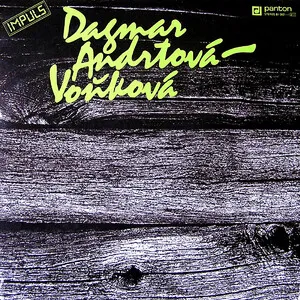
%2C%20Cover%20art.webp)
Best playlists


