Your digging level
Description
The Brno alternative scene refers to a semi‑official network of avant‑garde, post‑punk, art‑rock, and experimental groups centered in Brno, the second largest city of the then Czech Socialist Republic, during the 1980s.
Operating under late‑communist “normalization,” it took shape in student clubs, theatres, and cultural houses, where musicians, visual artists, and theatre makers blurred boundaries between rock, experimental composition, performance art, and Moravian folk inflections. While never fully underground, it existed on the margins of the state music system, relying on club circuits, festival showcases, and cassette culture to circulate bold, exploratory sounds.

History
After the post‑1968 “normalization” period curtailed many independent cultural activities, a younger generation in Brno began to assemble around university clubs, art schools, and theatres (notably the city’s vibrant dramaturgical milieu). Drawing inspiration from post‑punk, new wave, art rock, and local experimental composition, musicians sought semi‑official stages—student venues, cultural houses, and theatre spaces—where exploratory performance could be tolerated.
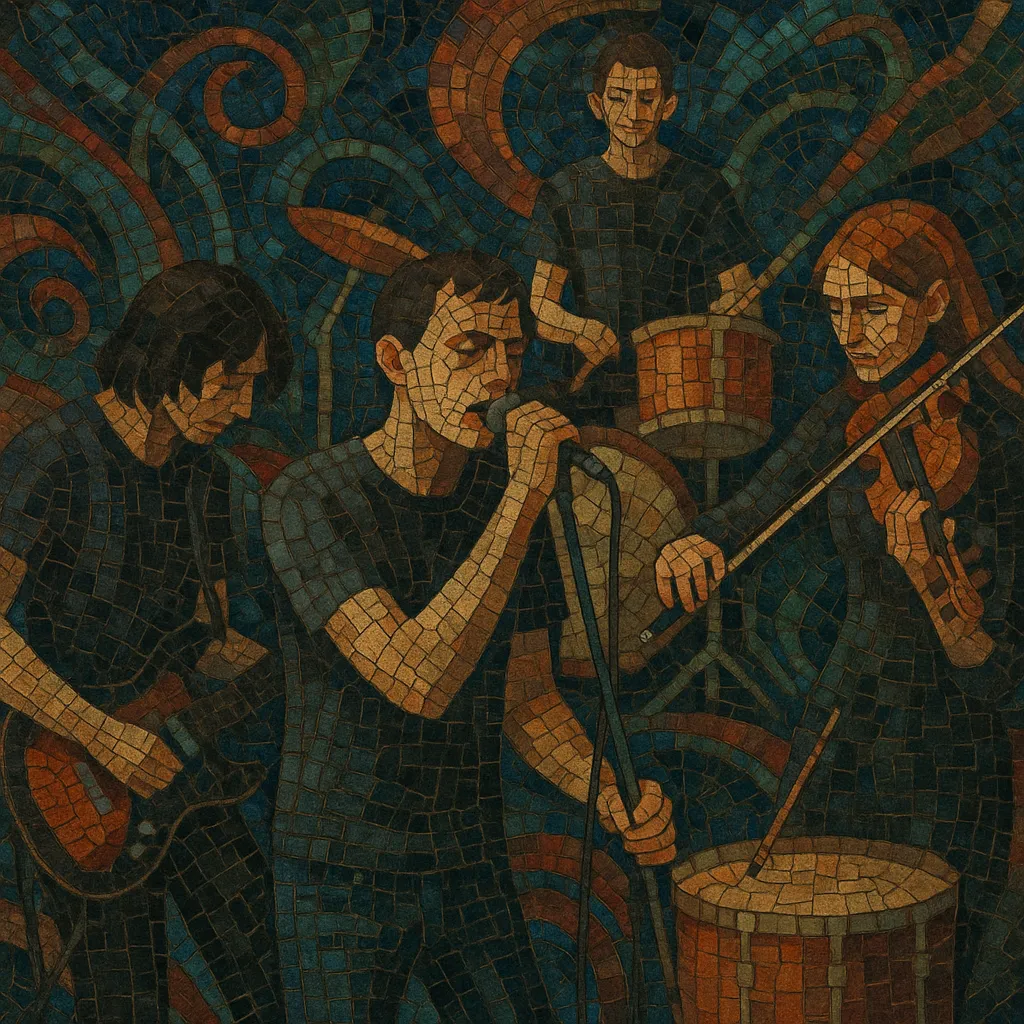
By the mid‑1980s, Brno’s alternative scene had clear contours: bands fused angular guitars, polyrhythmic percussion, nonstandard song forms, and theatrical delivery, while others injected Moravian folk colors and contemporary classical techniques. Cassettes, fanzines, and word‑of‑mouth sustained circulation; occasional state‑sanctioned club shows, festivals, and cultural programs provided limited visibility despite surveillance and bureaucratic friction. Artists often collaborated across disciplines—musicians played in theatre productions; visual artists performed in bands—giving the scene its multidimensional character.
In the late 1980s, a handful of ensembles gained national attention via festivals and recordings, and the 1989 Velvet Revolution opened institutional space for labels, clubs, and tours. Brno’s alternative vocabulary—part post‑punk bite, part art‑rock craft, part experimental daring—fed into emerging indie, experimental, and electronic currents of the 1990s and beyond, with reconfigurations of key groups and new projects carrying forward the city’s signature cross‑disciplinary ethos.
The Brno alternative scene is remembered for its resourceful semi‑official tactics, its synthesis of avant‑rock, theatre, and contemporary composition, and its formative role in shaping later Czech experimental, electronic, and indie practices. Its artists and aesthetics remain touchstones for subsequent generations across the Czech Republic.
Strive for a tense, exploratory blend of post‑punk propulsion, art‑rock structure, and experimental texture. Treat the song as a theatre of sound—voice, gesture, and arrangement should carry dramaturgical intent.