Your digging level
Description
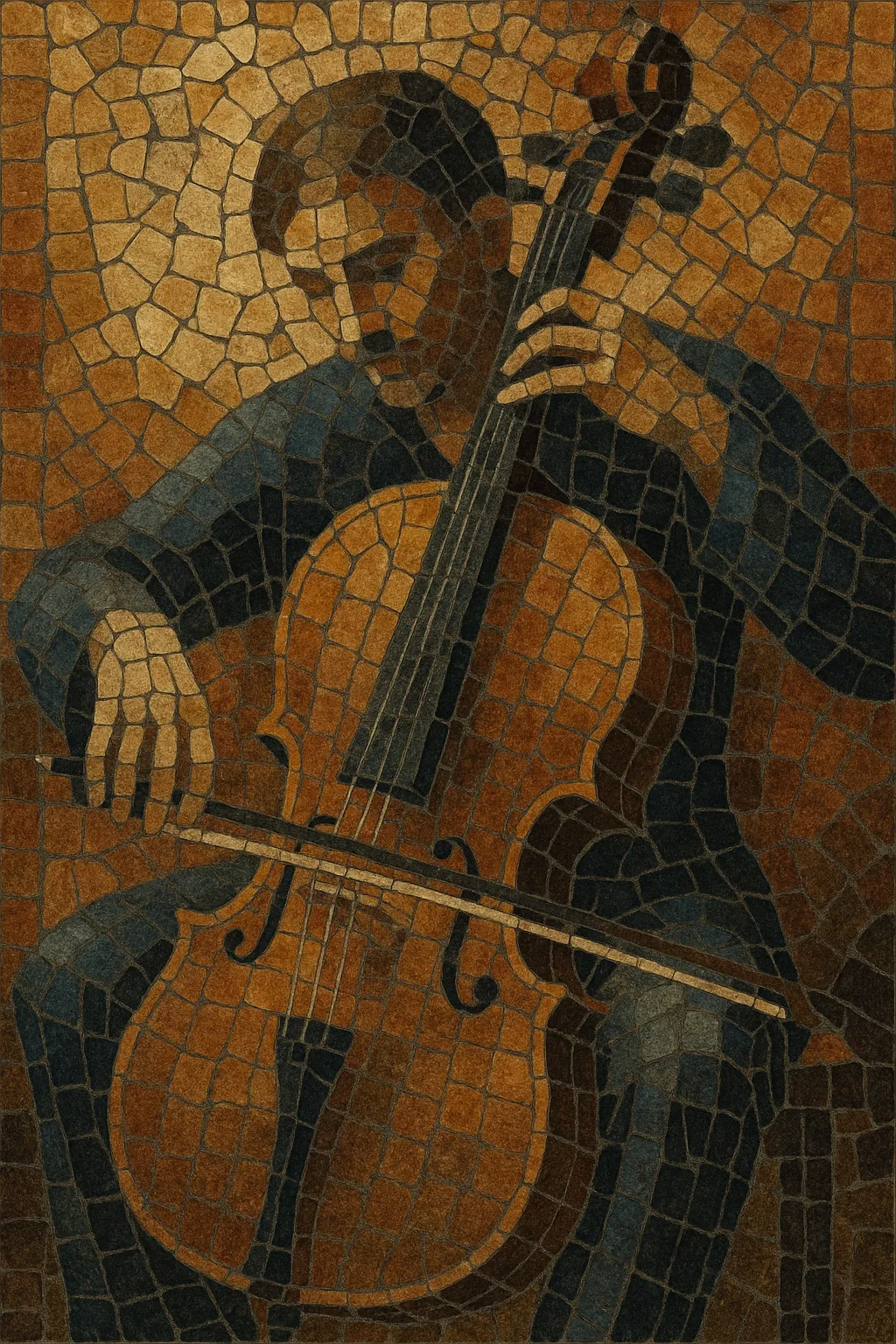
Cello as a genre centers musical works and performances where the violoncello is the primary voice, spanning solo repertoire, chamber settings, and orchestral features.
The instrument’s lyrical baritone range (from a deep C2 to a singing C6 and beyond in harmonics) allows it to cover melody, inner voices, and bass lines with equal authority. In this genre, idiomatic bowing (legato, spiccato, martelé), coloristic techniques (sul tasto, sul ponticello), and expressive vibrato shape phrases that often feel vocal in character. While rooted in Western classical traditions, modern cello practice also extends into film music, contemporary classical, and crossover settings, emphasizing intimacy, resonance, and storytelling.
History
The violoncello emerged in Northern Italy during the 1500s as a bass-register member of the violin family. By the early 1600s, it increasingly replaced viols in basso continuo roles and gained a distinct identity in Baroque ensembles, supported by makers like the Amati and Stradivari families and composers such as Corelli and Vivaldi who wrote idiomatic parts.
During the Classical era, composers (e.g., Haydn, Beethoven) elevated the cello from continuo support to a fully fledged melodic instrument in symphonies, chamber music, and concerti. The Romantic era expanded its expressive palette: Schumann, Dvořák, Saint-Saëns, and Tchaikovsky crafted landmark works that showcased the cello’s cantabile tone and dramatic breadth, cementing a soloist tradition alongside vital chamber roles (string quartets, piano trios, sonatas).
Great interpreters—Pablo Casals, later Mstislav Rostropovich and Janos Starker—redefined technique, phrasing, and repertoire. Composers like Britten, Shostakovich, Prokofiev, and Ligeti expanded textures, techniques (extended pizzicato, harmonics, col legno), and forms. The cello found a prominent voice in film scores and modern orchestration for its emotional immediacy.
Today, the cello spans historically informed performance, new music commissions, and cross-genre collaborations. It serves as a lyrical soloist in soundtracks, a core color in contemporary classical and ambient settings, and a flexible collaborator in jazz, folk, and popular music. Digital production and close miking emphasize its warmth and intimacy, while loopers and electronics broaden its timbral vocabulary.