Your digging level
Description
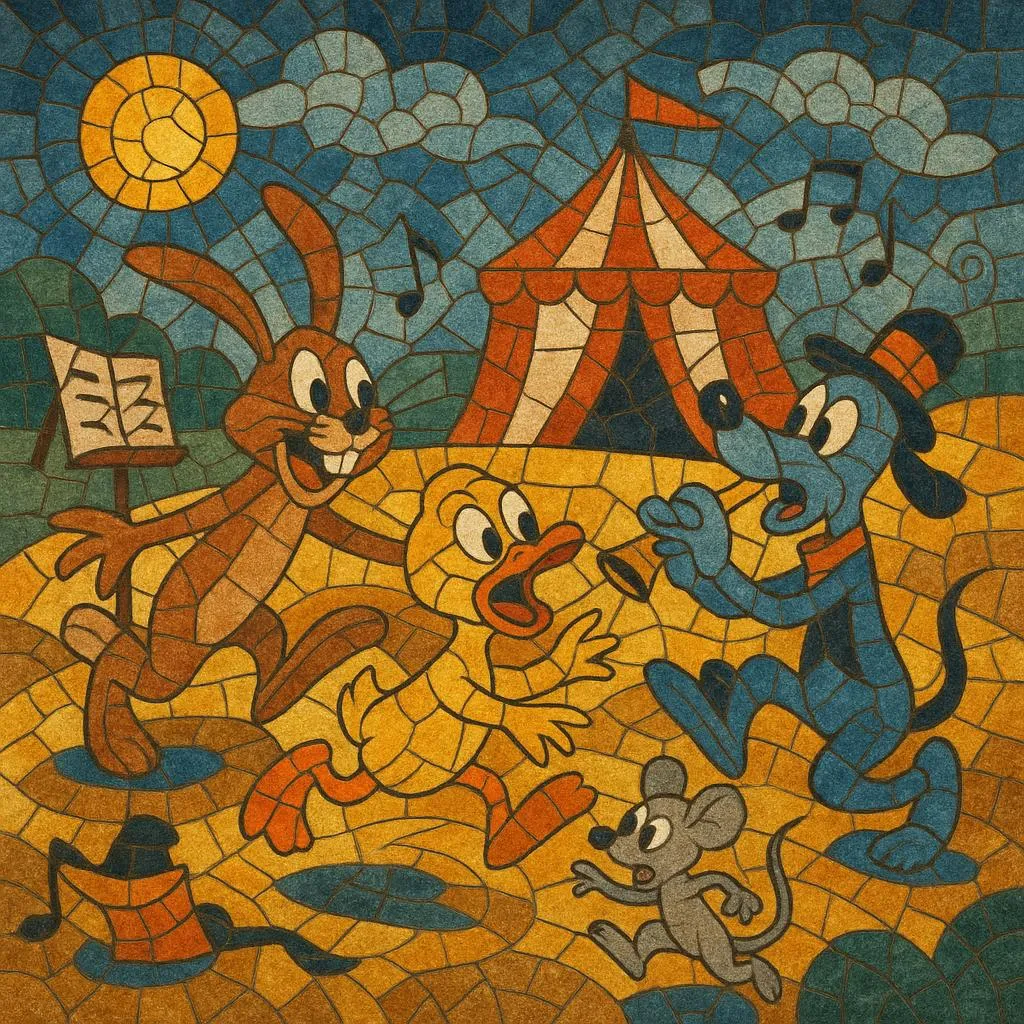
Cartoon music is the fast‑cut, highly synchronized orchestral and jazz‑inflected scoring style written for light‑hearted, hand‑drawn animation—especially short, family‑aimed theatrical or television cartoons.
Its signature sound blends classical orchestration with big‑band swing, ragtime, Tin Pan Alley tunes, circus flourishes, and musical "stingers" that track every action on screen (a technique often called "Mickey‑Mousing"). Expect rapid key changes, sudden tempo shifts, witty musical quotations, and colorful percussion and woodwind effects that turn the orchestra into a sound‑effects machine.
Although the medium is visual, the musical language of classic cartoons became a genre in its own right, shaping how generations hear comedy, chase sequences, gags, and on‑screen antics.
History
Before synchronized sound, animated shorts were accompanied by theater pianists or organists drawing on ragtime, popular songs, and light classics. With the arrival of sound-on-film in 1928 (e.g., Disney’s Steamboat Willie), music and picture could finally be locked together, birthing the fully synchronized cartoon score.
Studios like Warner Bros. (Looney Tunes/Merrie Melodies), Disney (Silly Symphonies), MGM (Tom and Jerry), Fleischer/Famous Studios (Betty Boop, Popeye), and Walter Lantz (Woody Woodpecker) standardized the style. Composers Carl Stalling (Warner) and Scott Bradley (MGM) fused classical orchestration with hot jazz and big-band rhythms, using blistering tempos, chromatic harmony, abrupt modulations, and witty quotations of folk songs and Tin Pan Alley standards. The practice of matching every on‑screen gesture with a musical gesture—"Mickey‑Mousing"—became a defining technique.
As cartoons moved to TV, budgets shrank and ensembles slimmed. Hanna‑Barbera’s Hoyt Curtin pioneered ultra‑catchy themes and modular, reusable cues that fit limited animation. Winston Sharples’ Famous Studios scores and abundant library music also shaped the televisual cartoon sound—leaner orchestrations but still rhythmically punchy and gag‑sensitive.
Cartoon scoring absorbed period styles—funk, disco, surf‑rock, and early synthesizers—while preserving the quick‑cut, gag‑timed grammar. Theme songs became pop‑conscious earworms, yet orchestral techniques (stingers, hits, modulations) remained core.
Warner’s Tiny Toon Adventures and Animaniacs re‑embraced full orchestras (Richard Stone’s team), paying direct homage to the Stalling/Bradley language. Contemporary scores mix orchestral, jazz, and digital elements, while game audio and streaming animation borrow cartoon music’s timing, stingers, and modular cueing. The style’s DNA remains audible across children’s media, comedy scoring, and even action set‑pieces in games and TV.