Your digging level
Description
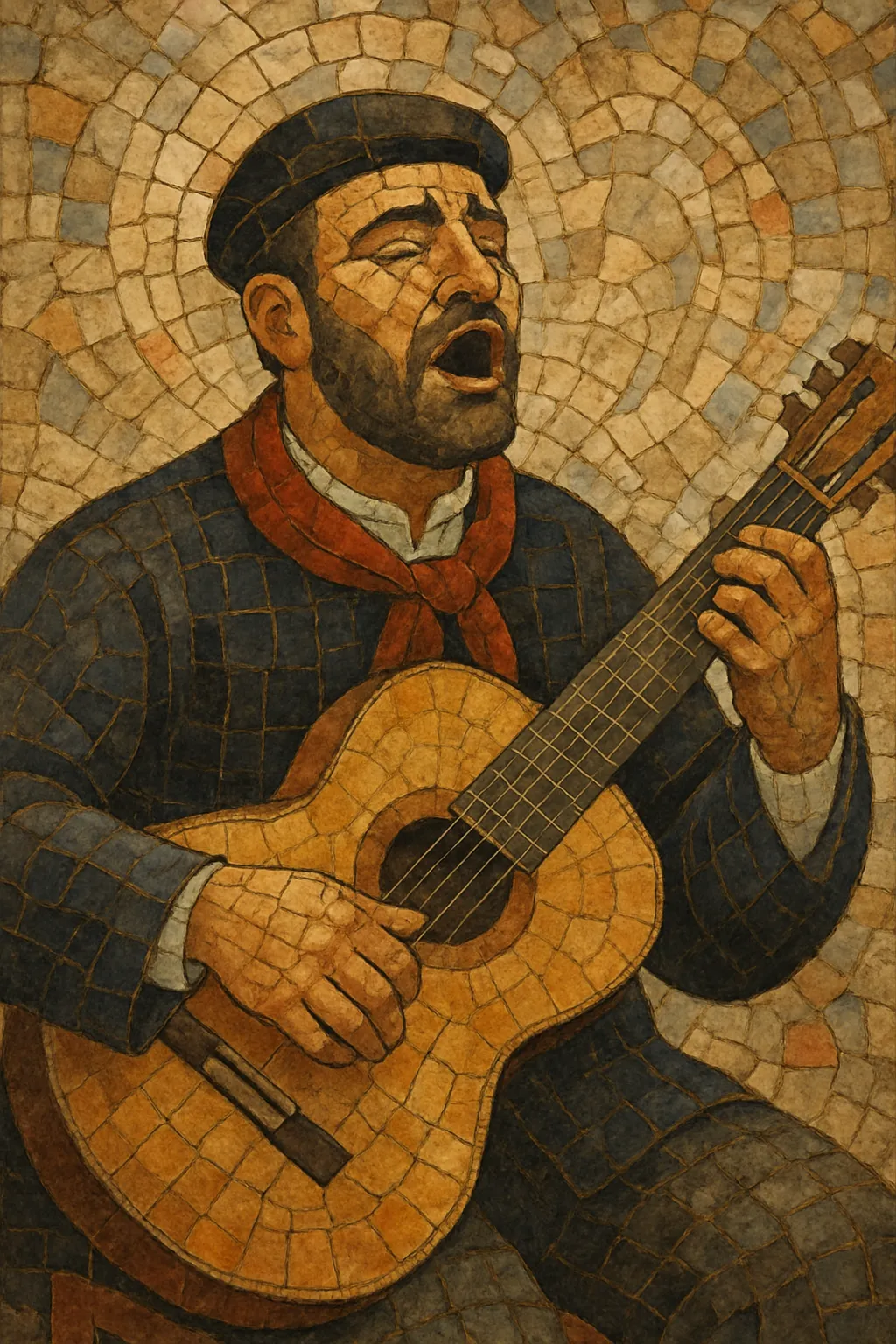
Cantu a chiterra is a northern Sardinian tradition of solo, monophonic singing in the Sardinian (especially Logudorese) and Gallurese languages, accompanied by the chiterra sarda (Sardinian guitar).
The voice is the protagonist: highly ornamented, melismatic lines unfold with free rubato over simple but supportive guitar harmonies. Pieces are often classified by their principal tonal center (for example, the well‑known Cantu in re, centered on D), and the singer’s phrasing stretches across the bar lines while the guitarist marks cadences and formal pillars.
Although some texts and melodic archetypes predate the widespread use of the guitar, the arrival of the Sardinian guitar in the 19th century crystallized today’s practice, spawning distinct regional variants in Logudoro, Goceano, Planargia, and Gallura. The result is a powerful, intimate, and declamatory song style equally at home in village squares, poetry duels, and stage competitions.
History
Although northern Sardinia preserved older, pre‑instrumental song types, the practice known as cantu a chiterra coalesced in the 1800s with the spread of the chiterra sarda (a slightly larger, lower‑pitched guitar). Singers (cantadores) began to match long, ornate, monophonic vocal lines to steady guitar frameworks provided by specialist accompanists (chitarristas). Naming conventions such as Cantu in re reflect modal/tonal centers that became common currency among practitioners.
By the turn of the 20th century, distinctive local flavors were recognized across Logudoro, Goceano, Planargia, and Gallura. The style served multiple roles: lyrical serenade, public performance, religious or civic occasions, and—crucially—poetic and musical contests. In Gallura, close ties to improvised verse (mutetu/mutettu) and the practice of staging friendly rivalries nurtured technically daring singing and responsive accompaniment.
Collectors and scholars began to document Sardinian vocal traditions, while local festivals and radio helped carry cantu a chiterra outside its hometown circuits. Standardized performance formats (alternation of free, melismatic passages with cadential markers) and favored tonalities consolidated during this period, while renowned cantadores became regional celebrities.
A broader Sardinian folk revival from the 1970s onward brought renewed attention to cantu a chiterra. Stage competitions, municipal festivals, cultural associations, and recordings have kept the style vibrant. While the idiom remains rigorously traditional—monophonic voice over guitar—contemporary performers sometimes collaborate with classical, jazz, or folk‑fusion musicians, presenting the style to wider Italian and international audiences without diluting its core techniques.