Your digging level

For this genre
0/8
🏆
Sign in, then listen to this genre to level up

Description

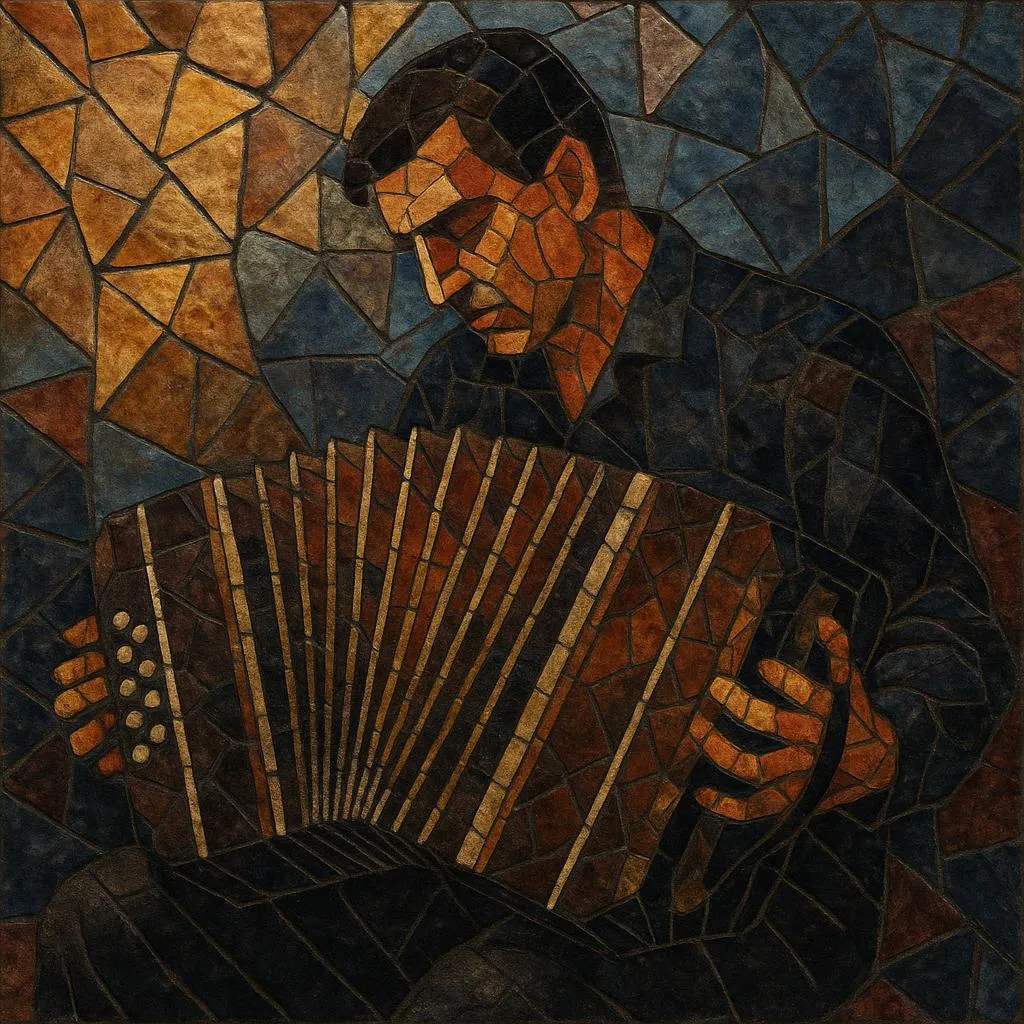
Bandoneon is a performance-centered genre built around the expressive free‑reed instrument of the same name, whose breathy bellows and rich, reedy timbre became the sonic emblem of Río de la Plata tango.

As a genre, it focuses on solo and ensemble works that foreground the bandoneon’s lyrical phrasing, sharp articulations (marcato, staccato), sweeping bellows changes, and dramatic rubato. Repertoire ranges from salon tangos and milongas to concert pieces that blend tango language with classical counterpoint and jazz harmony. Typical settings include solo bandoneon, chamber group (often bandoneon–piano–bass/strings), and the orquesta típica, where a line of bandoneones drives rhythm and color.

The affect oscillates between intimate melancholy and fervent, rhythmic drive—at once nostalgic and dancing—making the instrument a vehicle for both virtuosic display and songlike cantabile.


Sources: Spotify, Wikipedia, Discogs, RYM, MB, user feedback and other online sources

History

Origins (late 19th–early 20th century)

The bandoneon was invented in mid‑19th‑century Germany and reached Argentina and Uruguay by the late 1800s. In Buenos Aires and Montevideo, it quickly displaced earlier melodic instruments in tango ensembles thanks to its vocal, sigh‑like bellows and capacity for both melody and accompaniment. By the 1900s–1910s, a distinctive bandoneon idiom—arrastres (dragged pickups), portamento‑like slurs, and biting accents—was crystallizing in the nascent orquesta típica.

Consolidation and Golden Age (1930s–1950s)

During tango’s Golden Age, the bandoneon line became the heart of the typical orchestra, shaping phrasing, rhythm (marcato, sincopa), and form. Pioneers standardized fingering approaches, bellows control, and sectional voicings (unison riffs, counterlines, and chordal pads), producing a recognizably orchestral bandoneon “section sound.” Soloists and leaders refined the instrument’s lyrical voice in tangos, milongas, and valses.

Modernist Expansion (1950s–1970s)

A modern concert tradition emerged, integrating classical counterpoint, extended harmony, and chamber textures. Composers and virtuosi wrote suites, concertos, and chamber works that treated the bandoneon as a concert instrument equal to strings and winds, extending its reach beyond the dance floor into recital halls and radio/film music.

Globalization and Crossovers (1980s–present)

From the late 20th century onward, the bandoneon entered international jazz, contemporary classical, and world‑fusion circuits. Conservatories and festivals established dedicated programs; luthiers revived instrument production; and new writing—ranging from acoustic chamber tango to electrotango—kept the idiom evolving. Today, the bandoneon persists both as the poetic voice of traditional tango and as a versatile solo instrument across genres.

How to make a track in this genre

Instrumentation and Ensemble
•   Solo bandoneon; duo/trio (bandoneon–piano–double bass or strings); or orquesta típica with multiple bandoneones, violins, piano, bass, and sometimes vocals. •   Use the bandoneon for both melody and accompaniment: arpeggiated chords, pedal tones, and inner‑voice counterlines under a cantabile top line.
Rhythm and Groove
•   Core meters: 2/4 or 4/4 (tango), fast 2/4 (milonga), and 3/4 (vals). Emphasize off‑beat accents (síncopa), pickups (arrastre), and short–long patterns. •   Alternate articulations: marcato (detached quarter‑note pulse), marcato in 4, and legato rubato for lyrical sections; add sharp golpes (percussive attacks) for drama.
Harmony and Melody
•   Traditional language favors minor keys, modal mixture, and chromatic neighbor tones; cadences often approach via secondary dominants or tritone substitutions. •   For modern concert works, enrich with jazz chords (9ths, 11ths, 13ths), fugato/counterpoint, and shifting ostinati beneath lyrical melodies.
Idiomatic Techniques
•   Exploit bellows direction for phrasing; use bellows tremolo/shakes for intensity. •   Ornaments: slides, mordents, grace notes, and expressive portamenti between chord shapes. •   Texture: alternate single‑note singing lines with octave doublings, close‑position chord pads, and cross‑rhythmic compás figures.
Form and Arrangement
•   Common forms: A–B–A with an introduction (introducción) and a coda (cierre). Contrast rhythmic sections (marcato) with lyrical middle parts (cantabile). •   In ensemble writing, give bandoneones riffs, counter‑melodies, and call‑and‑response with violins; reserve piano for rhythmic compás and harmonic punctuations.
Production and Performance Tips
•   Record with close ribbons or condensers to capture key noise and bellows breath; add a room mic for space. •   Maintain rubato flexibility—micro‑pushes and pulls against the beat are essential to the idiom’s expressivity.

Top tracks

Locked
Share your favorite track to unlock other users’ top tracks

Related labels

Upcoming concerts

in this genre
Influenced by
Has influenced

Download our mobile app

Get the Melodigging app and start digging for new genres on the go
© 2026 Melodigging
Melodding was created as a tribute to Every Noise at Once, which inspired us to help curious minds keep digging into music's ever-evolving genres.
Buy me a coffee for Melodigging