

Your digging level
Description
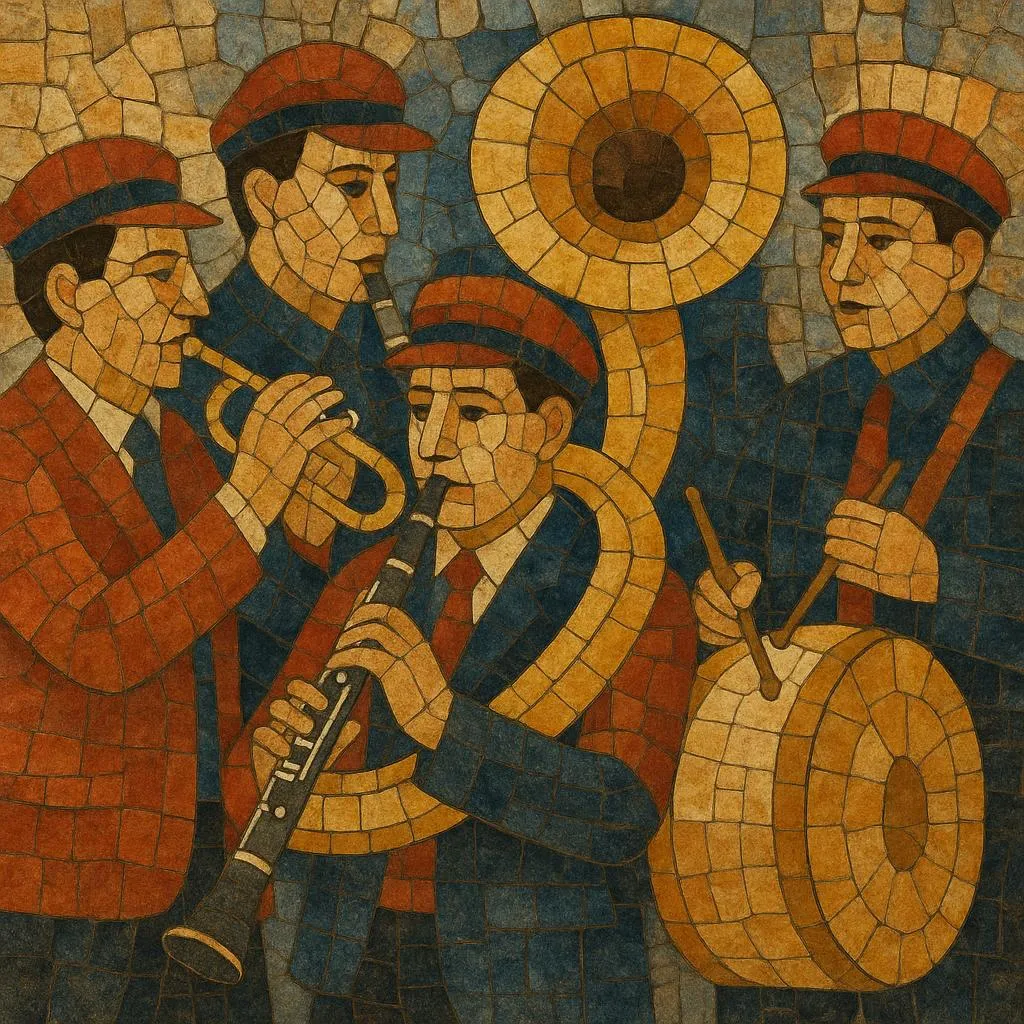
Banda peruana (Peruvian band music) refers to the tradition of Peruvian civic, military, and village brass/wind bands that perform marches, processional music, and dance repertoires such as huaynos, marineras, pasacalles, carnavales, and locally popular genres adapted for band.
Typical ensembles feature trumpets, clarinets, saxophones (alto/tenor/baritone), trombones, euphoniums, tubas/sousaphones, and a percussion battery of bass drum, snare, cymbals, and auxiliary percussion; in coastal fusions, the Afro‑Peruvian cajón may appear. While rooted in European military and concert band practice, banda peruana’s sound is distinctly Peruvian: bright, punchy brass melodies, antiphonal responses between trumpets and reeds, and rhythmic feels drawn from Andean and coastal dance traditions.
Bands accompany civic parades, Catholic processions, patron-saint fiestas, carnivals, and popular festivities across the country (notably in regions such as Cajamarca, Junín, Ancash, and La Libertad). In the late 20th and early 21st centuries, many groups also arrange cumbia, salsa, and contemporary popular songs for festive “banda show” performance.
History
European military and civic band traditions took firm root in Peru in the late 19th century and the early republican period. Military garrisons, police and civic institutions maintained bands that popularized marches, pasodobles, and ceremonial repertoire. Local musicians then formed community “bandas de pueblo,” modeling instrumentation and drill on military bands while adopting regional repertoires and performance roles for Catholic processions and civic ceremonies.
By the early–mid 20th century, village bands across Cajamarca, Junín, Ancash, and La Libertad were central to fiestas patronales and carnivals. Their programs blended pasacalles and marches with Andean genres—especially huayno and regional carnival tunes—as well as the northern coastal marinera. Clarinet and saxophone sections often carried florid countermelodies, while trumpets stated the tune and low brass supplied pedal points and bass ostinati.
From the 1970s onward, bands increasingly arranged cumbia (including cumbia peruana), salsa, and other urban dance styles, expanding from strictly ceremonial contexts to popular entertainment. Sound reinforcement, choreographed presentation, and “banda show” aesthetics became common. Today, banda peruana remains vital in religious and civic life while thriving in recordings, regional festivals, and social media, where medleys and upbeat dance mixes sustain the music’s festive public character.



