Your digging level
Description
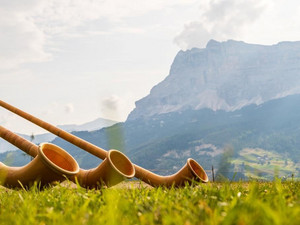
Alphorn music is the traditional repertoire performed on the alphorn (also called the Alpine horn), a long wooden natural horn associated with the Swiss Alps and neighboring alpine regions. Because the instrument lacks valves, its melodies are built from the natural harmonic series, producing open, resonant tones, pure triads, and characteristic “natural” seventh and eleventh partials that lend a pastoral, archaic color.
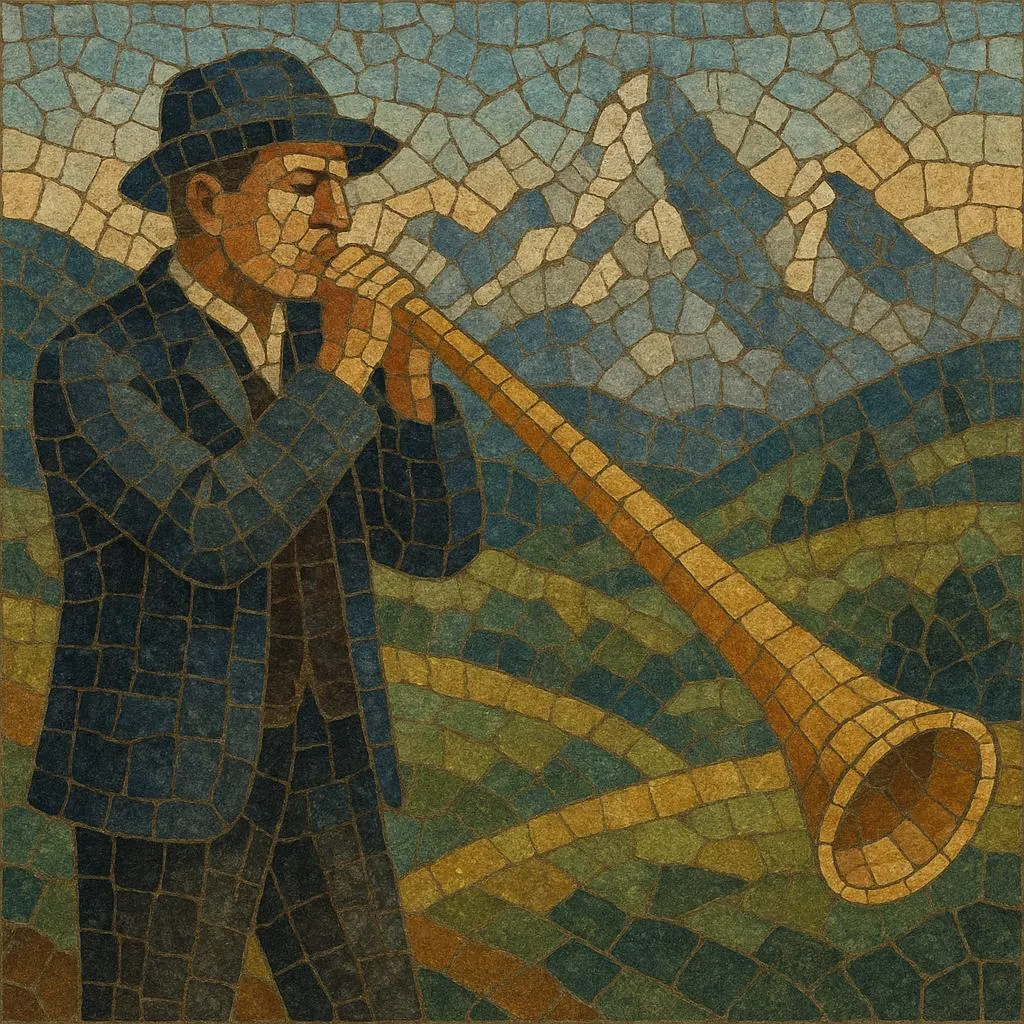
Historically used by herders for signaling across valleys—calling cattle, communicating time of day, or warning of danger—the alphorn later became a symbol of Swiss identity, heard in shepherds’ calls (Kuhreihen/Ranz des vaches), festive processions, and folk ensembles. In the 19th and 20th centuries it moved from mountain pastures to the stage, where composers and virtuosi adapted folk calls into concert pieces, and where jazz and contemporary musicians began to fuse its sonority with modern harmony and rhythm.
History
References to long wooden horns in the Alps appear by the 16th century, though the practice is likely older. The instrument’s role was practical: herders used naturally resonant calls built from the harmonic series to project over long distances for herding, signaling, and timekeeping. These calls (Kuhreihen/Ranz des vaches) became an aural emblem of alpine life and were documented in regional song collections.
During the late 18th and especially the 19th century, European interest in folk culture and the picturesque Alps elevated the alphorn from a working tool to a national symbol. Swiss festivals and civic celebrations formalized alphorn performance, standardizing instruments and codifying a repertory of calls, fanfares, and dance tunes (often in 3/4 or 4/4, with ländler-like inflections). Craftspeople refined construction and pitch (commonly in F or G), and ensembles of multiple alphorns appeared.
In the 20th century, composers and arrangers wrote concert pieces that translated pastoral calls into notated works with accompaniment (strings, brass band, organ, or percussion). The instrument entered conservatory curricula and folk academies; competitions and festivals proliferated. Recordings and radio introduced its sound to wider audiences, while tourism and world’s fairs further popularized alphorn displays.
From the late 20th century onward, alphorn music diversified. Jazz and world-music artists folded the horn’s open harmonics into modal improvisation, polyrhythms, and contemporary grooves. New works explore extended techniques (glissandi, lip bends, multiphonics) and site-specific acoustics (e.g., mountain echoes, cathedral resonance). Today, alphorn ensembles, soloists, and cross-genre collaborations sustain a vibrant tradition that bridges pastoral roots and modern artistry.