Your digging level
Description
Alpenpanorama is a modern label for the traditional, acoustic dance and salon music of the Alpine region, especially the Tyrol and neighboring Bavarian and Swiss areas. It evokes the sonic "panorama" of mountain life: intimate house music (Stubenmusi), rustic village dances, and small brass or string ensembles playing polkas, waltzes, and Ländler-like tunes.
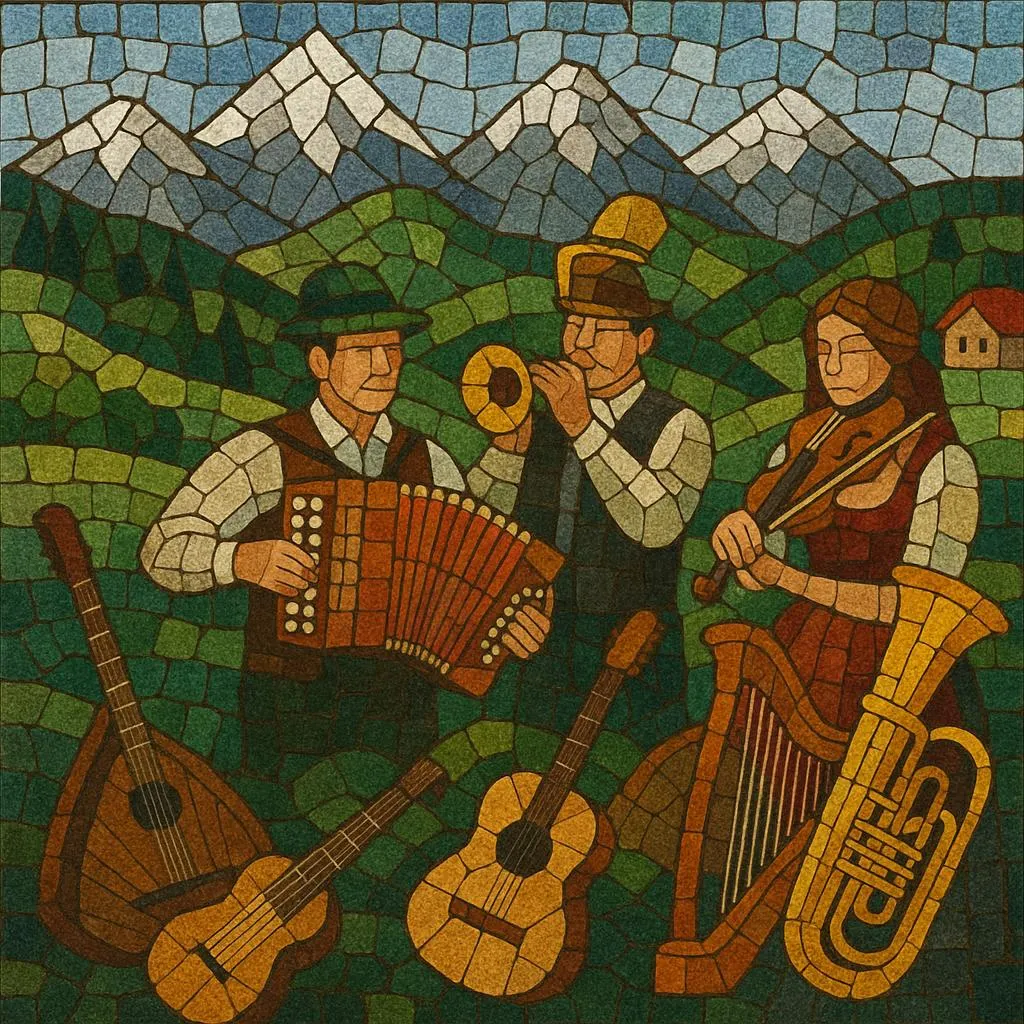
Typical instrumentation includes Steirische Harmonika or Schwyzerörgeli (button accordions), clarinet, violin, hammered dulcimer (Hackbrett), zither and harp, guitar and double bass, as well as small brass choirs (flugelhorn, trumpet, trombone, tenor horn, tuba). The music favors diatonic melodies in major keys, oom-pah bass patterns, and clear two- or three-part forms suitable for social dancing.
In streaming-era usage, "alpenpanorama" also denotes a pastoral, scenic curation of Alpine folk tracks—recordings by local ensembles and regional bands that preserve the dance repertoire while projecting a relaxed, picturesque mountain atmosphere.
History
The roots of Alpenpanorama lie in 19th‑century Alpine folk dance music. As urban and rural communities across Austria, Bavaria, South Tyrol, and Switzerland adopted the polka, waltz, and related forms, local ensembles adapted them to regional tastes and instruments—zither, harp, dulcimer, and village brass. This created a distinctive Alpine dance style closely tied to seasonal festivities and social dancing.
By the early 1900s, Tiroler Hausmusik (house music) and village brass bands were fixtures of regional life. Radio and early recordings helped standardize repertoires of polkas, Ländler-like triple‑meter dances, marches, and schottisches while keeping arrangements intimate and acoustic. After World War II, tourism and folkloric festivals amplified demand for polished yet traditional ensembles.
From the 1950s, modern Alpine groups and regional broadcasters popularized the idiom beyond its local contexts. Brass bands and small string/wind groups recorded extensive dance repertoires, while neighboring styles (e.g., Oberkrainer) showcased how Alpine dance idioms could be modernized without losing their core rhythmic feel.
Since the late 20th century—and especially in the streaming era—"alpenpanorama" has come to signify curated Alpine folk playlists and recordings that emphasize scenic, pastoral moods: polkas, waltzes, and salon pieces by Tyrolean, Bavarian, and Swiss ensembles. The tag consolidates a cross‑border tradition into a recognizable listening aesthetic while remaining rooted in historically social, dance-driven music.