Your digging level
Description
African reggae is the pan‑African adaptation of Jamaican reggae, fusing the one‑drop groove, off‑beat guitar skank, and deep basslines with African languages, rhythms, and storytelling traditions.
While rooted in Jamaica’s late‑1960s reggae revolution, African reggae localized the style across West, Central, East, and Southern Africa, integrating elements of highlife, soukous, afrobeat, and jùjú, and adding traditional percussion, call‑and‑response vocals, and horn lines inspired by local brass traditions. Lyrically it often addresses Pan‑African identity, social justice, faith, migration, and everyday life, making it a powerful vehicle for protest and uplift across the continent.
History
Reggae’s global breakout in the early 1970s—carried by the music of Bob Marley & The Wailers and the Rastafari movement—resonated strongly in Africa. Pioneering African bandleaders and singer‑songwriters began adopting the reggae groove and its emancipatory messages. In anglophone West Africa, figures such as Sonny Okosun in Nigeria experimented with reggae inflections by the mid‑to‑late 1970s, laying groundwork for a distinctly African voice in the style.
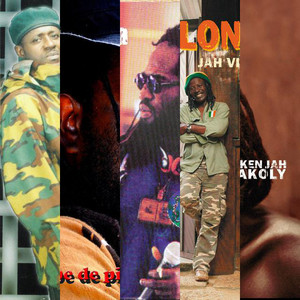
The 1980s saw African reggae crystallize, particularly in Côte d’Ivoire and South Africa. Alpha Blondy (Abidjan) and Lucky Dube (Johannesburg) emerged as continental stars, marrying tight roots‑reggae rhythm sections with African languages and idioms. In francophone West Africa, artists like Ismaël Isaac and Serges Kassy broadened the audience, while Nigeria’s Majek Fashek helped anchor the style in anglophone markets. Thematically, the music echoed local struggles—apartheid, economic hardship, and calls for unity—while maintaining reggae’s spiritual and Pan‑African ethos.
Through touring and cassette/CD exchanges, African reggae flourished across East Africa (e.g., Kenya and Tanzania) and the Sahel. Artists traveled and collaborated widely, while European festival circuits and diasporic communities amplified the sound. The period also saw stronger studio ties to Kingston, Paris, and London, blending African guitar lines and percussion with Jamaican riddim craft and dub production aesthetics.
African reggae diversified alongside dancehall and reggae fusion, while maintaining a strong roots current. Bands and singers incorporated soukous guitars, afrobeat horn arrangements, and localized rhythmic feels (e.g., highlife and mbalax nuances), and sang in Bambara, Dioula, Wolof, Yoruba, Zulu, and more. Festivals from Abidjan to Addis and the European world‑music circuit sustained the scene, and digital production made cross‑continental collaboration easier.
Contemporary African reggae remains a vital protest and celebration music, coexisting with afrobeats, dancehall, and hip‑hop while retaining its conscience‑driven core. Its enduring appeal lies in the fusion of a globally recognizable groove with African melodic phrasing, languages, and lived realities.