Your digging level

For this genre
0/8
🏆
Sign in, then listen to this genre to level up

Description

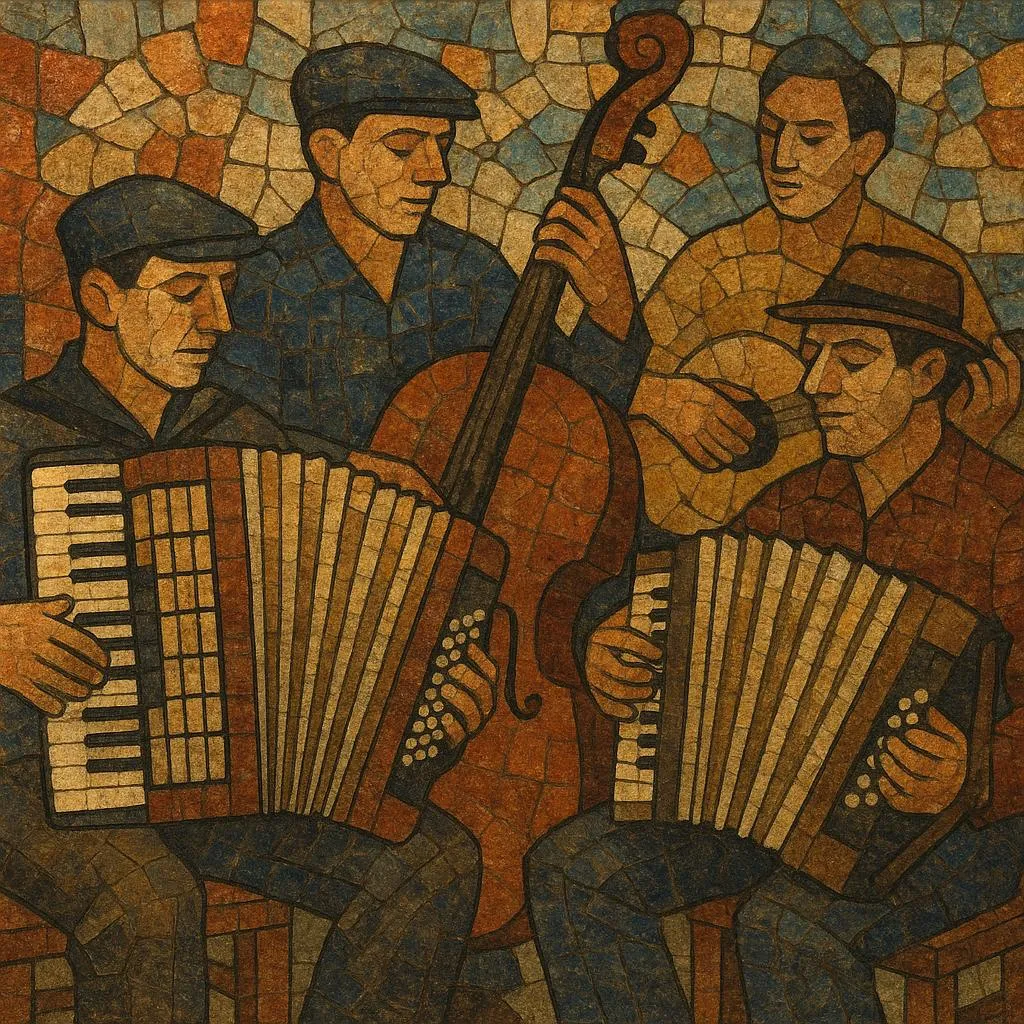
Accordion band refers to ensembles built around multiple accordions (piano or button) playing in close harmony, often supported by rhythm section instruments (percussion, bass, guitar/banjo) and occasionally by woodwinds or brass. Typical repertoire includes social‑dance forms—polkas, waltzes, schottisches, quicksteps, and marches—as well as medleys of popular tunes and traditional airs.

The sound is characterized by unison or parallel‑thirds/sixths melodies, buoyant “oom‑pah” left‑hand patterns, crisp bellows articulation, and bright multi‑reed registrations that fill the role of both melody and chordal accompaniment. Accordion bands flourished on radio, 78‑rpm records, and dance halls, and they continue in community and parade traditions in parts of the UK and Ireland.


Sources: Spotify, Wikipedia, Discogs, RYM, MB, user feedback and other online sources

History

Origins (1930s)

Accordion bands coalesced in the 1930s in the United Kingdom, where leaders organized groups of accordions into tight sections that could cover melody, harmony, and rhythm without a full orchestra. The format suited radio studios, variety stages, and the dance hall boom, and drew on an already healthy amateur accordion culture as well as on continental musette and British light‑music tastes.

Postwar Popularity (1940s–1950s)

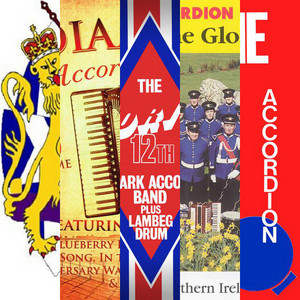
After World War II the accordion band became a staple of variety broadcasts and social dancing. Repertoires centered on waltzes, schottisches, polkas, and quicksteps, frequently arranged as seamless medleys with key‑change lifts to keep dancers moving. In parallel, community and parade accordion bands took root—particularly in Northern Ireland and Scotland—adapting the format to marching contexts with side drums and bass drum.

International Echoes

In the United States, showband leaders and virtuosi popularized accordion‑led ensembles on stage and television, while continental Europe maintained strong accordion‑orchestra traditions. The format’s portability and volume made it ideal for civic events, fêtes, and local competitions, and it intersected with céilí/dance‑band practices in Ireland and Scotland.

Continuity and Revival

Although changing pop tastes reduced mainstream exposure from the 1960s onward, accordion bands persisted in community circuits, folk dance, and educational settings. Today, dedicated accordion orchestras and local marching/dance bands keep the idiom active, and archival reissues and festivals have renewed interest in the classic sound.

How to make a track in this genre

Instrumentation and Ensemble Balance
•   Core: 3–8 accordions divided into melody and harmony chairs. Include at least one player comfortable with counter‑melodies and inner voices. •   Rhythm: side drum + bass drum (for parade styles) or a light kit; optional bass accordion, tuba, or upright/electric bass; guitar/banjo for percussive chording. •   Registration: use two‑ and three‑reed (LM/MH) combinations for brightness; reserve musette detune for lyrical waltzes.
Rhythm and Groove
•   Polka (2/4): left hand “oom‑pah” (bass‑chord) with occasional off‑beat pushes; tempo 112–128 BPM. •   Waltz (3/4): flowing bass‑chord‑chord pattern; shape phrases with bellows swells on beat 1. •   Schottische/Quickstep (4/4): light dotted figures in the melody; keep the rhythm section very even for dancers. •   March (2/4 or 6/8): emphasize snare rudiments and bass drum downbeats; accordions play strong unison lines with simple counter‑lines in thirds/sixths.
Harmony and Arrangement
•   Favor diatonic keys friendly to accordions (G, D, A, C, F). Progressions often revolve around I–IV–V with secondary dominants for lift. •   Write the tune in unison for 8–16 bars, then thicken with parallel thirds/sixths or an inner counter‑melody. •   Use sectional call‑and‑response: melody chairs present the theme; harmony chairs answer with fills. •   Create medleys: chain 3–5 tunes, modulating up a whole tone or perfect fourth between numbers for energy.
Articulation and Expression
•   Keep bellows changes synchronized across the section for clean phrasing. •   Use light staccato for dance clarity; reserve legato for lyrical waltz strains. •   Ornament sparingly—grace notes, mordents, short slides—so the ensemble stays tight.
Repertoire and Form
•   Mix traditional dance forms (polkas, waltzes, schottisches, marches) with familiar popular melodies. •   Typical structure: 32‑bar tune (AABA), repeat with harmony, key change to tune 2, short drum break, reprise in unison for a strong ending.

Top tracks

Locked
Share your favorite track to unlock other users’ top tracks

Upcoming concerts

in this genre
Influenced by
Has influenced

Download our mobile app

Get the Melodigging app and start digging for new genres on the go
© 2026 Melodigging
Melodding was created as a tribute to Every Noise at Once, which inspired us to help curious minds keep digging into music's ever-evolving genres.
Buy me a coffee for Melodigging