Your digging level

For this genre
0/8
🏆
Sign in, then listen to this genre to level up

Description

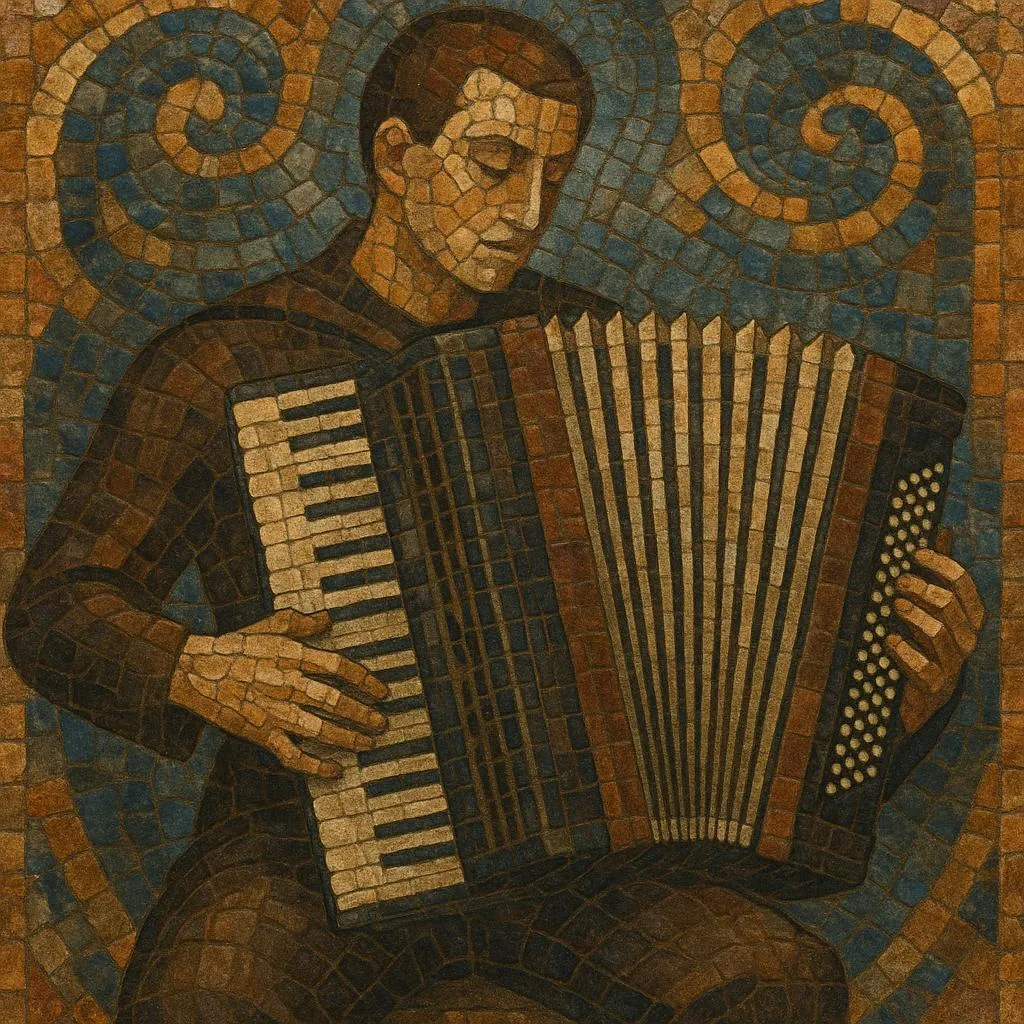
Classical accordion is the use of the concert accordion (often a free-bass “convertor” accordion or Russian bayan) as a fully fledged classical instrument in solo, chamber, and concerto settings.

Unlike folk, pop, or musette traditions, the classical accordion employs a free-bass left hand capable of single-note lines and full polyphony, allowing true four-part counterpoint and organ- or keyboard-like textures. The instrument’s bellows enable uniquely elastic phrasing and long, organ-like sustains, while registrational changes supply a palette ranging from reedy delicacy to orchestral weight.

The repertoire spans baroque and romantic transcriptions, 20th‑century modernism, and a rich body of late‑20th and 21st‑century works written specifically for the instrument, frequently exploring extended techniques (bellows shakes, air-button noises, key/percussion effects) and, in contemporary settings, electronics.


Sources: Spotify, Wikipedia, Discogs, Rate Your Music, MusicBrainz, and other online sources

History

Origins (early 20th century)

The accordion emerged in the 19th century, but a classical idiom required a left-hand capable of more than preset bass chords. Around the early 1900s, free-bass and bayan designs enabled single-note and fully polyphonic left-hand writing. This technical leap—along with the instrument’s growing presence in conservatories—laid the groundwork for a “classical accordion” practice distinct from folk and popular styles.

Institutionalization and pedagogy (mid-20th century)

By the mid-20th century, Eastern Europe, Russia, and Scandinavia championed the instrument in academic settings. Conservatory programs (notably in Moscow and later across the Nordics and Germany) produced performer‑pedagogues who created core teaching repertoires, transcribed baroque keyboard works, and commissioned new music. These efforts proved the accordion’s suitability for contrapuntal textures and serious concert performance.

New repertoire and modernist expansion (late 20th century)

From the 1960s onward, leading composers embraced the instrument’s coloristic range and dynamic breath of the bellows. Substantial solo pieces, chamber works, and concertos appeared, often deploying extended techniques and, in some cases, electronics. Performers toured internationally, elevating the accordion’s concert profile and catalyzing a virtuosic, modern repertoire alongside historically informed transcription practice.

Global reach and contemporary practice (21st century)

In the 21st century the classical accordion is firmly established in conservatories and festivals worldwide. The repertoire continues to expand—ranging from stylistically faithful transcriptions to cutting‑edge works that foreground the instrument’s physicality (bellows as “bow,” key and case sounds as percussion) and collaborations with ensemble, choir, and electronics. Today’s scene is both archival (Bach, Scarlatti, romantic miniatures) and innovative (post‑tonal, spectral, electroacoustic), reflecting the instrument’s dual identity as a keyboard and a wind‑driven, quasi‑orchestral voice.

How to make a track in this genre

Instrument and setup
•   Write for a concert “convertor” accordion (or bayan) with free-bass left hand; this enables true counterpoint and independent lines in both hands. •   Expect a wide compass (instrument-dependent), with multiple registers. Classical instruments are typically straight‑tuned (“dry”) for clean blend with strings and winds.
Notation and texture
•   Use grand staff; many scores notate both hands in treble clef, but bass clef for left-hand free‑bass is common. •   Treat the left hand as an equal polyphonic partner, not only an accompaniment. Fugue subjects, inner voices, and canons work well. •   Plan registrational changes for color; mark them clearly and leave time for switching.
Phrasing, dynamics, and articulation
•   Think of the bellows as the instrument’s “breath” or a string bow: phrase with swells and decays, and align musical sentences with bellows direction changes. •   Exploit bellows tremolo/shake for crescendos, trills, or dramatic emphasis. Indicate precise articulation (staccatissimo to legatissimo) to avoid over‑sustain.
Extended techniques and color
•   Coloristic effects: air-button breaths, key clicks, controlled bellows noise, palm or forearm clusters, percussive taps on the case. •   In contemporary works, integrate electronics or amplification judiciously to retain the instrument’s dynamic nuance.
Harmony and idiom
•   The instrument accommodates tonal and post‑tonal harmony, dense clusters, and stratified textures. Counterpoint and chorale‑style writing are especially idiomatic. •   For baroque or romantic transcriptions, respect voice‑leading and ornaments while leveraging bellows to emulate bowing or organ wind.
Chamber and concerto contexts
•   Proven pairings include string quartet, violin/cello duo, clarinet, flute, or mixed ensembles. Write with balance in mind; the accordion can project powerfully but also blend delicately. •   In concertos, orchestrate around sustained bellows lines and registrational colors rather than sheer mass; leave windows for the soloist’s timbre to read.
Practicalities
•   Allow time for manual switches and bellows repositioning. •   Avoid unplayable stretches in extreme registers or dense chords; consult range charts for the specific instrument model. •   Coordinate page turns or use tablet performance where possible, as both hands are frequently engaged.

Top tracks

Locked
Share your favorite track to unlock other users’ top tracks
Influenced by
Has influenced
Challenges
Digger Battle
Let's see who can find the best track in this genre

Download our mobile app

Get the Melodigging app and start digging for new genres on the go
© 2026 Melodigging
Melodding was created as a tribute to Every Noise at Once, which inspired us to help curious minds keep digging into music's ever-evolving genres.
Buy me a coffee for Melodigging