

Your digging level

For this genre
0/8
🏆
Sign in, then listen to this genre to level up

Description

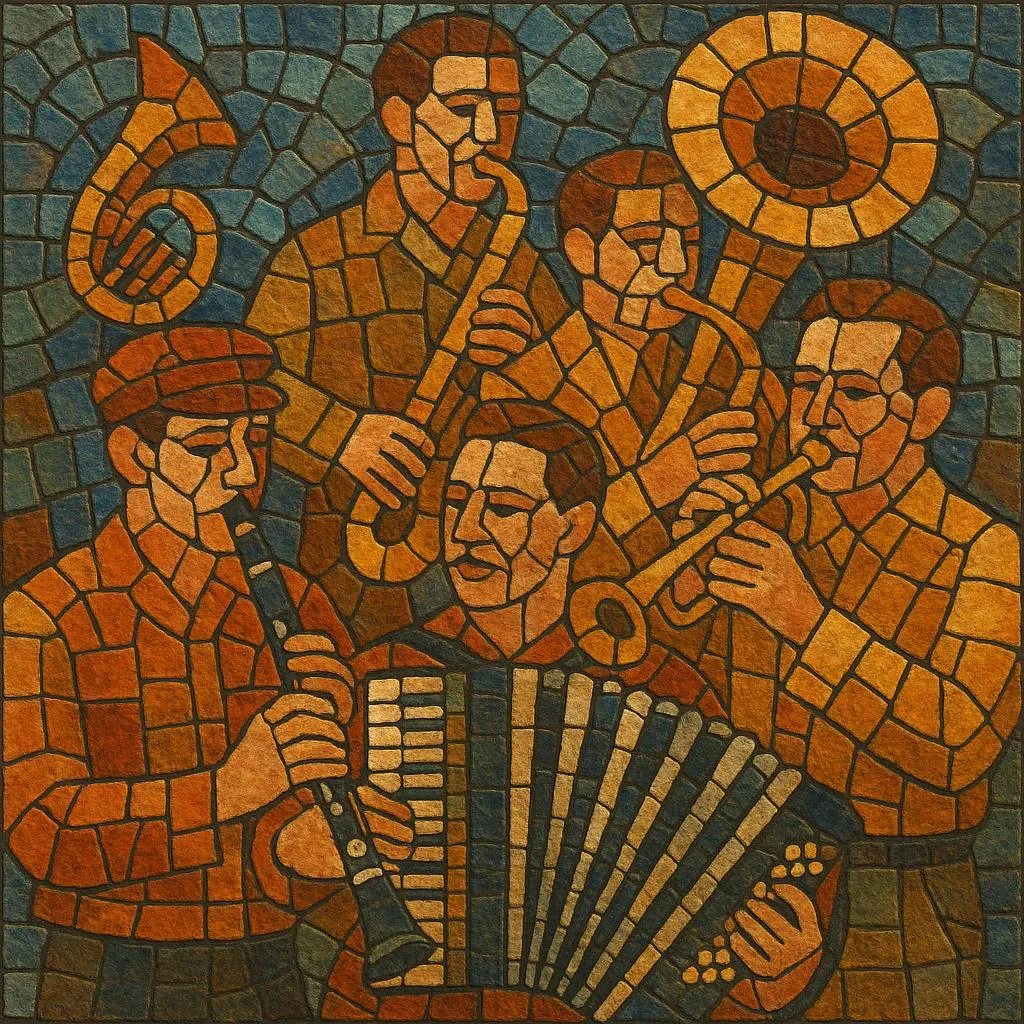
Eastern-style polka is a Northeast U.S. polish-American big-band take on the classic Central European polka. It emphasizes a driving 2/4 "oom-pah" pulse, fast tempos, and bright, brassy horn sections supporting accordion- or clarinet-led melodies.

Compared with the smoother, button-concertina-forward Cleveland/Slovenian style and the more rhythm-section-heavy Chicago style, Eastern style feels punchier and more extroverted: piano accordion and clarinet often carry agile lead lines, trumpets and saxes provide crisp stabs and countermelodies, and the drummer and tuba/electric bass lock into an energetic, dance-first groove. The repertoire typically mixes English- and Polish-language polkas with related Polish dances (obereks, mazurkas) and sentimental waltzes.


Sources: Spotify, Wikipedia, Discogs, RYM, MB, user feedback and other online sources

History

Origins (late 1930s–1950s)

Polka came to the United States with Central and Eastern European immigrants in the 19th and early 20th centuries. In Polish-American communities along the U.S. East Coast—New York state, New Jersey, Pennsylvania, and New England—post‑Depression dance halls and ethnic clubs fostered bands that blended Polish village dance repertoires with American swing/big‑band instrumentation. This fusion, centering piano accordion, clarinet, trumpets, and saxophones, crystallized into the brisk, horn-forward “Eastern” sound by the late 1940s.

Postwar boom and regional consolidation (1950s–1970s)

After World War II, Eastern-style bands became staples of weddings, parish picnics, and Saturday-night dances. Radio programs and ethnic labels promoted the sound, while festivals (e.g., in upstate New York and Pennsylvania coal country) created an interstate circuit. The music’s hallmarks—faster tempos, crisp snare accents, clarinet/accordion lead lines, and bright brass riffs—distinguished it from the smoother Cleveland/Slovenian style and the heavier Chicago/Polish style.

Media era and national recognition (1980s–1990s)

Television specials, syndicated radio, and the Grammy Awards era brought national attention—especially via Jimmy Sturr & His Orchestra, whose big-band polish (and many Grammys) carried Eastern-style polka beyond ethnic enclaves. Meanwhile, bands such as Happy Louie, Larry Chesky, and Ray Henry sustained a lively New England/East Coast ballroom tradition, with repertoires that mixed polkas, obereks, mazurkas, and waltzes.

Contemporary scene (2000s–present)

Though fewer ballrooms remain, the style stays vibrant at festivals, church socials, and heritage events, with younger ensembles (often from Buffalo/WNY and Pennsylvania) maintaining the brisk feel, bilingual vocals, and horn‑driven arrangements. Modern productions may swap tuba for electric bass and add tighter studio polish, but the core dance impulse and community function remain unchanged.


How to make a track in this genre

Core rhythm and tempo
•   Use a solid 2/4 polka groove with a pronounced "oom-pah": bass (tuba or electric) hits beat 1; snare accents beat 2; kick mirrors the bass for drive. •   Typical tempos range from 120–140 BPM, often leaning faster than Midwestern styles. •   For set variety, include a few waltzes (~90–110 BPM) and an oberek (lively triple meter with a lilting push).
Harmony and form
•   Favor bright major keys and simple diatonic progressions (I–IV–V), spiced with secondary dominants and occasional circle‑of‑fifths movement for turnarounds. •   Standard song forms: 16‑ or 32‑bar strains (AABB or AABA), with instrumental breaks and modulations up a whole step for a lift.
Instrumentation and voicings
•   Lead: piano accordion and/or clarinet. Alternate melody and countermelody between them. •   Horns: 2 trumpets + saxes (alto/tenor) for punchy riffs, call‑and‑response hits, and tight unisons in thirds/sixths. •   Rhythm: drums (snappy snare on 2, steady hi‑hat), tuba or electric bass, guitar/banjo for percussive chop, optional piano for stride/comp.
Melody and phrasing
•   Write singable, danceable melodies with short motifs, neighbor tones, and quick grace notes; clarinet can add klezmer‑like turns. •   Alternate 8‑bar vocal sections with instrumental choruses where accordion/clarinet restate the hook.
Vocals and language
•   Mix English and Polish lyrics; themes include community, dancing, humor, and romance. •   Use group shouts and simple refrains for crowd participation; occasional comic patter fits the tradition.
Arranging tips
•   Open with a drum pickup and horn stinger; insert short horn “shots” on cadences. •   Plan a key‑up modulation near the final chorus; end with a collective stinger and ritard.
Production
•   Keep rhythm section tight and upfront; let accordion and clarinet sit slightly forward in the mids. •   Pan sax/trumpet sections for width; capture room energy if recording live dance settings.

Top tracks

Locked
Share your favorite track to unlock other users’ top tracks

Upcoming concerts

in this genre
Influenced by

Download our mobile app

Get the Melodigging app and start digging for new genres on the go
© 2026 Melodigging
Melodding was created as a tribute to Every Noise at Once, which inspired us to help curious minds keep digging into music's ever-evolving genres.
Buy me a coffee for Melodigging