Your digging level

For this genre
0/8
🏆
Sign in, then listen to this genre to level up

Description

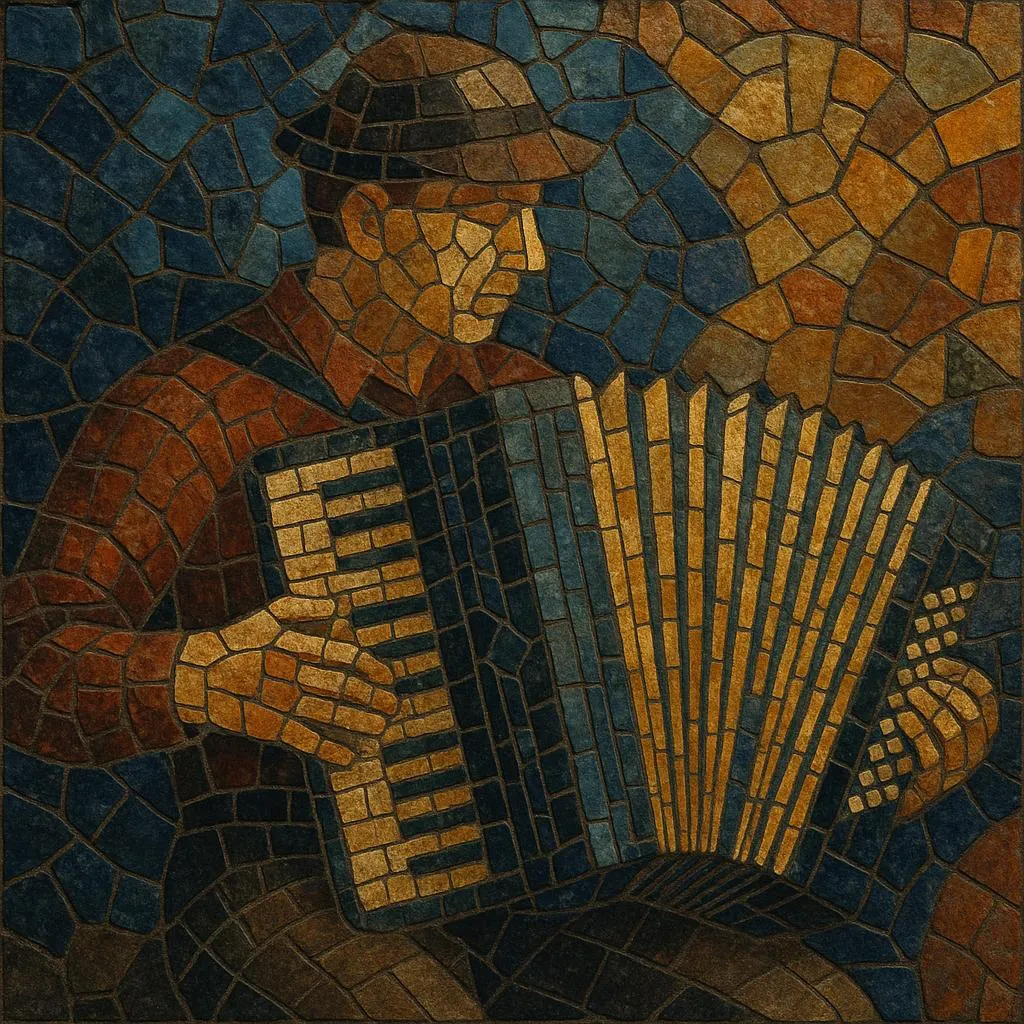
Harmonikka is the Finnish accordion tradition and repertoire, centered on solo and ensemble playing of chromatic and diatonic button accordions in Finland. It foregrounds dance-derived forms such as waltz (valssi), jenkka (Finnish schottische), polkka (polka), humppa, mazurka, and the distinctly Finnish tango.

Stylistically, the music features a singing right-hand melody embellished with grace notes, turns, and bellows shakes, and a left-hand oom‑pah (bass–chord) accompaniment with crisp staccato and tightly controlled bellows phrasing. Timbres range from dry, focused reeds to lightly tremolo “wet” tunings; players use register switches to shape color from intimate chamber tones to bright festival projection. Though often purely instrumental, harmonikka also supports popular Finnish schlager (iskelmä) songs and social dance contexts.


Sources: Spotify, Wikipedia, Discogs, RYM, MB, user feedback and other online sources

History

Early 20th century roots

Accordions reached Finland in the late 19th century via Central and Northern Europe. By the 1900s–1910s, the instrument became a mainstay of pelimanni (folk/dance) music in rural communities, replacing or partnering fiddles at weddings and social dances. Finnish players favored chromatic button accordions (often 5‑row C/B‑system) and two‑row diatonic boxes for portability and volume.

Interwar and postwar popularization

In the 1930s–1950s, recording, radio, and dancehall circuits propelled the harmonikka to national prominence. Virtuoso soloists developed a distinctive Finnish sound: lyrical, melody‑first phrasing over tight left‑hand accompaniment, agile ornamentation, and bellows control. Repertoire standardized around valssi, jenkka, polkka, mazurka, foxtrot/foxi, humppa, and—crucially—the Finnish tango, whose bittersweet character paired naturally with the accordion’s expressive bellows.

Institutionalization and festival culture

From the 1960s onward, teaching chairs and competition circuits professionalized the tradition. The Sata‑Häme Soi (Ikaalinen Accordion Festival, founded 1970s) and televised competitions (e.g., Kultainen harmonikka) nurtured new talent, while conservatories (notably the Sibelius Academy’s folk department) expanded technique and repertoire, including classical transcriptions and contemporary compositions for accordion.

Late 20th century to present: breadth and renewal

From the 1980s–2000s, Finnish accordionists bridged genres—folk revival, new classical, experimental, and world traditions—while maintaining the core dance repertoire for social use and stage performance. Today, harmonikka spans village dance floors and international concert halls, with artists simultaneously preserving canonical forms (valssi, jenkka, humppa, tango) and pushing bellows‑driven music into jazz, avant‑folk, and contemporary classical domains.

How to make a track in this genre

Core instrumentation and setup
•   Primary instrument: chromatic button accordion (C- or B-system) with Stradella bass; diatonic two-row boxes are also used for pelimanni styles. •   Favor relatively dry to mildly wet reed tuning for clarity in dance repertoire. Use register switches to shift between mellow and brilliant colors.
Rhythms and forms
•   Waltz (Valssi, 3/4): flowing right-hand legato with left-hand bass–chord–chord; typical tempi 84–108 BPM. •   Jenkka (Finnish schottische, usually 2/4): buoyant, lightly accented oom‑pah with bright staccato; ~120–150 BPM. •   Polkka/Polka (2/4): driving off‑beat chord snaps, crisp bellows changes; ~120–160+ BPM. •   Humppa (2/4): compact, dance‑floor “oom‑pah” with tight articulation and occasional bass runs; ~100–130 BPM (felt brisk due to articulation). •   Finnish Tango (4/4, slow): rubato‑tinged melody, subtle bellows swells, minor modes; ~60–70 BPM.
Melody, harmony, and phrasing
•   Compose singable diatonic melodies, then enrich with grace notes, mordents, slides, and short bellows shakes at cadences. •   Harmonies favor tonic–dominant motion with secondary dominants, circle‑of‑fifths turns, and occasional modal inflections (aeolian/dorian) for folk color; Finnish tango often uses harmonic/melodic minor. •   Balance articulation: right hand legato singing lines against left-hand staccato oom‑pah; vary bellows direction to phrase like a vocalist.
Arrangement and performance practice
•   Solo accordion should fill bass, harmony, and melody; in ensembles, pair with fiddle, guitar, double bass, or clarinet, leaving more space in the left hand. •   Use dynamic terracing via bellows and register changes to shape AABB or verse–refrain dance forms (16–32 bars per strain). •   Keep danceability paramount: clear downbeats, consistent groove, and endings that cue dancers (ritardando + fermata or crisp tag).
Recording and interpretation tips
•   Mic both treble and bass sides for balance; slight room ambience suits traditional sets, closer miking for virtuosic passages. •   For tango and lyrical valssi, favor warmer registers and gentle tremolo; for jenkka/polkka, choose brighter couplers and tighter articulation.

Top tracks

Locked
Share your favorite track to unlock other users’ top tracks

Upcoming concerts

in this genre
Influenced by
Has influenced

Download our mobile app

Get the Melodigging app and start digging for new genres on the go
© 2026 Melodigging
Melodding was created as a tribute to Every Noise at Once, which inspired us to help curious minds keep digging into music's ever-evolving genres.
Buy me a coffee for Melodigging