Genres
Artists
Albums
Make Music
Sign in
Sign in
Artists
Bolero
Artists
Bolero
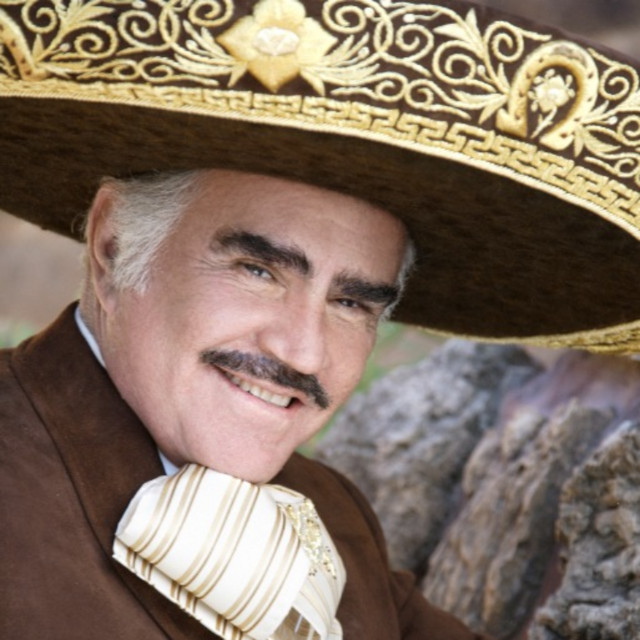
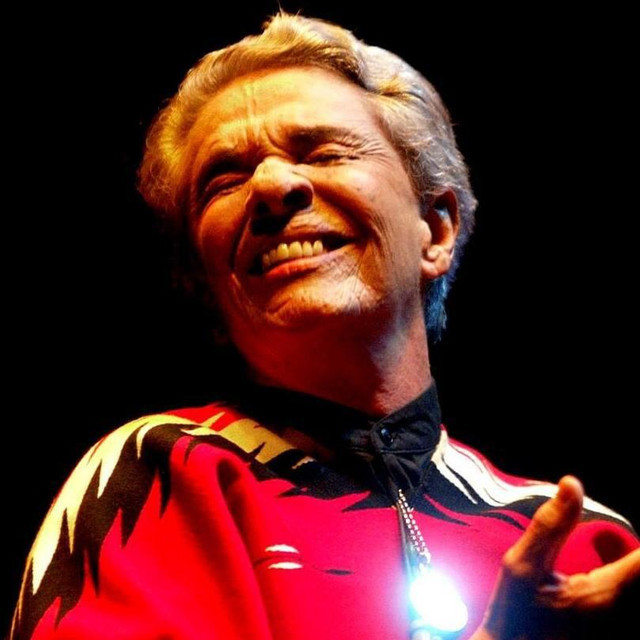
Vicente Fernández
1968–2024
·
60 albums
Listen
5
/5
Genres
Reparto
Reparto is a contemporary Cuban urban dance genre that grew out of Havana’s neighborhood (“el reparto”) party circuits. It is built for high-energy street dancing, emphasizing syncopated, loop-based rhythms, shouted hooks, and a raw, percussive low-end that often feels closer to club-ready reggaeton than to traditional Cuban pop. A distinctive trait is the incorporation of Cuban music elements—especially salsa-derived rhythmic language and, in many productions, salsa-like guitar picking patterns that add a bright, montuno-adjacent drive over modern drum programming. Vocals typically alternate between rap-style delivery, call-and-response chants, and catchy repeated slogans designed for crowd participation.
Discover
Listen
Classify
Classify is a streaming-era microgenre that blends light classical technique with contemporary pop repertoire, typically presented as unobtrusive instrumental covers. It prioritizes soft dynamics, gentle tempos, and intimate recording to create a calm, elegant backdrop suitable for studying, working, or events. Most arrangements are for solo piano, string quartet, cello/piano duos, or small chamber ensembles. Harmonies remain diatonic and consonant, melodies are clearly voiced, and textures favor arpeggios, ostinati, and sustained legato lines. The overall aesthetic borrows from modern classical and new age moods while retaining the familiarity of pop song forms.
Discover
Listen
Pov: Indie
"pov: indie" is a social-media-native microstyle built around short, cinematic indie-pop/indie-rock snippets designed to accompany a first-person (POV) narrative. Instead of being defined by a single new musical technique, it is defined by context: the music is chosen or written to feel like the soundtrack to a specific moment (a crush, a late-night walk, moving to a new city, seasonal nostalgia). Sonically it typically uses bright but soft guitars or synths, intimate vocals, simple memorable hooks, and production that reads clearly on phone speakers. The emotional tone is often wistful, tender, and “coming-of-age,” with lyrics that can be understood quickly in a 10–30 second clip.
Discover
Listen
Queer Country
Queer country is a contemporary movement within country and Americana that centers LGBTQ+ voices, stories, and aesthetics while keeping strong ties to classic country songwriting, instrumentation, and vocal styles. Musically, it often draws from traditional country, outlaw country, honky-tonk, and folk-country, but its defining feature is lyrical perspective: songs about queer love, gender expression, chosen family, rural/working-class life, and the tension between tradition and belonging. Rather than being a single fixed sound, queer country is best understood as a scene and cultural re-framing of country music—one that challenges the genre’s historic heteronormativity while celebrating its narrative power and community roots.
Discover
Listen
Latin Pop
Latin pop is mainstream pop music performed primarily in Spanish (and sometimes Portuguese) that blends contemporary pop songwriting with Latin American and Iberian rhythms, harmonies, and vocal stylings. It typically features verse–pre-chorus–chorus forms, catchy hooks, polished production, and a balance between rhythmic drive and romantic lyric themes. Classic Latin pop often leans on bolero- and ballad-informed melodies and soft-rock textures, while modern Latin pop readily incorporates dance-pop, electronic, and urbano elements (such as reggaeton-influenced grooves) without losing its sing-along pop core.
Discover
Listen
Latin
Latin (as a genre label) is a broad umbrella used by the recording industry to categorize popular music rooted in Latin America, the Caribbean, and the Iberian world, often characterized by syncopated Afro-diasporic rhythms, dance-forward grooves, and lyrics primarily in Spanish or Portuguese. As a marketplace category that took shape in the mid-20th century United States, it gathers diverse traditions—Afro-Cuban, Brazilian, Mexican, and Caribbean styles—into a shared space. In practice, "Latin" spans everything from big-band mambo and bolero ballads to contemporary pop, rock, hip hop, and dance fusions produced by artists of Latin American heritage.
Discover
Listen
Norteño
Norteño (música norteña) is a Mexican regional style built around the bright timbre of the diatonic button accordion and the driving strum of the bajo sexto. Rooted in borderland dance music, it blends Central European polka, waltz, and schottische rhythms with Mexican corrido storytelling and ranchera songcraft. Characterized by brisk 2/4 polkas and lilting 3/4 waltzes, norteño songs range from narrative corridos about migration and everyday struggles to romantic ballads and party tunes. Traditional ensembles used tololoche (upright bass) and snare, while modern groups often add electric bass, full drum kits, and occasionally tenor sax (in the norteño-sax substyle) or tuba (in norteño-banda). The result is a dance-forward, story-rich music that bridges rural and urban audiences on both sides of the U.S.–Mexico border.
Discover
Listen
Ranchera
Ranchera (canción ranchera) is a traditional Mexican song genre characterized by passionate, emotive vocals; memorable, singable melodies; and direct, heartfelt lyrics about love, heartbreak, drinking, patriotism, rural life, and personal honor. Although its roots reach back to rural song traditions of the late 18th and early 19th centuries, ranchera consolidated as a national popular style before the Mexican Revolution and was later projected across Latin America through the Golden Age of Mexican cinema. The genre is commonly performed with mariachi (violins, trumpets, vihuela, guitarra, guitarrón), but it can also appear with norteño, banda, or solo voice-and-guitar arrangements. Musically, rancheras often use simple strophic or verse–chorus forms, tonal harmonies (I–IV–V with occasional secondary dominants or modulations), and meters in 3/4 (vals ranchero) or 2/4 and 4/4 (ranchera alegre or ranchera lenta). Vocal delivery features expressive rubato, dramatic dynamic arcs, and the iconic grito (a shouted cry) between phrases.
Discover
Listen
Banda
Banda is the traditional music of the Banda peoples of the Central African Republic and adjacent regions of the central Sudano–Congolese belt. It centers on communal performance—singers, dancers, and instrumentalists creating interlocking parts that are woven together through call-and-response and polyrhythm. Characteristic timbres include ensembles of natural horns (notably among Banda-Linda groups) that perform single-note hocketing to build complex melodic textures, wooden slit-drums used for rhythm and communication, frame and barrel drums, rattles, handclaps, transverse and end-blown flutes, and lamellophones (sanza/likembe). Vocal music ranges from antiphonal work and dance songs to ceremonial chants, often supporting life-cycle rituals, healing, hunting, and communal celebrations. Melodically, Banda repertoires commonly employ pentatonic and heptatonic pitch collections, while rhythmically they favor layered ostinati in compound meters (e.g., 12/8) and additive patterns. The music functions as living social practice, binding community, marking identity, and conveying oral history.
Discover
Listen
Corrido
Corrido is a Mexican narrative ballad tradition that tells real or imagined stories about heroes, outlaws, battles, tragedies, and contemporary events. It is strophic, usually built from octosyllabic lines organized into quatrains with assonant rhyme, and features a declamatory vocal delivery designed to make the storyline clear. Musically, corridos are commonly set to dance-derived rhythms such as polka in 2/4 or waltz in 3/4, reflecting 19th‑century European influences absorbed in northern Mexico. They are performed by different ensembles—most famously norteño groups with accordion and bajo sexto, mariachi with violins and trumpets, or banda with brass and tuba—yet the poetic form and storytelling remain central. Typical corridos open with a saludo (greeting/announcement), present the narrative in chronological episodes rich with names, places, and dates, and close with a despedida (farewell or moral). Modern variants include narcocorridos and, more recently, corridos tumbados that fuse the narrative form with contemporary urban and trap aesthetics.
Discover
Listen
Mexican Folk Music
Mexican folk music is a broad family of regional styles that fuse Indigenous, Spanish, and African diasporic elements into song forms meant for dance, celebration, storytelling, and community ritual. Across Mexico’s regions, “sones” (e.g., son jarocho, son huasteco, son calentano) feature strummed small guitars, violins, harps, and percussive zapateado dance on wooden platforms. Northern traditions absorbed 19th‑century European partner dances (polka, waltz, mazurka, schottische), while central‑western ensembles developed the mariachi sound with vihuela and guitarrón (later trumpets). Narrative corridos chronicle heroes, history, and everyday life. Typical rhythmic feel often centers on sesquiáltera (hemiola) interplay between 6/8 and 3/4, bright strumming patterns, call‑and‑response singing, and copla or décima poetic forms. Melodies are largely diatonic, frequently ornamented, and supported by parallel thirds and sixths on strings or violins.
Discover
Listen
Bolero
Bolero is both a Spanish dance-music form from the late 18th century and, later, a Cuban song style from the late 19th century. The Spanish bolero emerged as a moderately slow solo or partner dance in 3/4 time, shaped by Andalusian song-dance traditions. It typically features guitar accompaniment and castanets, and its sung texts often follow the seguidilla stanza pattern. In Cuba, bolero evolved into a romantic ballad—most often in 2/4 (later also felt in 4/4)—performed by singers, trios, and salon ensembles. Cuban bolero emphasizes intimate, lyrical melodies, guitar-led accompaniment (often with requinto), and gentle Afro-Caribbean rhythmic undercurrents (habanera feel, soft bongo, claves), becoming one of Latin America’s quintessential love-song forms.
Discover
Listen
Mariachi
Mariachi is a traditional Mexican ensemble and performance practice that crystallized in western Mexico (especially Jalisco, Colima, Nayarit, and Michoacán) and later became a national and international emblem of Mexican music. Modern mariachi bands typically feature multiple violins, two trumpets, and a rhythm section anchored by the high‑pitched, five‑string vihuela and the deep, fretless guitarrón, often alongside a standard guitar and, in some historic or regional variants, the Mexican harp. The sound balances bright, projecting trumpets and soaring violins over rich strummed textures and a powerful, melodic bass line. Repertoire spans regional sones (including son jalisciense), huapangos, rancheras, corridos, boleros, waltzes, and polkas. Vocal delivery is central: most players sing in stacked harmonies, trade lead verses, and punctuate performances with expressive gritos (exclamations). Costuming (charro suits) and stylized stagecraft are integral to the genre’s identity.
Discover
Listen
Show all 13 genres
Albums
2024
3
/5
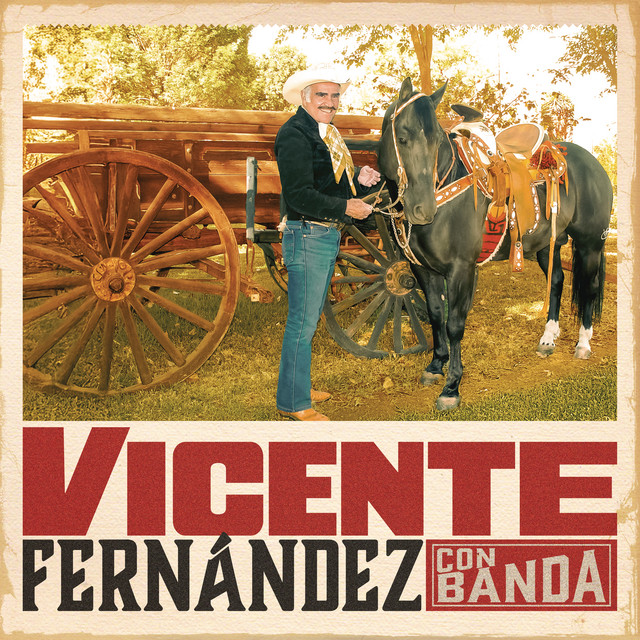
Vicente Fernández Con Banda
Vicente Fernández
Bolero
Mariachi
2024
Pa´ la parranda
Vicente Fernández
Bolero
Mariachi
Ranchera
2020
A mis 80's
Vicente Fernández
Bolero
Mariachi
Ranchera
2018
Más romántico que nunca
Vicente Fernández
Bolero
Mariachi
Ranchera
2015
Muriendo de amor
Vicente Fernández
Bolero
Mariachi
Ranchera
2012
Los 2 Vicentes
Vicente Fernández & Vicente Fernández Hijo
Bolero
Mariachi
Ranchera
2009
El hombre que más te amó
Vicente Fernández
Latin Pop
Mariachi
Ranchera
2007
5
/5
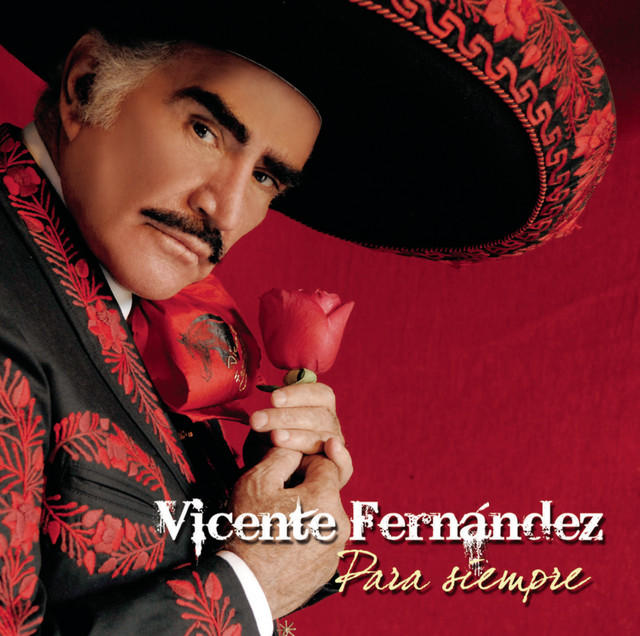
Para siempre
Vicente Fernández
Mariachi
Bolero
Ranchera
2006
La tragedia del vaquero
Vicente Fernández
Corrido
Latin
Ranchera
2003
Se me hizo tarde la vida
Vicente Fernández
Latin
Mariachi
2002
Lo mejor de Lara
Vicente Fernández
Latin
2001
Más con el número uno
Vicente Fernández
Latin
2000
Lobo herido
Vicente Fernández
Latin
1999
Vicente Fernandez y los mas grandes exitos de Los Dandy's
Vicente Fernández
Latin
1998
Entre el amor y yo
Vicente Fernández
Latin
1997
Estatua de marfil
Vicente Fernández
Bolero
Mariachi
Ranchera
1995
Aunque me duela el alma
Vicente Fernández
Latin
1994
Recordando a Los Panchos
Vicente Fernández
Mariachi
Ranchera
1993
Lástima que seas ajena
Vicente Fernández
Latin
1992
4
/5
Que de raro tiene
Vicente Fernández
Ranchera
Mariachi
Latin
1991
El charro mexicano
Vicente Fernández
Latin
Ranchera
1990
4
/5
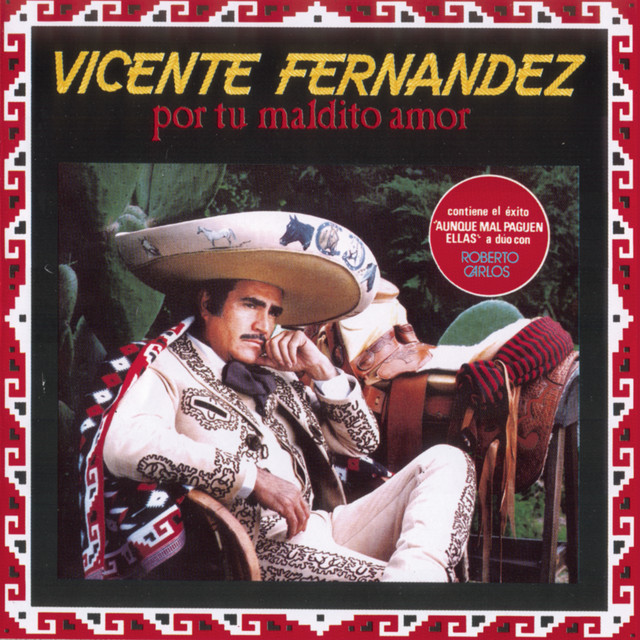
Por Tu Maldito Amor
Vicente Fernández
Bolero
Mariachi
1990
Mientras ustedes no dejen de aplaudir
Vicente Fernández
Latin
Ranchera
1990
Vicente Fernández y las clásicas de José Alfredo Jiménez
Vicente Fernández
Bolero
Mariachi
Ranchera
1989
3
/5
Por tu maldito amor
Vicente Fernández
Mariachi
Ranchera
1988
Lo mejor de la baraja
Vicente Fernández
Latin
1988
El Cuatrero
Vicente Fernández
Latin
Ranchera
1987
4
/5
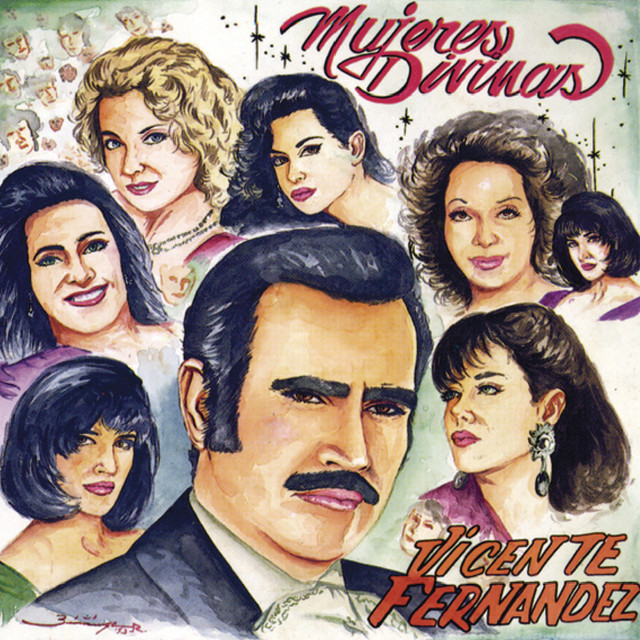
Mujeres Divinas
Vicente Fernández
Bolero
Mariachi
Ranchera
1987
Motivos del alma
Vicente Fernández
Latin
1987
Dos corazones
Vicente Fernández y Vikki Carr
Bolero
Mariachi
Ranchera
1986
Vicente le canta a América Latina
Vicente Fernández
Latin
1986
Hoy platique con mi gallo
Vicente Fernández
Latin
1985
De un rancho a otro
Vicente Fernández
Latin
1984
Un mexicano en la México
Vicente Fernández
Bolero
Mariachi
Ranchera
1984
15 nuevos éxitos con el idolo de mexico
Vicente Fernández
Bolero
Mariachi
Ranchera
1983
15 grandes con el número 1
Vicente Fernández
Bolero
Mariachi
Ranchera
1982
Es la diferencia
Vicente Fernández
Latin
1981
Valses del recuerdo
Vicente Fernández
Bolero
Mariachi
Ranchera
1981
El número uno
Vicente Fernández
Bolero
Mariachi
Ranchera
1979
Mi amigo el tordillo
Vicente Fernández
Corrido
Latin
1978
Vicente Fernandez
Vicente Fernández
Bolero
Corrido
Latin
1978
4
/5
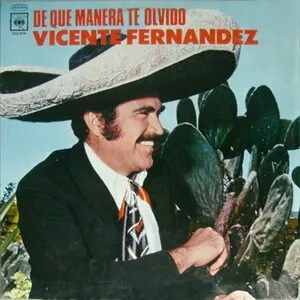
De que manera te olvido
Vicente Fernández
Mariachi
Mexican Folk Music
Latin
1977
La muerte de un gallero
Vicente Fernández
Latin
1977
4
/5
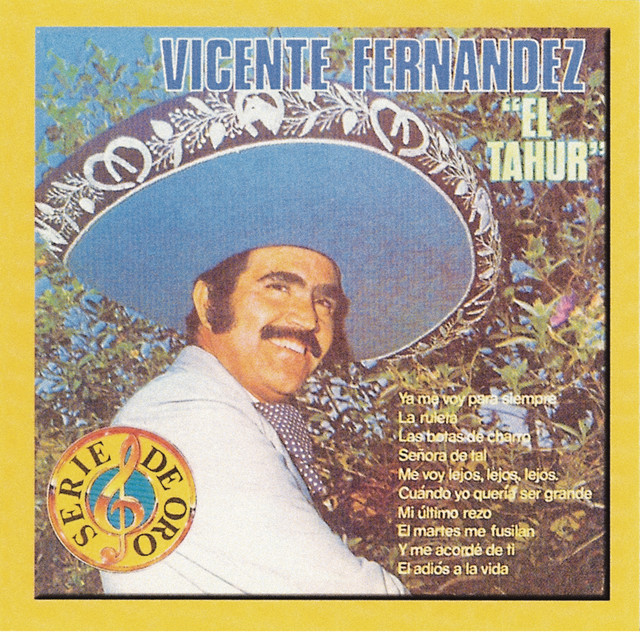
El Tahur
Vicente Fernández
Bolero
Mariachi
Ranchera
1977
4
/5
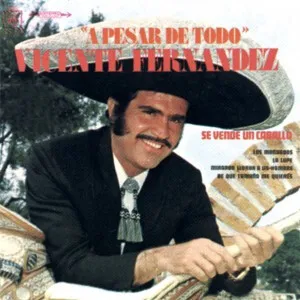
A pesar de todo
Vicente Fernández
Ranchera
Mariachi
Latin
1976
A tu salud
Vicente Fernández
Latin
1976
¿Gusta usted? Joyas rancheras al estilo de Vicente Fernández
Vicente Fernández
Latin
1975
El hijo del pueblo
Vicente Fernández
Latin
1975
Canta para recordar
Vicente Fernández
Latin
1974
Cantando
Vicente Fernández
Bolero
Mariachi
Ranchera
1973
Toda una época con Vicente Fernández
Vicente Fernández
Bolero
Mariachi
Ranchera
1972
4
/5
¡Arriba Huentitán!
Vicente Fernández
Mariachi
Ranchera
Latin
1972
4
/5
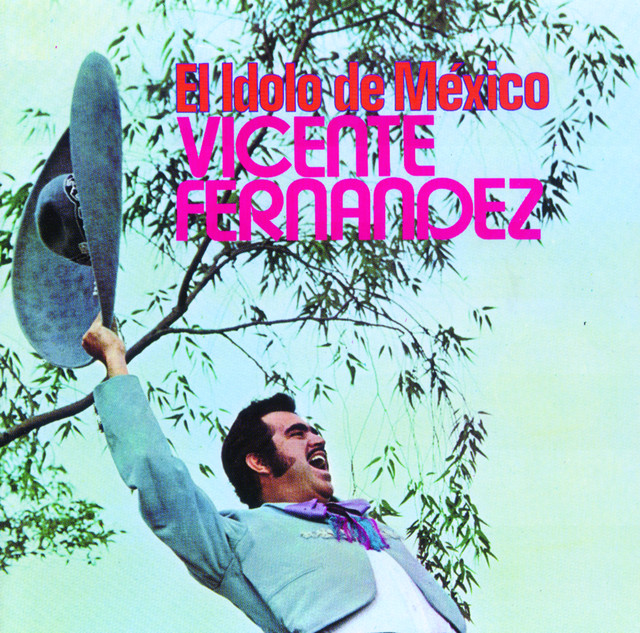
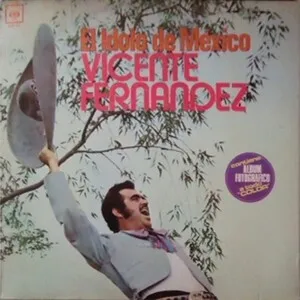
El Idolo De Mexico
Vicente Fernández
Bolero
Mariachi
1972
1
/5
El ídolo de México
Vicente Fernández
Mariachi
Ranchera
1971
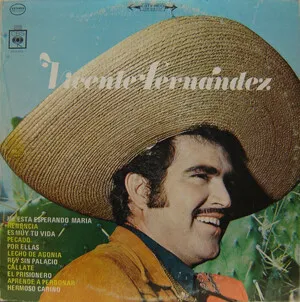
Vicente Fernández
Vicente Fernández
Bolero
Mariachi
Ranchera
1970
Ni en defensa propia
Vicente Fernández
Bolero
Mariachi
Ranchera
1969
Palabra de Rey
Vicente Fernández
Latin
1968
La voz que usted esperaba
Vicente Fernández
Latin
Me está esperando María
Vicente Fernández
Mariachi
Me está esperando María
Vicente Fernández
Ranchera
Similar artists
4
/5
José Alfredo Jimenez
Mariachi
Ranchera
Bolero
5
/5
Luis Miguel
Bolero
Latin Pop
Mariachi
5
/5
Juan Gabriel
Bolero
Mariachi
Canción Melódica
5
/5
Joan Sebastian
Grupera
Mariachi
Ranchera
4
/5
Alejandro Fernández
Ranchera
Latin
Mariachi
4
/5
Natalia Lafourcade
Bolero
Latin Folk
Latin
4
/5
Antonio Aguilar
Corrido
Mariachi
Bolero
5
/5
Los Tigres Del Norte
Corrido
Norteño
Latin
4
/5
Rocío Dúrcal
Canción Melódica
Mariachi
Bolero
3
/5
Chavela Vargas
Nueva Canción
Ranchera
Bolero
Download our mobile app
Get the Melodigging app and start digging for new genres on the go
Download on the App Store
Get it on Google Play
© 2026 Melodigging
Give feedback
Legal
Melodding was created as a tribute to
Every Noise at Once
, which inspired us to help curious minds keep digging into music's ever-evolving genres.