Genres
Artists
Albums
Make Music
Sign in
Sign in
Artists
Baltimore Club
Artists
Baltimore Club
Teklife
2024
·
1 album
Listen
2
/5
Genres
Footwork Jungle
Footwork jungle is a hybrid of Chicago footwork’s 160 BPM battle-ready minimalism and the UK’s early-’90s jungle breakbeat science. It marries chopped Amen/Think breaks, sub-heavy 808 bass, and halftime/duple-feel syncopation with footwork-style vocal chops, call‑and‑response samples, and spacious, rave‑born atmospherics. The result is music that can flex between heads‑down listening and high‑intensity dance movement, retaining jungle’s rolling momentum while adopting footwork’s off‑grid micro‑rhythm and negative space.
Discover
Listen
Baltimore Club
Baltimore club (often shortened to Bmore club) is a high‑energy, loop‑driven dance music that fuses the drum programming and four‑on‑the‑floor insistence of house with the chopped breaks, vocal call‑and‑response, and swagger of hip hop. Typically hovering around 125–135 BPM (most commonly ~130), it relies on hard, syncopated kick patterns, snappy snares and claps, and rapid‑fire sample edits. Iconic breaks like Lyn Collins’ "Think (About It)" and Gaz’s "Sing Sing" are frequently chopped into chant‑like hooks, while sirens, stabs, and party shouts drive its rowdy, club‑ready feel. Born in Baltimore’s DJ culture and perfected on local radio and dance floors, the style prioritizes movement and repetition—short phrases, big drums, and unforgettable vocal loops designed for instantaneous crowd response.
Discover
Listen
Footwork
Footwork (often called juke or Chicago juke) is a high‑velocity, sample‑driven form of electronic dance music that emerged from Chicago’s battle‑dance culture. Built around stuttering, off‑grid percussion at roughly 160 BPM, it uses chopped vocal snippets, booming sub‑bass, and rapid toms, claps, and snares arranged in highly syncopated patterns that are not locked to a constant 4/4 kick. Producers frequently slice fragments of rap, R&B, pop, and soul into call‑and‑response hooks that interact with dancers on the floor. The result is a tense, kinetic sound designed for competitive circles as much as for clubs and headphones.
Discover
Listen
Chicago House
Chicago house is the original strain of house music that emerged from Chicago’s club scene in the mid to late 1980s. Built around a four-on-the-floor kick, syncopated hi‑hats, handclaps, and looping basslines from affordable drum machines and synths, it translated the energy of disco and boogie into a raw, hypnotic, DJ‑friendly format. The sound was forged by resident DJs and producers associated with venues like The Warehouse, Music Box, and Power Plant, as they extended and reworked soulful, gospel-tinged dance records into long, functional grooves. Early Chicago house is often sparse and gritty—driven by TR‑808/909 patterns, piano stabs, deep pads, and call‑and‑response vocals—designed first and foremost for the dance floor.
Discover
Listen
Albums
2024
1
/5
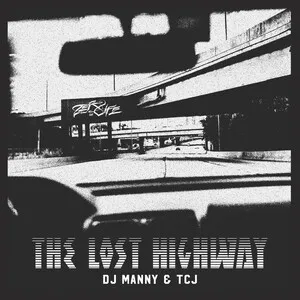
The Lost Highway
DJ Manny & TCJ
Footwork Jungle
Similar artists
2
/5
DJ Manny
Footwork
Baltimore Club
Chicago House
3
/5
Cajmere
Baltimore Club
Chicago House
Footwork
3
/5
Waxmaster
Baltimore Club
Chicago House
Footwork
2
/5
DJ Rashad
Footwork
Juke
Ghetto House
2
/5
DJ Spinn
Footwork
Baltimore Club
Chicago House
2
/5
DJ Slugo
Ghettotech
Baltimore Club
Chicago House
2
/5
Traxman
Footwork
Baltimore Club
Chicago House
2
/5
dj funk
Acid House
Baltimore Club
Chicago House
2
/5
DJ Clent
Baltimore Club
Chicago House
Footwork
1
/5
DJ Gant-Man
Baltimore Club
Chicago House
Footwork
Download our mobile app
Get the Melodigging app and start digging for new genres on the go
Download on the App Store
Get it on Google Play
© 2026 Melodigging
Give feedback
Legal
Melodding was created as a tribute to
Every Noise at Once
, which inspired us to help curious minds keep digging into music's ever-evolving genres.