Genres
Artists
Albums
Make Music
Sign in
Sign in
Artists
Avant-Garde
Artists
Avant-Garde
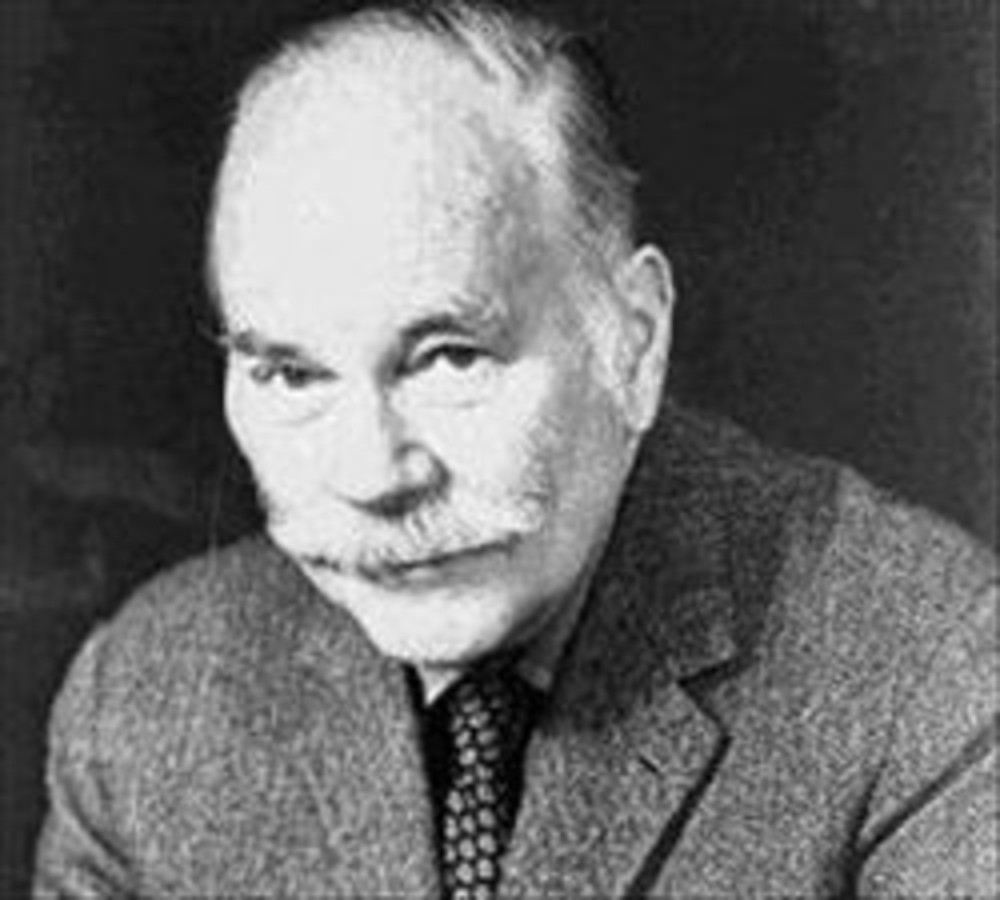
Otto Luening
2006
·
1 album
Listen
1
/5
Genres
New Isolationism
New isolationism is a contemporary strain of isolationist ambient and post-industrial minimalism that emerged in the 2010s, particularly around Scandinavian experimental labels and studios. It foregrounds intimate, close-mic’d sound, negative space, and a quiet-but-present noise floor; its pieces feel both internal and architectural, like rooms built from reverb tails, tape hiss, and soft electronics. Sonically, the style blends glacial drones, fragile chamber timbres (strings, organ, piano), lo‑fi electronics, and field recordings into stark, slow-evolving tableaux. Melodic information is sparse—often only a few tones or gestures—while rhythm is either absent or reduced to distant pulses, heartbeats, or mechanical cycles. Vocals, when they appear, are murmured, diaristic, or abstracted by pitch and time manipulation. Aesthetically, new isolationism is post‑internet and diaristic: it captures solitude, memory, and dislocation with a palette that feels personal yet estranged, drawing as much from contemporary gallery sound practice as from classic dark ambient.
Discover
Listen
Experimental
Experimental music is an umbrella term for practices that prioritize exploration, process, and discovery over adherence to established genre norms. It embraces new sound sources, nonstandard tuning systems, indeterminacy and chance operations, graphic and open-form scores, extended techniques, and technology-led sound design (tape, electronics, computers, and live processing). Rather than a single style, it is a methodology and ethos: testing hypotheses about sound, structure, and performance, often blurring boundaries between composition, improvisation, sound art, and performance art. Listeners can expect unfamiliar timbres, unusual forms, and an emphasis on how music is made as much as the resulting sound.
Discover
Listen
Electroacoustic Composition
Electroacoustic composition is a branch of art music that uses microphones, tape, analog and digital synthesis, and studio processing to create works in which timbre, texture, space, and transformation are primary musical parameters. Emerging from the post‑war laboratory and broadcast studio, it brings together recorded real‑world sounds (musique concrète), purely electronic tones (elektronische Musik), and later computer processing. Works may be fixed‑media pieces diffused over multi‑speaker systems, or live‑electronics that transform acoustic sources in real time. Rather than traditional melody and harmony, form is often built from sound objects, spectral evolution, gesture, and spatial motion.
Discover
Listen
Theremin
Theremin is a performance-centered genre built around the theremin, one of the earliest fully electronic instruments, invented by Léon Theremin in 1920. Played without physical contact, it produces a continuous, voice‑like tone by controlling pitch and volume with hand movements in electromagnetic fields. The style ranges from classically inflected repertoire and chamber settings to experimental and ambient soundscapes. Its hallmark is expressive portamento, vibrato, and legato phrasing, often enhanced by reverberation and delay to emphasize its ethereal, otherworldly quality. Because it is monophonic and highly sensitive to micro-movements, theremin music foregrounds melodic contour, timbral nuance, and careful intonation over dense harmony or percussive articulation. Culturally, the instrument became a sonic emblem of mystery and science fiction in mid‑century film scores, while contemporary practitioners have expanded it into concert music, avant‑pop, and electronic hybrids.
Discover
Listen
Avant-Garde
Avant-garde music is an umbrella term for boundary-pushing practices that challenge prevailing norms of harmony, rhythm, timbre, form, and performance. It privileges experimentation, conceptual rigor, and a willingness to reframe what counts as music at all. Historically tied to early 20th‑century artistic modernism, avant-garde music introduced atonality, the emancipation of noise, and new forms of notation and process. It embraces indeterminacy, extended techniques, electronics, spatialization, and multimedia performance, treating sound as material to be sculpted, questioned, and reinvented.
Discover
Listen
Albums
2006
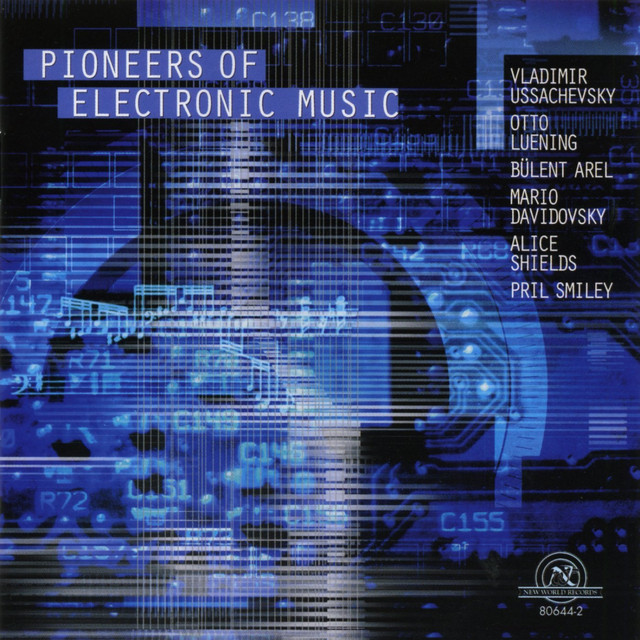
Pioneers Of Electronic Music
Vladimir Ussachevsky, Otto Luening, Alice Shields, Bülent Arel, Pril Smiley
Electroacoustic Composition
Theremin
Similar artists
1
/5
Vladimir Ussachevsky
Avant-Garde
Experimental
Theremin
1
/5
Alice Shields
Avant-Garde
Electroacoustic Composition
Experimental
2
/5
Pierre Henry
Acousmatic
Avant-Garde
Electroacoustic Composition
2
/5
Mika Vainio
Ambient
Avant-Garde
Drone
1
/5
Pierre Schaeffer
Avant-Garde
Experimental
Acousmatic
1
/5
Bernard Parmegiani
Acousmatic
Electroacoustic
Musique Concrète
1
/5
Morton Subotnick
Acousmatic
Avant-Garde
Experimental
1
/5
François Bayle
Acousmatic
Avant-Garde
Experimental
1
/5
Francis Dhomont
Avant-Garde
Experimental
Electroacoustic Composition
1
/5
Jean-Claude Risset
Avant-Garde
Experimental
Electroacoustic Composition
Download our mobile app
Get the Melodigging app and start digging for new genres on the go
Download on the App Store
Get it on Google Play
© 2026 Melodigging
Give feedback
Legal
Melodding was created as a tribute to
Every Noise at Once
, which inspired us to help curious minds keep digging into music's ever-evolving genres.