Genres
Artists
Albums
Make Music
Sign in
Sign in
Artists
Choral
Artists
Choral
Maurice Bourbon
1998
·
1 album
Listen
1
/5
Genres
Madrigal
The madrigal is a secular vocal music genre that flourished during the Renaissance and into the early Baroque period. It is typically written for three to six voices and is most often performed a cappella in its 16th‑century form. Madrigals are through-composed, meaning the music changes to suit each line of text rather than following a repeating strophic pattern. Composers prioritized vivid text expression and word painting, aligning musical gestures with the imagery and rhetoric of the poetry—frequently drawing on Petrarchan themes of love, desire, nature, and melancholy. Over time, the style evolved from relatively clear textures and diatonic harmonies to highly expressive chromaticism and bold dissonances. Late madrigals introduced instruments doubling or accompanying the voices and helped usher in the seconda pratica, ultimately bridging toward early opera and other Baroque vocal forms.
Discover
Listen
Requiem
A requiem is a musical setting of the Roman Catholic Mass for the Dead (Missa pro defunctis). Historically rooted in Latin liturgy, it sets movements such as the Introit, Kyrie, (historically) the Sequence Dies irae, Offertory, Sanctus, Agnus Dei, and Communion, and often includes additional responsories like Libera me and In paradisum. While the earliest requiems were monophonic chants, the genre became a showcase for polyphonic and later symphonic choral writing. Renaissance composers wrote austere, modal settings; Classical and Romantic composers expanded the forces and dramatic scope; and 20th–21st century composers reimagined the form with new languages, from neo-modal and impressionistic harmonies to avant‑garde sonorities. Today, requiems appear both in liturgy and as concert works, symbolizing collective mourning, remembrance, and spiritual reflection.
Discover
Listen
Medieval
Medieval music refers to the diverse sacred and secular musical practices of Europe between the fall of the Western Roman Empire and the dawn of the Renaissance. It spans more than eight centuries, from early monophonic chant to the first notated polyphony. Core features include the use of church modes rather than major/minor, extensive reliance on vocal music (Latin sacred chant as well as vernacular song), and the progressive development from unmeasured chant to rhythmic modal notation and, later, mensural notation. Texture evolves from monophony (plainchant, troubadour songs) to organum, conductus, and the motet, culminating in complex isorhythmic works by the late 13th–14th centuries. Secular traditions—troubadours and trouvères in France, Minnesänger in German lands, and the Iberian Cantigas—coexisted with and influenced sacred practice. Instruments such as the vielle, harp, psaltery, recorder, shawm, hurdy-gurdy, and portative organ often doubled or accompanied voices, though much music remained purely vocal.
Discover
Listen
Choral
Choral refers to music written for and performed by a choir—an ensemble of voices organized into sections such as soprano, alto, tenor, and bass (SATB), or same-voice groupings (SSA, TTBB). It encompasses both sacred and secular repertoire and may be sung a cappella or with accompaniment by organ, piano, or full orchestra. Stylistically, choral music ranges from chant-like monophony to intricate polyphony and rich homophonic textures. Texts are drawn from liturgy, scripture, poetry, and vernacular sources, and are set in many languages. Performance contexts include church services, concert halls, and community events, making choral one of the most socially embedded and widely practiced forms of ensemble music. Across history, choral music has served as a laboratory for vocal counterpoint, word painting, and text-driven form, while functioning as a cultural bridge among religious rites, national traditions, and contemporary concert practice.
Discover
Listen
Albums
1998
1
/5
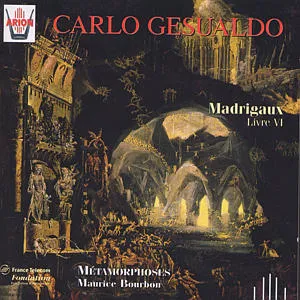
Madrigaux, livre VI
Carlo Gesualdo / Métamorphoses / Maurice Bourbon
Madrigal
Similar artists
2
/5
The Hilliard Ensemble
Madrigal
Gregorian Chant
Medieval Classical Music
3
/5
Peter Phillips
Choral
Renaissance
Requiem
3
/5
Oxford Camerata
Gregorian Chant
Medieval
Classical
3
/5
The Tallis Scholars
Choral
Renaissance
Requiem
3
/5
Paul Hillier
Choral
Minimalism
Classical
2
/5
Tomás Luis de Victoria
Requiem
Choral
Gregorian Chant
2
/5
Paul Van Nevel
Renaissance
Choral
Franco-Flemish School
2
/5
Johannes Ockeghem
Franco-Flemish School
Medieval
Classical
2
/5
James O'Donnell
Requiem
Choral
Gregorian Chant
2
/5
Huelgas Ensemble
Renaissance
Choral
Franco-Flemish School
Download our mobile app
Get the Melodigging app and start digging for new genres on the go
Download on the App Store
Get it on Google Play
© 2026 Melodigging
Give feedback
Legal
Melodding was created as a tribute to
Every Noise at Once
, which inspired us to help curious minds keep digging into music's ever-evolving genres.