Genres
Artists
Albums
Make Music
Sign in
Sign in
Artists
Avant-Garde
Artists
Avant-Garde
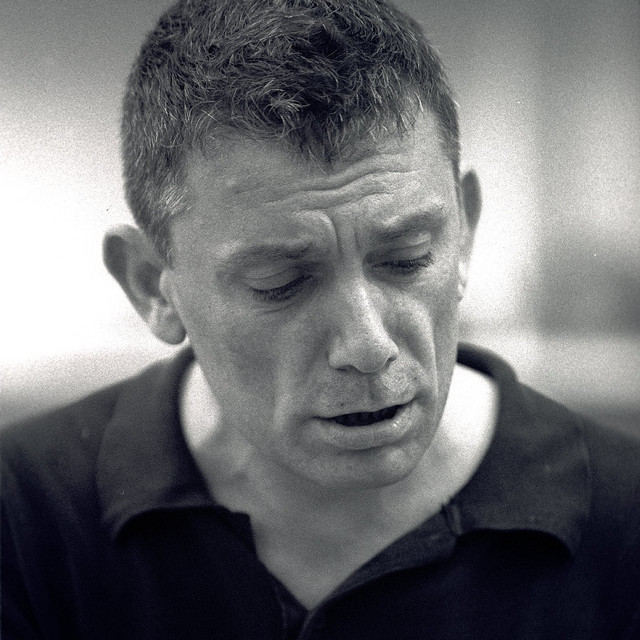
Marino Formenti
2003
·
1 album
Listen
2
/5
Genres
Contemporary Classical Piano
Contemporary classical piano refers to post–World War II and 21st‑century concert music written for solo piano (and often piano with electronics or small ensembles) that extends or departs from common‑practice tonality. It embraces a wide spectrum of aesthetics: post‑war avant‑garde, serial and atonal writing; chance and indeterminate procedures; extended techniques such as prepared piano, inside‑the‑piano playing, and harmonics; process‑based minimalism and post‑minimalism; spectral and timbre‑driven harmony; complex meters, additive rhythms, and polyrhythms; graphic or hybrid notations; and integrations with tape, live electronics, amplification, and multimedia. The result ranges from whisper‑quiet, bell‑like resonance and vast silences to motoric repetition, dense tone clusters, and physically demanding virtuosity. Although deeply rooted in the European art‑music tradition, the style is transatlantic and global, exchanging ideas with electronic music, sound art, and experimental performance practices.
Discover
Listen
Contemporary Classical
Contemporary classical is the broad field of Western art music created after World War II. It embraces an array of aesthetics—from serialism and indeterminacy to minimalism, spectralism, electroacoustic practices, and post‑tonal lyricism—while retaining a concern for notated composition and timbral innovation. Unlike the unified styles of earlier eras, contemporary classical is pluralistic. Composers freely mix acoustic and electronic sound, expand instrumental techniques, adopt non‑Western tuning and rhythm, and explore new forms, from process-based structures to open and graphic scores. The result is a music that can be rigorously complex or radically simple, technologically experimental or intimately acoustic, yet consistently focused on extending how musical time, timbre, and form can be shaped.
Discover
Listen
Avant-Garde
Avant-garde music is an umbrella term for boundary-pushing practices that challenge prevailing norms of harmony, rhythm, timbre, form, and performance. It privileges experimentation, conceptual rigor, and a willingness to reframe what counts as music at all. Historically tied to early 20th‑century artistic modernism, avant-garde music introduced atonality, the emancipation of noise, and new forms of notation and process. It embraces indeterminacy, extended techniques, electronics, spatialization, and multimedia performance, treating sound as material to be sculpted, questioned, and reinvented.
Discover
Listen
Albums
2003
Nothing is real
Marino Formenti
Contemporary Classical Piano
Similar artists
2
/5
Meredith Monk
Avant-Garde
Contemporary Classical
Electroacoustic
2
/5
John Cage
Indeterminacy
Classical
Experimental
2
/5
John Adams
Minimalism
Post-Minimalism
Avant-Garde
2
/5
Olivier Messiaen
Classical
Mélodie
Modern Classical
2
/5
Herbert Henck
Avant-Garde
Contemporary Classical
Minimalism
2
/5
Morton Feldman
Classical
Chamber Music
Contemporary Classical Piano
3
/5
Kronos Quartet
Classical
Chamber Music
Latin American Classical Music
3
/5
Steve Reich
Minimalism
Classical
Modern Classical
3
/5
Paul Hillier
Choral
Minimalism
Classical
2
/5
Reinbert de Leeuw
Classical
Impressionism
Avant-Garde
Download our mobile app
Get the Melodigging app and start digging for new genres on the go
Download on the App Store
Get it on Google Play
© 2026 Melodigging
Give feedback
Legal
Melodding was created as a tribute to
Every Noise at Once
, which inspired us to help curious minds keep digging into music's ever-evolving genres.