Genres
Artists
Albums
Make Music
Sign in
Sign in
Artists
Baroque
Artists
Baroque
Luca Guglielmi
2011
·
1 album
Listen
2
/5
Genres
Early Music
Early music is a modern performance movement devoted to the repertoire of the Medieval, Renaissance, and early Baroque eras (roughly before c. 1750), approached with historically informed performance (HIP) practices. It emphasizes period instruments (or faithful replicas), historical tunings and temperaments, original notations and sources, and performance conventions documented in treatises of the time. The sound world ranges from monophonic chant and modal organum, to intricate Renaissance polyphony, to the emergence of basso continuo and dramatic affect in the early Baroque. Rather than being a single historical style, early music is a contemporary practice of reviving diverse pre‑Classical musics with scholarly rigor and artistic vitality.
Discover
Listen
Baroque Cello
Baroque cello refers both to a historical instrument setup (gut strings, shorter fingerboard, lower string tension, a convex Baroque bow, and typically no endpin) and to the style and repertoire written for the violoncello during the Baroque era. The genre centers on solo suites, sonatas, ricercars, and concertos composed roughly between 1680 and 1750, alongside continuo playing in chamber, orchestral, and vocal works. Hallmarks include rhetorical phrasing, dance-derived rhythms and forms (allemande, courante, sarabande, gigue), vivid sequences, suspensions, and improvised ornamentation. The sound world is warm, speech-like, and agile, with clear articulation and a speaking tone that exploits gut strings and lower pitch standards (often around A=415).
Discover
Listen
Baroque
Baroque is a period and style of Western art music spanning roughly 1600–1750. It is characterized by the birth of functional tonality, the widespread use of basso continuo (figured bass), and a love of contrast—between soloist and ensemble, loud and soft, and different timbres. Hallmark genres and forms of the era include opera, cantata, oratorio, concerto (especially the concerto grosso), dance suite, sonata, and fugue. Textures range from expressive monody to intricate counterpoint, and melodies are richly ornamented with trills, mordents, and appoggiaturas. Baroque music flourished in churches, courts, and theaters across Europe, with regional styles (Italian, French, German, English) shaping distinctive approaches to rhythm, dance, harmony, and ornamentation.
Discover
Listen
Chamber Music
Chamber music is a tradition of composed music for small ensembles—typically one player per part—intended for intimate spaces such as courts, salons, and private rooms rather than large public halls. Its aesthetic emphasizes clarity of texture, conversational interplay among parts, and balance without a conductor. Hallmark formations include the string quartet, piano trio, wind quintet, string quintet, and various mixed ensembles. Multi‑movement cycles (often in sonata form) and finely wrought counterpoint are common, ranging from Baroque trio sonatas to Classical string quartets and modern works with expanded timbres and techniques. Because of its scale and transparency, chamber music has long been a proving ground for compositional craft and ensemble musicianship, shaping the core of Western art music from the Baroque through the present.
Discover
Listen
Renaissance
Renaissance music (c. 1400–1600) marks the shift from medieval sonorities to a clearer, triad-based polyphony in which multiple independent voices are treated with near-equal importance. It favors modal counterpoint, pervasive imitation, smooth voice-leading, and carefully prepared cadences. Text intelligibility and expressive text-setting become central concerns, especially in sacred motets and masses and in secular forms like the Italian madrigal and the French chanson. While much of the repertory is a cappella, instrumental consorts (viol, recorder, sackbut, cornett, organ) play a growing role. A steady tactus underpins rhythms, and tuning systems such as meantone temperament shape its characteristic color. Music printing (from 1501) accelerates stylistic diffusion across Europe.
Discover
Listen
Albums
2011
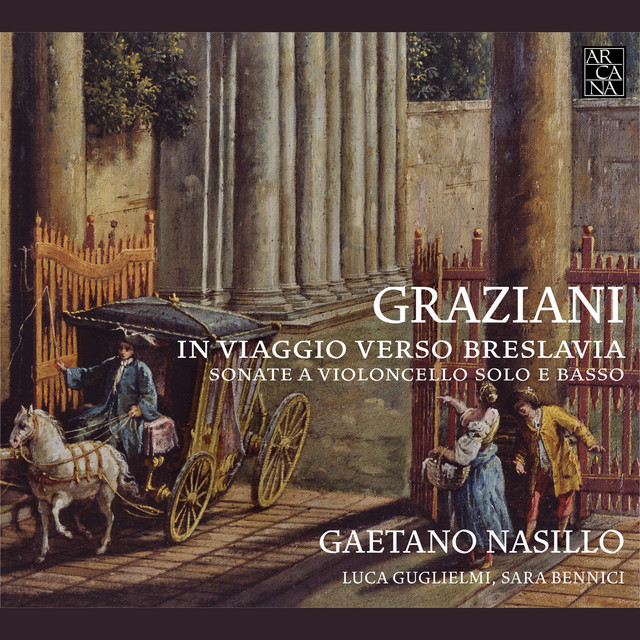
Graziani: In viaggio verso Breslavia (Sonate a violoncello solo e basso)
Carlo Graziani, Gaetano Nasillo, Luca Guglielmi, Sara Bennici
Baroque Cello
Similar artists
3
/5
Il Giardino Armonico
Baroque
Classical
Opera
3
/5
Reinhard Goebel
Baroque
Chamber Music
Classical
3
/5
Musica Antiqua Köln
Baroque
Chamber Music
Classical
3
/5
Musica Amphion
Baroque
Chamber Music
Classical
2
/5
Paolo Pandolfo
Baroque
Chamber Music
Renaissance
2
/5
Philippe Pierlot
Baroque
Cantata
Chamber Music
2
/5
Gustav Leonhardt
Baroque
Classical
Renaissance
2
/5
Amandine Beyer
Baroque
Classical
Baroque Violin
2
/5
Pierre Hantaï
Baroque
Chamber Music
Early Music
2
/5
Hespèrion XX
Baroque
Chamber Music
Early Music
Download our mobile app
Get the Melodigging app and start digging for new genres on the go
Download on the App Store
Get it on Google Play
© 2026 Melodigging
Give feedback
Legal
Melodding was created as a tribute to
Every Noise at Once
, which inspired us to help curious minds keep digging into music's ever-evolving genres.