Genres
Artists
Albums
Make Music
Sign in
Sign in
Artists
Classical
Artists
Classical
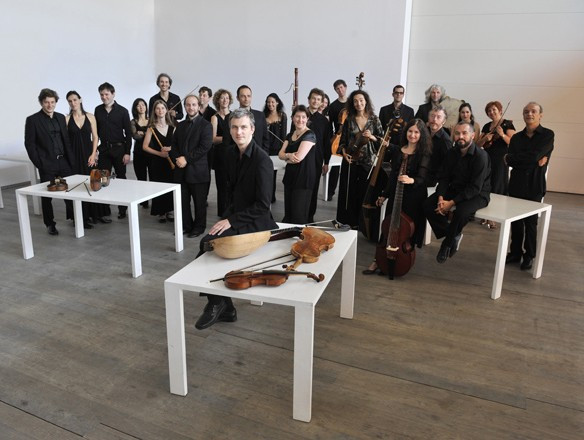
Le Poème Harmonique
2001–2022
·
5 albums
Listen
2
/5
Genres
Tragédie En Musique
Tragédie en musique (also called tragédie lyrique) is a French Baroque operatic genre forged at the court of Louis XIV by composer Jean-Baptiste Lully and librettist Philippe Quinault. It blends a solemn, heroic or mythological subject with a distinctive five-act plan plus a ceremonial prologue, abundant choral writing, instrumental interludes, and elaborate danced divertissements. The music features the French overture (majestically dotted rhythms), supple French récitatif tailored to the nuances of the language, brief airs rather than showpiece arias, and rich orchestral colors shaped by a five-part string band and basso continuo. Its overall aesthetic is one of noble declamation, dramatic clarity, and courtly spectacle—where text, dance, chorus, and stagecraft combine into a unified theatrical experience.
Discover
Listen
Comédie-Ballet
Comédie-ballet is a French Baroque theatrical form that fuses spoken comedy with music and dance in an integrated, plot-driven spectacle. It was devised to entertain courtly audiences with witty dialogue, elegant dancing, and richly scored intermèdes that commented on or extended the action. Developed by Molière in close collaboration with Jean-Baptiste Lully and choreographer Pierre Beauchamp under the patronage of Louis XIV, the genre balances dramatic scenes with sequences of airs, choruses, and court dances (gavotte, bourrée, sarabande, gigue), framed by the characteristic French overture. Its tone ranges from satirical to farcical, but its musical language remains refined, ornamented, and distinctly French.
Discover
Listen
Zarzuela
Zarzuela is a Spanish lyric‑dramatic genre that alternates spoken dialogue with sung numbers such as romanzas (arias), ensembles, and choruses. It blends courtly and popular musical idioms, weaving in Spanish dance rhythms (seguidillas, fandangos, jotas, chotis) and vivid costumbrista (everyday-life) scenes. Two principal formats emerged: the expansive zarzuela grande (multi‑act, operatic in scope) and the género chico (one‑act, agile, and often comedic). Across all forms, zarzuela prizes clear storytelling, tuneful melodies, rhythmic vitality, and a strong sense of place, often portraying Madrid’s barrios or regional Spain with humor, sentiment, and social observation.
Discover
Listen
Zarzuela Barroca
Zarzuela barroca is the early, Baroque-era form of the Spanish zarzuela: a courtly and public musical theatre that blends spoken dialogue with sung numbers, choruses, dances, and instrumental interludes. It emerged in 17th‑century Spain around the royal hunting lodge La Zarzuela (near Madrid), from which it takes its name. Unlike fully sung Italian opera, Baroque zarzuela alternates prose or verse dialogue with arias, ensembles, and popular dance-songs, rooting high court spectacle in recognizable Iberian idioms. Stylistically it marries Italianate recitative and aria craft to Spanish song and dance forms such as jácaras, seguidillas, and later fandangos, often with vivid mythological or allegorical plots crafted by leading Golden Age playwrights.
Discover
Listen
Ballet De Cour
Ballet de cour (court ballet) was a lavish French courtly entertainment that fused dance, vocal and instrumental music, spoken allegory, poetry, and spectacular stagecraft. Emerging in the late Renaissance and flourishing into the early Baroque, it was performed by a mixture of professional musicians and noble amateurs in large ceremonial halls, tennis courts, or improvised theaters at court. Its dramaturgy revolved around sequences of contrasting entrées (self-contained numbers) unified by mythological or allegorical themes that celebrated dynastic power, diplomacy, and ideals of order and harmony. The musical language bridged modal Renaissance practices and early tonal tendencies, drawing on popular and court dance types (branles, pavanes, galliards, courantes) and on courtly song traditions such as the air de cour.
Discover
Listen
Renaissance
Renaissance music (c. 1400–1600) marks the shift from medieval sonorities to a clearer, triad-based polyphony in which multiple independent voices are treated with near-equal importance. It favors modal counterpoint, pervasive imitation, smooth voice-leading, and carefully prepared cadences. Text intelligibility and expressive text-setting become central concerns, especially in sacred motets and masses and in secular forms like the Italian madrigal and the French chanson. While much of the repertory is a cappella, instrumental consorts (viol, recorder, sackbut, cornett, organ) play a growing role. A steady tactus underpins rhythms, and tuning systems such as meantone temperament shape its characteristic color. Music printing (from 1501) accelerates stylistic diffusion across Europe.
Discover
Listen
Classical
Classical music is the notated art-music tradition of Europe and its global descendants, characterized by durable forms, carefully codified harmony and counterpoint, and a literate score-based practice. The term “classical” can refer broadly to the entire Western art-music lineage from the Medieval era to today, not just the Classical period (c. 1750s–1820s). It privileges long-form structures (such as symphonies, sonatas, concertos, masses, and operas), functional or modal harmony, thematic development, and timbral nuance across ensembles ranging from solo instruments to full orchestras and choirs. Across centuries, the style evolved from chant and modal polyphony to tonal harmony, and later to post-tonal idioms, while maintaining a shared emphasis on written notation, performance practice, and craft.
Discover
Listen
Medieval
Medieval music refers to the diverse sacred and secular musical practices of Europe between the fall of the Western Roman Empire and the dawn of the Renaissance. It spans more than eight centuries, from early monophonic chant to the first notated polyphony. Core features include the use of church modes rather than major/minor, extensive reliance on vocal music (Latin sacred chant as well as vernacular song), and the progressive development from unmeasured chant to rhythmic modal notation and, later, mensural notation. Texture evolves from monophony (plainchant, troubadour songs) to organum, conductus, and the motet, culminating in complex isorhythmic works by the late 13th–14th centuries. Secular traditions—troubadours and trouvères in France, Minnesänger in German lands, and the Iberian Cantigas—coexisted with and influenced sacred practice. Instruments such as the vielle, harp, psaltery, recorder, shawm, hurdy-gurdy, and portative organ often doubled or accompanied voices, though much music remained purely vocal.
Discover
Listen
Choral
Choral refers to music written for and performed by a choir—an ensemble of voices organized into sections such as soprano, alto, tenor, and bass (SATB), or same-voice groupings (SSA, TTBB). It encompasses both sacred and secular repertoire and may be sung a cappella or with accompaniment by organ, piano, or full orchestra. Stylistically, choral music ranges from chant-like monophony to intricate polyphony and rich homophonic textures. Texts are drawn from liturgy, scripture, poetry, and vernacular sources, and are set in many languages. Performance contexts include church services, concert halls, and community events, making choral one of the most socially embedded and widely practiced forms of ensemble music. Across history, choral music has served as a laboratory for vocal counterpoint, word painting, and text-driven form, while functioning as a cultural bridge among religious rites, national traditions, and contemporary concert practice.
Discover
Listen
Show all 9 genres
Albums
2022
1
/5
Coronis
Sebastián Durón / Le Poème Harmonique / Vincent Dumestre
Zarzuela Barroca
Zarzuela
Classical
2022
2
/5
Le bourgeois gentilhomme
Jean-Baptiste Lully / Le Poème Harmonique / Vincent Dumestre
Comédie-Ballet
2019
1
/5
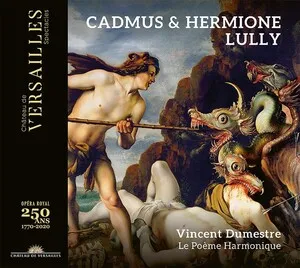
Cadmus & Hermione
Jean-Baptiste Lully / Le Poème Harmonique / Vincent Dumestre
Tragédie En Musique
2004
2
/5
Je meurs sans mourir
Antoine Boësset / Le Poème Harmonique / Vincent Dumestre
Ballet De Cour
Classical
2001
2
/5
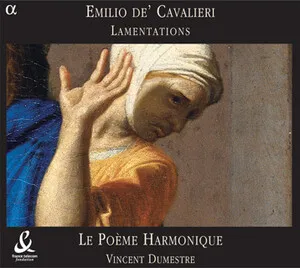
Lamentations
Emilio de' Cavalieri / Le Poème Harmonique / Vincent Dumestre
Renaissance
Choral
Classical
Similar artists
2
/5
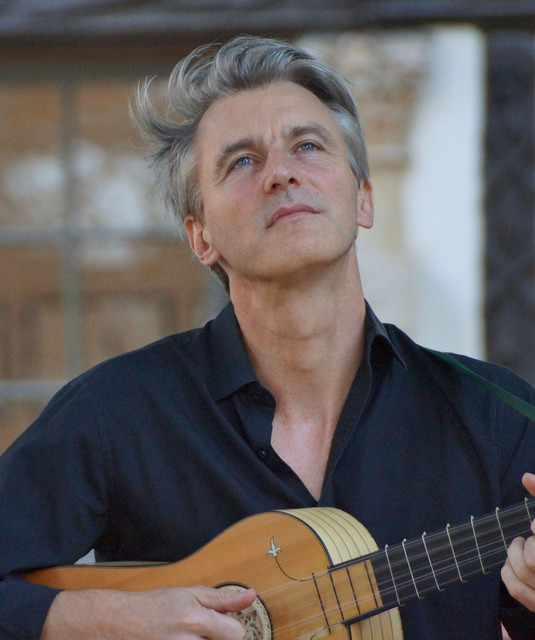
Vincent Dumestre
Classical
Medieval
Ballet De Cour
3
/5
Jordi Savall
Renaissance
Baroque
Classical
3
/5
Giovanni Pierluigi da Palestrina
Renaissance
Classical
Choral
3
/5
Peter Phillips
Choral
Renaissance
Requiem
3
/5
Oxford Camerata
Gregorian Chant
Medieval
Classical
3
/5
The Tallis Scholars
Choral
Renaissance
Requiem
3
/5
Jeremy Summerly
Gregorian Chant
Medieval
Classical
2
/5
Josquin des Prez
Franco-Flemish School
Classical
Motet
2
/5
Chœur De Chambre De Namur
Opera
Classical
Tragédie En Musique
2
/5
Paul Van Nevel
Renaissance
Choral
Franco-Flemish School
Download our mobile app
Get the Melodigging app and start digging for new genres on the go
Download on the App Store
Get it on Google Play
© 2026 Melodigging
Give feedback
Legal
Melodding was created as a tribute to
Every Noise at Once
, which inspired us to help curious minds keep digging into music's ever-evolving genres.