Genres
Artists
Albums
Make Music
Sign in
Sign in
Artists
Avant-Garde
Artists
Avant-Garde
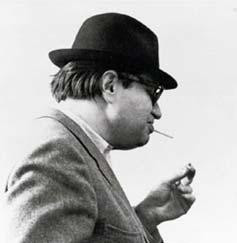
Jürg Frey
2015
·
4 albums
Listen
1
/5
Genres
Lowercase
Lowercase is a minimalist strain of experimental ambient music that privileges extremely quiet, often barely-perceptible sound. Instead of melody and rhythm, it focuses on micro-sonic details—hiss, hums, room tone, paper rustle, HVAC drones, cable buzz, and distant environmental traces—presented at very low volumes. Coined by artist Steve Roden in the early 2000s, the term denotes both a sonic aesthetic and a listening practice: attentive, headphone-based, and patient. Releases frequently use long durations, wide dynamic range, and near-silence to pull listeners toward the threshold of audibility. Labels such as 12k, LINE, and Trente Oiseaux, along with galleries and sound-art contexts, helped situate lowercase at the intersection of ambient, electroacoustic composition, and conceptual sound art.
Discover
Listen
Reductionism
Reductionism is a strand of experimental, improvised music that emerged in the late 1990s, coalescing in scenes around Berlin, London, Tokyo, and Vienna. It focuses on extremely quiet dynamics, the creative use of silence, and the cultivation of subtle, unconventional timbres. Hallmarks include microtonality, extended and non-standard techniques, high amplification at very low volumes, and attention to minute sonic events such as friction, breath, electrical hum, and resonant artifacts. Rather than narrative arcs or traditional rhythm/harmony, the music prioritizes space, texture, and the act of listening itself.
Discover
Listen
Minimalism
Minimalism is a style of Western art music that emerged in the United States during the 1960s, characterized by the use of very limited musical materials, steady pulse, and extensive repetition. Composers often build pieces from short cells or motifs that are repeated and slowly transformed through additive or subtractive processes, phase shifting, and gradual changes in harmony, texture, or register. Harmony is typically consonant (often modal or diatonic), though just intonation and extended drones are also common. The result is music that foregrounds process, clarity, audibility of structure, and a hypnotic sense of stasis and flow. Typical ensembles include keyboards, mallet percussion, strings, winds, voices, and electronics or tape. Minimalism influenced a wide array of later styles, from ambient and new age to post-minimalism and minimal techno.
Discover
Listen
Avant-Garde
Avant-garde music is an umbrella term for boundary-pushing practices that challenge prevailing norms of harmony, rhythm, timbre, form, and performance. It privileges experimentation, conceptual rigor, and a willingness to reframe what counts as music at all. Historically tied to early 20th‑century artistic modernism, avant-garde music introduced atonality, the emancipation of noise, and new forms of notation and process. It embraces indeterminacy, extended techniques, electronics, spatialization, and multimedia performance, treating sound as material to be sculpted, questioned, and reinvented.
Discover
Listen
Art Song
Art song is an intimate, concert-music genre in which a poetic text is set for solo voice with an equally integral piano accompaniment. Unlike popular song, it is composed for attentive listening in the recital hall or salon, and unlike opera, it does not require staging or multiple characters. The genre privileges prosody, word-painting, and subtle harmonic color to illuminate imagery and emotion in the poem. Forms range from strophic and modified strophic to fully through-composed designs, and the piano often supplies prelude, interludes, and a telling postlude that extends or reframes the text’s sentiment. German Lieder, French mélodie, and English-language art song are the best-known national currents within this tradition.
Discover
Listen
Lied
Lied (plural: Lieder) is the German art song: a finely crafted setting of German-language poetry for solo voice and piano. It is characterized by an intimate, chamber-scale dialogue between singer and pianist in which the accompaniment is an equal partner rather than mere support. Texts are drawn from canonical poets such as Goethe, Heine, Rückert, and Eichendorff, and the music often employs vivid text painting, flexible prosody, and nuanced harmonic color to illuminate poetic imagery. Formal designs include strophic, modified strophic, and through-composed forms, allowing composers to mirror a poem’s narrative or emotional arc. The Lied flourished in the Romantic era, crystallizing ideals of interiority, nature, folklore, and the unity of poetry and music. It remains central to recital repertoire and a cornerstone of German vocal culture.
Discover
Listen
Chamber Music
Chamber music is a tradition of composed music for small ensembles—typically one player per part—intended for intimate spaces such as courts, salons, and private rooms rather than large public halls. Its aesthetic emphasizes clarity of texture, conversational interplay among parts, and balance without a conductor. Hallmark formations include the string quartet, piano trio, wind quintet, string quintet, and various mixed ensembles. Multi‑movement cycles (often in sonata form) and finely wrought counterpoint are common, ranging from Baroque trio sonatas to Classical string quartets and modern works with expanded timbres and techniques. Because of its scale and transparency, chamber music has long been a proving ground for compositional craft and ensemble musicianship, shaping the core of Western art music from the Baroque through the present.
Discover
Listen
Classical
Classical music is the notated art-music tradition of Europe and its global descendants, characterized by durable forms, carefully codified harmony and counterpoint, and a literate score-based practice. The term “classical” can refer broadly to the entire Western art-music lineage from the Medieval era to today, not just the Classical period (c. 1750s–1820s). It privileges long-form structures (such as symphonies, sonatas, concertos, masses, and operas), functional or modal harmony, thematic development, and timbral nuance across ensembles ranging from solo instruments to full orchestras and choirs. Across centuries, the style evolved from chant and modal polyphony to tonal harmony, and later to post-tonal idioms, while maintaining a shared emphasis on written notation, performance practice, and craft.
Discover
Listen
Show all 8 genres
Albums
2015
1
/5
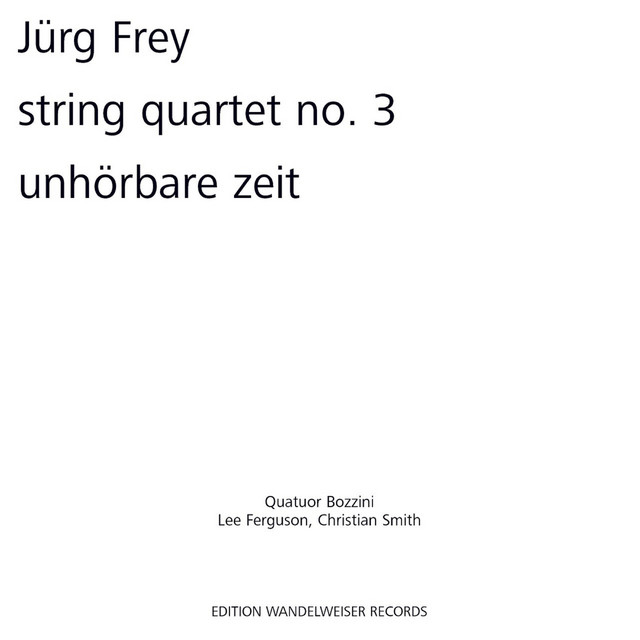
String Quartet No. 3; Unhörbare Zeit
Jürg Frey
Reductionism
Classical
24 Wörter
Jürg Frey
Art Song
Φ
Jürg Frey
Lowercase
24 Wörter
Jürg Frey
Lied
Similar artists
3
/5
Kronos Quartet
Classical
Chamber Music
Latin American Classical Music
2
/5
Morton Feldman
Chamber Music
Classical
Avant-Garde
1
/5
Ensemble Recherche
Avant-Garde
Chamber Music
Minimalism
1
/5
Giacinto Scelsi
Avant-Garde
Microtonal Classical
Chamber Music
1
/5
Quatuor Molinari
Avant-Garde
Chamber Music
Free Jazz
1
/5
JACK Quartet
Chamber Music
Avant-Garde
Classical
1
/5
Christopher Cerrone
Avant-Garde
Chamber Music
Minimalism
1
/5
Irvine Arditti
Chamber Music
Avant-Garde
Étude
1
/5
Roger Heaton
Avant-Garde
Chamber Music
Minimalism
1
/5
Quatuor Bozzini
Avant-Garde
Chamber Music
Classical
Download our mobile app
Get the Melodigging app and start digging for new genres on the go
Download on the App Store
Get it on Google Play
© 2026 Melodigging
Give feedback
Legal
Melodding was created as a tribute to
Every Noise at Once
, which inspired us to help curious minds keep digging into music's ever-evolving genres.