Genres
Artists
Albums
Make Music
Sign in
Sign in
Artists
Kundiman
Artists
Kundiman
Joey Ayala at ang Bagong Lumad
1995
·
1 album
Listen
1
/5
Genres
Pinoy Alternative
Pinoy alternative (Filipino alternative) is a broad strand of Original Pilipino Music (OPM) that fused the melodic sensibility of local pop with the DIY ethos and guitar-driven sound of global alternative rock. Emerging in the 1990s, the style favored hooky choruses, jangly-to-crunchy guitars, and conversational lyrics in Tagalog, Taglish, and English. It embraced humor, social observation, and youth narratives while drawing from grunge, Britpop, new wave, and indie rock. The result is music that can be witty and anthemic yet reflective and sentimental—distinctly Filipino in voice and storytelling.
Discover
Listen
Opm
OPM (Original Pilipino Music) is the umbrella term for Filipino popular music, encompassing mainstream pop, soft rock, ballads, and band music primarily sung in Filipino languages (especially Tagalog) as well as English. The tag crystallized in the 1970s alongside the Manila Sound movement and the formation of a modern local recording industry that foregrounded Filipino songwriting and artists. Stylistically, OPM blends Western pop/rock and soul with indigenous and Hispanic-influenced Filipino song traditions such as kundiman and harana. Melodies tend to be singable and emotive, harmony is diatonic with occasional modulations, and lyrics often revolve around love, nostalgia, family, and national identity. Across decades, OPM has continually evolved—from disco-tinged 70s pop and 80s power ballads to 90s alternative band culture and today’s polished pop and R&B—while remaining distinctively Filipino in sensibility and storytelling.
Discover
Listen
Pinoy Rock
Pinoy rock is the Filipino take on rock music, distinguished by its use of Tagalog and other Philippine languages, melodic songcraft, and a strong sense of place and social commentary. Rooted in classic rock and roll, blues rock, and psychedelic rock of the 1960s–70s, it crystallized in the early 1970s when artists began writing original rock songs in Tagalog. Over time it absorbed punk, new wave, alternative rock, and metal, creating a broad spectrum that runs from anthemic, guitar-driven classics to edgy, socially charged punk and radio-friendly pop-rock. Beyond sound, Pinoy rock is a cultural movement: it chronicles everyday life, humor, love, and political realities in the Philippines, often with catchy hooks, sing-along choruses, and conversational, Taglish (Tagalog-English) lyrics.
Discover
Listen
Kundiman
Kundiman is a Filipino art-song tradition centered on love and devotion, typically sung in Tagalog with refined, lyrical melodies. It is most often set in a slow triple meter (commonly 3/4), employing expressive rubato and ornamentation. Harmonically, kundiman pieces characteristically begin in a minor key and resolve to the parallel major in the refrain, mirroring a poetic journey from yearning to hope. While rooted in indigenous Filipino song and serenade practice, the genre absorbed European art-song and Romantic-era harmonic language during Spanish and early American colonial periods. Beyond romantic themes, kundiman historically served as an allegory for patriotic love of the motherland, especially during the late 19th-century Philippine Revolution. Today it is performed by classical singers and traditional vocalists alike, remaining a cornerstone of Filipino musical identity.
Discover
Listen
Philippine Music
Philippine music is a broad umbrella that spans indigenous Austronesian traditions, centuries of Hispanic and church-influenced forms, and a modern spectrum of pop, rock, hip hop, and R&B known collectively as OPM (Original Pilipino Music). At one end are precolonial and Islamic-court musics such as kulintang gong-chime ensembles in Mindanao and Sulu, bamboo and nose-flute repertories, and epic-chant traditions—relying on cyclical rhythms, interlocking patterns, and modal scales. From the Spanish era came guitar-centered serenades (harana), art song (kundiman), and the rondalla string orchestra, blending Iberian harmony with Filipino melodic sensibility. In the 20th century, American and global influences catalyzed jazz bands, Manila Sound, Pinoy rock, and contemporary P-pop, while Tagalog, Cebuano, Ilocano, Kapampangan, and other languages remained central to lyrical identity. Across all eras, Philippine music emphasizes memorable melody, lyrical directness, danceable and flexible rhythms, and a penchant for romantic and nostalgic expression that coexists with socially conscious songwriting.
Discover
Listen
Albums
1995
2
/5
Mga Awit ng Tanod-lupa
Bagong Lumad & Joey Ayala
Philippine Music
Similar artists
3
/5
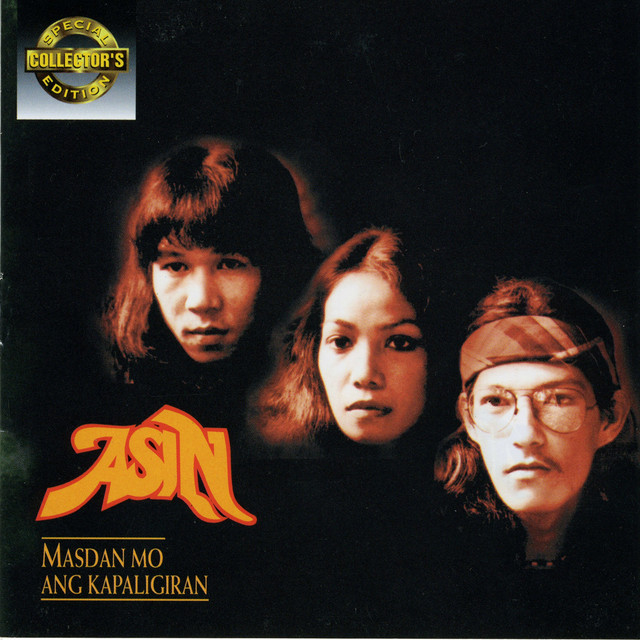
Asin
Manila Sound
Pinoy Folk Rock
Pop
1
/5
Various Artists
Afro-Funk
Alternative Rock
Ambient
4
/5
December Avenue
Pinoy Alternative
Pinoy Rock
Batak
4
/5
Silent Sanctuary
Pinoy Alternative
Pinoy Rock
Harana
4
/5
Up Dharma Down
Harana
Kundiman
Opm
4
/5
Eraserheads
Harana
Kundiman
Opm
4
/5
Rico Blanco
Pinoy Alternative
Pinoy Rock
Harana
4
/5
Orange & Lemons
Harana
Kundiman
Opm
3
/5
The Itchyworms
Harana
Kundiman
Opm
3
/5
Aegis
Kundiman
Opm
P-Pop
Download our mobile app
Get the Melodigging app and start digging for new genres on the go
Download on the App Store
Get it on Google Play
© 2026 Melodigging
Give feedback
Legal
Melodding was created as a tribute to
Every Noise at Once
, which inspired us to help curious minds keep digging into music's ever-evolving genres.