Your digging level
Description
Batak is the umbrella term for the traditional and popular music of the Batak peoples of North Sumatra, Indonesia—most prominently the Toba, Karo, Simalungun, Pakpak/Dairi, Angkola, and Mandailing groups.
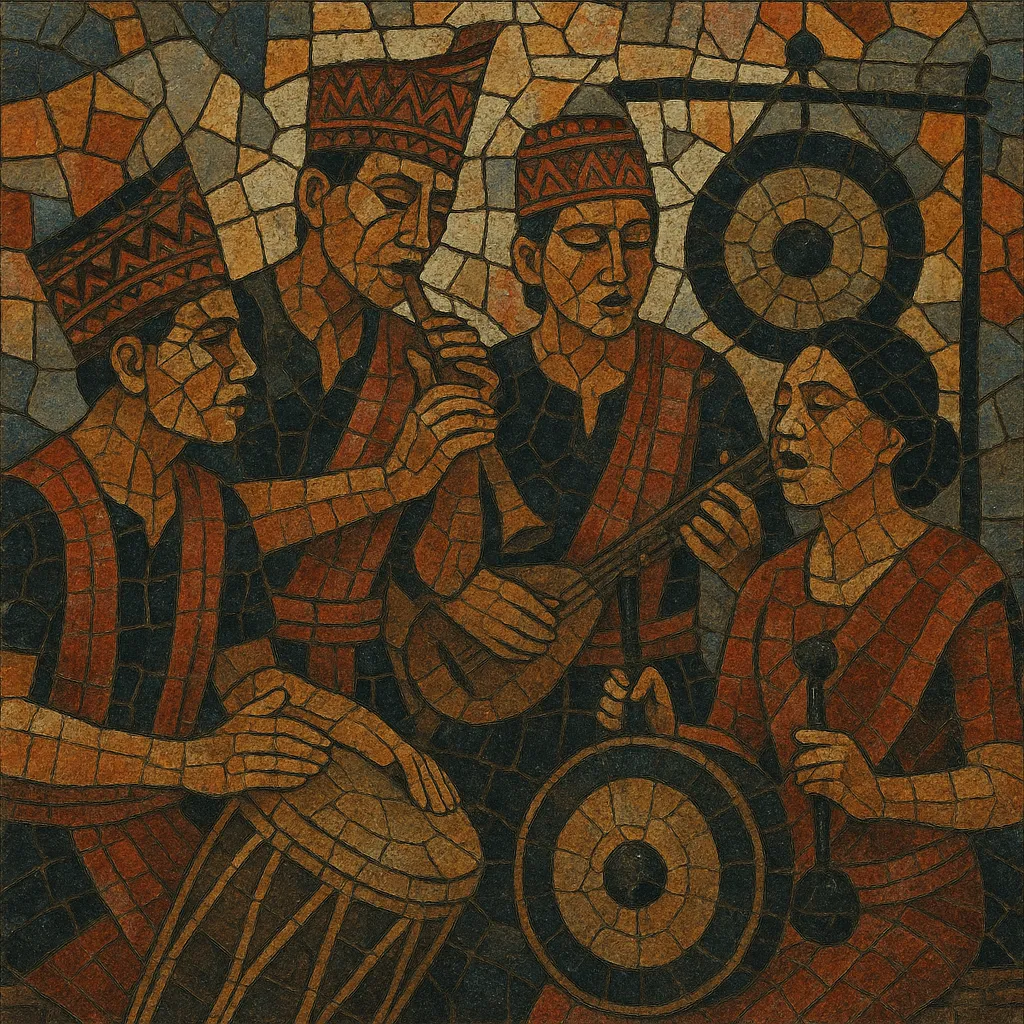
Core traditions include ritual drum–gong ensembles (e.g., Toba Batak gondang sabangunan; Mandailing gordang sambilan; Karo gendang lima sedalanen), reed and flute melodies (sarune bolon, tulila), and plucked-lute repertoires (hasapi in the Toba gondang hasapi ensemble). The music is typically cyclic and interlocking, built on layered gong timelines, call-and-response vocal lines, and heterophonic elaboration rather than Western harmony.
Performances accompany life-cycle rituals (weddings, funerals, communal feasts), dance (tortor), and storytelling. Since the late 19th century, Christian hymnody and later amplified instruments have blended with indigenous practices, producing a continuum from sacred-ritual music to modern stage and recording styles.
History
The Batak musical heritage predates colonization and was embedded in adat (customary law) and ritual life. Distinct sub-ethnic ensembles emerged: Toba Batak developed gondang sabangunan (taganing and gordang drums, ogung gongs, sarune bolon, hesek idiophones), Mandailing cultivated the gordang sambilan (nine graduated drums), and Karo established the gendang lima sedalanen. These ensembles marked ritual time, mediated communication with ancestors, and accompanied the tortor dance.
From the mid–late 1800s, Protestant mission activity and schooling introduced hymnody, choral singing, and staff notation. Indigenous melody types and language fused with four-part choral textures, creating a robust Batak hymn tradition that coexisted with (and sometimes reframed) ritual repertoires.
Radio, cassettes, and urban migration catalyzed song-based formats. Composers such as Nahum Situmorang authored enduring Batak-language songs. Plucked-lute (hasapi) idioms moved from domestic and semi-ritual contexts into salons and studios, while ceremonial gondang remained central at community events.
Amplified hasapi, keyboards, drum kits, and studio production reshaped performance practice, as bands and vocal trios popularized Batak repertoires locally and in the diaspora. Arrangers such as Viky Sianipar brought orchestration, world-fusion colors, and contemporary harmony to traditional melodies, while ritual ensembles continue in parallel for weddings, funerals, and cultural festivals around Lake Toba and beyond.