Genres
Artists
Albums
Make Music
Sign in
Sign in
Artists
No Wave
Artists
No Wave
James White And The Blacks
2004–2023
·
3 albums
Listen
1
/5
Genres
Post-Disco
Post-disco emerged at the turn of the 1980s as club music adapted to the backlash against late-1970s disco. It kept disco’s dance-floor focus but pared down the orchestral lushness, replacing strings and large horn sections with drum machines, synthesizers, and tighter funk- and soul-informed grooves. The style favors mid-tempo, bass-forward rhythms (often around 105–120 BPM), crisp handclaps, syncopated rhythm guitar, and glossy keyboard textures. It served as a bridge between classic disco and later developments like boogie, electro-funk, house, freestyle, and dance-pop, defining the sonic palette of early 1980s urban contemporary R&B.
Discover
Listen
Mutant Disco
Mutant disco is a hybrid, downtown New York dance sound that splices the four‑on‑the‑floor pulse of disco with the angularity of post‑punk, the abrasiveness of no wave, and the groove science of funk and dub. Coined and popularized around ZE Records’ 1981 compilation “Mutant Disco: A Subtle Discolation of the Norm,” it embraces irony, art‑school playfulness, and cosmopolitan polyrhythms. Expect rubbery basslines, clipped guitar scratches, hand percussion, early synths, and talk‑sung or theatrical vocals that subvert disco’s glossy hedonism while keeping its dancefloor logic intact. The style is loose by design—less a rigid formula than a creative ethos that remixes disco with downtown experimentalism, Caribbean/Latin flavors, and DIY punk energy.
Discover
Listen
No Wave
No wave is a late-1970s New York City underground movement that rejected the orthodoxies of punk, rock, and pop in favor of abrasive sonics, anti-virtuosic playing, and an art-forward, confrontational attitude. Its sound ranges from skronky, free-jazz-influenced sax blasts and scraping, detuned guitars to rigid, mechanical rhythms and stark, minimal song structures. Lyrics are often spoken, shouted, or declaimed in a deadpan or feral style, addressing urban anxiety, alienation, and cultural decay. More than a fixed style, no wave was a short, intense rupture: a scene of musicians and artists who intentionally dismantled conventional harmony, groove, and song form to foreground texture, noise, and performance as critique.
Discover
Listen
Post-Punk
Post-punk is a broadly experimental strain of rock that emerged in the late 1970s as artists sought to push beyond the speed, simplicity, and orthodoxy of first-wave punk. It typically features angular, bass-forward grooves; jagged or minimal guitar lines; stark, spacious production; and an openness to dub, funk, electronic, and avant-garde ideas. Lyrics often examine alienation, urban decay, politics, and the inner life with artful or abstract delivery. A studio-as-instrument approach, emphasis on rhythm section interplay, and an appetite for non-rock textures (tape effects, drum machines, found sound, synths) distinguish the style. The result can be danceable yet tense, cerebral yet visceral, and emotionally restrained yet intensely expressive.
Discover
Listen
Rock
Rock is a broad family of popular music centered on amplified instruments, a strong backbeat, and song forms that foreground riffs, choruses, and anthemic hooks. Emerging from mid‑20th‑century American styles like rhythm & blues, country, and gospel-inflected rock and roll, rock quickly expanded in scope—absorbing folk, blues, and psychedelic ideas—while shaping global youth culture. Core sonic markers include electric guitar (often overdriven), electric bass, drum kit emphasizing beats 2 and 4, and emotive lead vocals. Rock songs commonly use verse–chorus structures, blues-derived harmony, and memorable melodic motifs, ranging from intimate ballads to high‑energy, stadium‑sized performances.
Discover
Listen
Jazz
Jazz is an improvisation-centered music tradition that emerged from African American communities in the early 20th century. It blends blues feeling, ragtime syncopation, European harmonic practice, and brass band instrumentation into a flexible, conversational art. Defining features include swing rhythm (a triplet-based pulse), call-and-response phrasing, blue notes, and extended harmonies built on 7ths, 9ths, 11ths, and 13ths. Jazz is as much a way of making music—spontaneous interaction, variation, and personal sound—as it is a set of forms and tunes. Across its history, jazz has continually hybridized, from New Orleans ensembles and big-band swing to bebop, cool and hard bop, modal and free jazz, fusion, and contemporary cross-genre experiments. Its influence permeates global popular and art music.
Discover
Listen
Albums
2023
1
/5
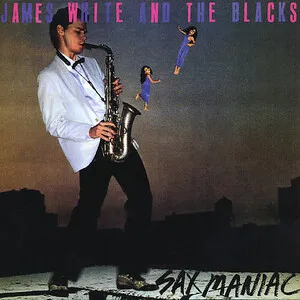
Sax Maniac
James White and The Blacks
No Wave
2021
1
/5
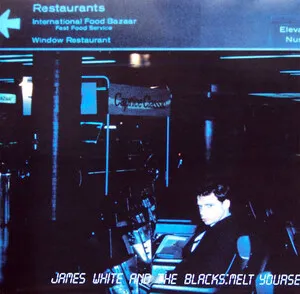
Melt Yourself Down
James White and The Blacks
Mutant Disco
Jazz
No Wave
2004
2
/5
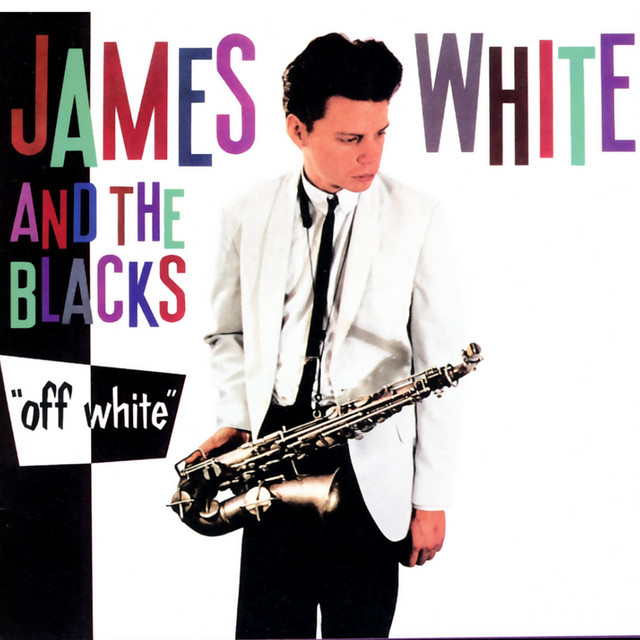
Off White
James White and The Blacks
No Wave
Similar artists
2
/5
Lizzy Mercier Descloux
No Wave
Disco
Mutant Disco
1
/5
Various Artists
Afro-Funk
Alternative Rock
Ambient
3
/5
ESG
No Wave
Post-Disco
Post-Punk
3
/5
Sonic Youth
Alternative Rock
Noise Rock
Post-Punk
3
/5
Suicide
Synth Punk
No Wave
Experimental Rock
3
/5
Swans
Experimental Rock
Post-Rock
No Wave
1
/5
The Contortions
Avant-Garde
Noise Rock
Post-Disco
1
/5
Ut
No Wave
Noise Rock
Post-Punk
3
/5
Teena Marie
Post-Disco
Flint Sound
Minneapolis Sound
3
/5
black midi
Windmill Scene
Math Rock
Noise Rock
Download our mobile app
Get the Melodigging app and start digging for new genres on the go
Download on the App Store
Get it on Google Play
© 2026 Melodigging
Give feedback
Legal
Melodding was created as a tribute to
Every Noise at Once
, which inspired us to help curious minds keep digging into music's ever-evolving genres.