Genres
Artists
Albums
Make Music
Sign in
Sign in
Artists
Krautrock
Artists
Krautrock
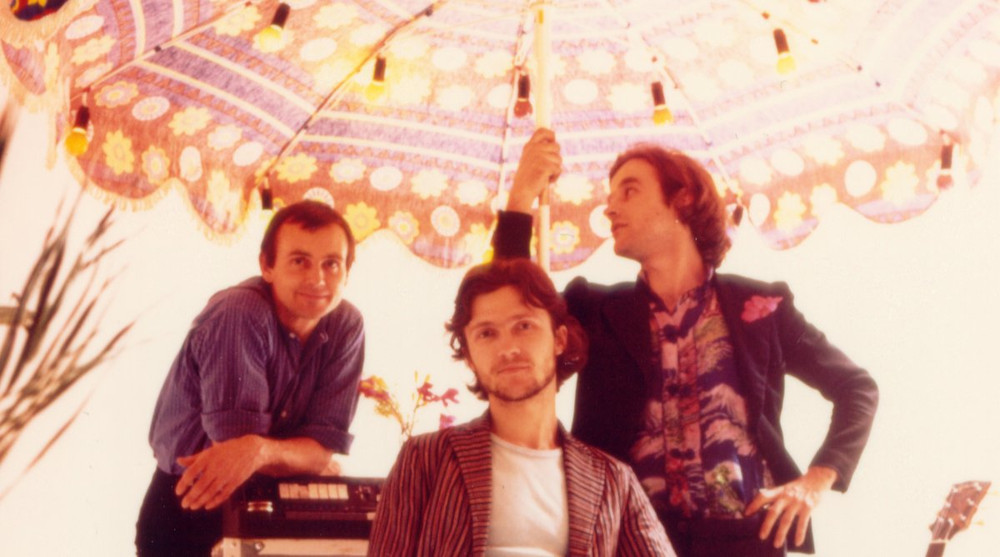
Harmonia
2015
·
3 albums
Listen
2
/5
Genres
Berlin School
Berlin School is a strand of German electronic music built around long, hypnotic sequences, evolving textures, and exploratory improvisation. It foregrounds analog synthesizers, step‑sequencers, and tape delays to create spacious, slowly shifting soundscapes. Emerging from the early 1970s Berlin underground, the style favors extended forms over song structures, minimal harmonic movement anchored by pedal points, and modal or scalar lead lines that weave over pulsing arpeggiations. The result balances mechanistic momentum with cosmic ambience, inviting deep listening and trance-like immersion.
Discover
Listen
Progressive Electronic
Progressive electronic is a 1970s-born branch of electronic music that applies the exploratory ethos of progressive rock to synthesizers, sequencers, and studio-as-instrument techniques. It favors long-form structures, evolving textures, and thematic development over verse–chorus song forms. Hallmarks include analog synth timbres (Moog, ARP), step-sequenced ostinatos, spacious tape and plate reverbs, and gradual modulation of filters and envelopes. The music often embraces minimalistic repetition, cosmic and cinematic atmospheres, and a sense of narrative journey, connecting it to krautrock’s experimentalism and early ambient’s focus on tone and space.
Discover
Listen
Düsseldorf School
The Düsseldorf School is a strand of German electronic and experimental rock that emerged in the early 1970s around the city of Düsseldorf. It is characterized by a minimalist, machine-precise “motorik” pulse, sleek modernist aesthetics, and a cool, detached approach to vocals and presentation. Artists in this school favored repetition, linear song structures, and the use of synthesizers, drum machines, and sequencers to evoke the sounds of contemporary technology, transit, and urban life. While often grouped within Krautrock, the Düsseldorf sound is more urban, pop-leaning, and design-conscious than the cosmic, improvisatory Berlin School, directly laying foundations for synth-pop, electro, techno, EBM, and much of electronic pop thereafter.
Discover
Listen
Krautrock
Krautrock is an experimental form of rock that emerged in late-1960s West Germany, characterized by hypnotic repetition, long-form structures, and a forward-looking embrace of electronics and studio experimentation. It typically features a steady, driving 4/4 “motorik” beat, circular bass ostinatos, sparse harmonic movement, and textural layering that draws from minimalism, free improvisation, and avant-garde composition. Rather than virtuosic solos, the emphasis is on collective groove, trance-inducing momentum, and timbral exploration. The sound ranges from raw, percussive jams to spacious, cosmic electronics, often eschewing conventional Anglo-American blues forms in favor of a distinctly European modernist aesthetic.
Discover
Listen
Space Rock
Space rock is a psychedelic branch of rock characterized by long-form, hypnotic grooves, swirling guitars awash in delay and reverb, and prominent analog synthesizers that evoke cosmic or interstellar imagery. The music often emphasizes texture and atmosphere over conventional song structures, creating expansive soundscapes that feel weightless and otherworldly. Emerging in late-1960s Britain from the overlap of psychedelic rock, early progressive rock, and experimental electronics, space rock frequently employs motorik-leaning rhythms, modal or drone-based harmony, and science-fiction themes. Extended improvisations, phased and fuzz-drenched timbres, and tape or echo effects are common, encouraging a sense of forward drift and cosmic exploration.
Discover
Listen
Progressive Rock
Progressive rock is a rock subgenre that expands the genre’s formal, harmonic, and conceptual boundaries. It favors long-form compositions, intricate arrangements, and virtuosic musicianship, often drawing on Western classical, jazz, folk, and psychedelic idioms. Typical hallmarks include multi-part suites, shifting time signatures, extended instrumental passages, recurring motifs, and concept albums that present unified themes or narratives. The sound palette commonly features electric guitar, bass, and drums alongside an array of keyboards (Hammond organ, Mellotron, Moog/ARP synthesizers, piano), woodwinds or brass, and occasional orchestral additions. Lyrics often explore science fiction, mythology, philosophy, social commentary, and introspective themes.
Discover
Listen
Supergroup
Supergroup is not a strictly sonic genre but a band formation in which already famous musicians from established acts join forces to create a new project. Because its members bring distinct musical identities, a supergroup’s sound is typically a hybrid of its contributors’ home genres (e.g., rock, folk rock, blues rock, hard rock, pop, or country). Hallmarks often include star-forward vocals, showpiece instrumental passages, polished songwriting, and production that emphasizes individual signatures while aiming for arena-scale accessibility. The appeal is both musical and cultural: the promise of chemistry between noteworthy artists, the intertextual play with their prior catalogs, and the event-like feeling of collaboration.
Discover
Listen
Avant-Garde
Avant-garde music is an umbrella term for boundary-pushing practices that challenge prevailing norms of harmony, rhythm, timbre, form, and performance. It privileges experimentation, conceptual rigor, and a willingness to reframe what counts as music at all. Historically tied to early 20th‑century artistic modernism, avant-garde music introduced atonality, the emancipation of noise, and new forms of notation and process. It embraces indeterminacy, extended techniques, electronics, spatialization, and multimedia performance, treating sound as material to be sculpted, questioned, and reinvented.
Discover
Listen
Electronic
Electronic is a broad umbrella genre defined by the primary use of electronically generated or electronically processed sound. It encompasses music made with synthesizers, drum machines, samplers, computers, and studio/tape techniques, as well as electroacoustic manipulation of recorded or synthetic sources. The genre ranges from academic and experimental traditions to popular and dance-oriented forms. While its sonic palette is rooted in electricity and circuitry, its aesthetics span minimal and textural explorations, structured song forms, and beat-driven club permutations. Electronic emphasizes sound design, timbre, and studio-as-instrument practices as much as melody and harmony.
Discover
Listen
Show all 9 genres
Albums
2015
2
/5
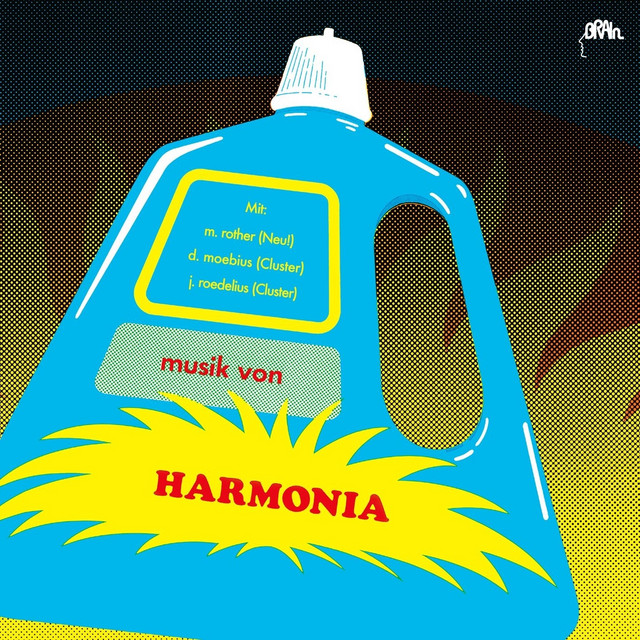
Musik von Harmonia
Harmonia
Berlin School
2015
1
/5
Musik von Harmonia
Harmonia
Düsseldorf School
Krautrock
2015
1
/5
Deluxe
Harmonia
Düsseldorf School
Krautrock
Progressive Electronic
Similar artists
2
/5
Manuel Göttsching
Krautrock
Berlin School
Progressive Electronic
3
/5
Tangerine Dream
Berlin School
Progressive Electronic
Ambient
2
/5
Klaus Schulze
Berlin School
Ambient
Electronic
2
/5
Cluster
Krautrock
Ambient
Düsseldorf School
3
/5
Ashra
Berlin School
Ambient
Krautrock
2
/5
Moebius
Krautrock
Ambient
Avant-Garde
1
/5
Conrad Schnitzler
Düsseldorf School
Avant-Garde
Berlin School
2
/5
NEU!
Krautrock
Ambient
Düsseldorf School
2
/5
Agitation Free
Krautrock
Avant-Garde
Progressive Rock
2
/5
Amon Düül II
Krautrock
Progressive Rock
Rock
Download our mobile app
Get the Melodigging app and start digging for new genres on the go
Download on the App Store
Get it on Google Play
© 2026 Melodigging
Give feedback
Legal
Melodding was created as a tribute to
Every Noise at Once
, which inspired us to help curious minds keep digging into music's ever-evolving genres.