Genres
Artists
Albums
Make Music
Sign in
Sign in
Artists
Classical
Artists
Classical
Chorus of the Royal Opera House, Covent Garden
1968–1989
·
2 albums
Listen
2
/5
Genres
Romantische Oper
Romantische Oper (Romantic Opera) is an early nineteenth‑century German operatic genre that blends folkloric subject matter, medieval or fantastic settings, and a heightened orchestral role with the number‑opera practices inherited from the late Classical era. Rather than growing directly out of the eighteenth‑century Singspiel, it was decisively shaped by the French opéra comique of the Revolutionary and Napoleonic eras. Characteristic are reminiscence motifs—recognizable musical phrases tied to characters, ideas, or places—that recur across a work to bind drama and music, prefiguring later leitmotivic techniques. Orchestration becomes vivid and dramaturgical (hunting horns, nature painting, offstage ensembles), while choruses and folk‑like tunes reinforce themes of the supernatural, heroism, nationhood, and the poetic power of nature. Typical libretti draw on German folk tales, legends, and medieval romance; musically, the style favors singable, diatonic melodies colored by chromatic harmony and striking timbral effects to depict magic and terror alongside lyric intimacy.
Discover
Listen
Opéra Comique
Opéra comique is a French operatic genre defined by the presence of spoken dialogue between musical numbers rather than by comic subject matter. Early works used popular tunes (vaudevilles) with newly written words, later evolving into fully original scores with arias, ensembles, finales, and orchestral writing. Originating in Paris fairground theatres, the genre developed at the Opéra-Comique institution into a flexible form that could encompass light, humorous plots as well as serious and even tragic stories. By the 19th century it ranged from graceful, classical elegance to full Romantic drama—so much so that a tragedy like Bizet’s Carmen is still called an opéra comique because it originally included spoken dialogue. Typical features include an overture, clear French prosody, memorable lyrical numbers (romances, couplets), conversational pacing, and finales that integrate multiple characters on stage. Harmony and orchestration track the broader shift from late Baroque/Classical clarity to Romantic color and intensity.
Discover
Listen
Opera Chorus
Opera chorus refers to the tradition of writing and performing choral numbers within operas, typically for SATB (soprano, alto, tenor, bass) chorus with orchestral accompaniment. It functions dramatically as a collective character—crowds, soldiers, villagers, priests—commenting on or participating in the action, from celebratory festival scenes to prayerful laments and political rallying cries. Stylistically, opera choruses span homophonic, hymn-like textures for clarity and power, to contrapuntal and fugal passages for excitement and propulsion. They often feature memorable refrains, rhythmic unisons, and antiphonal exchanges with soloists or offstage ensembles. The sound world ranges from intimate, a cappella supplication to massive, brass-led climaxes, and it is shaped by the operatic language—Italian, French, German, Russian—through text-driven phrasing, prosody, and articulation.
Discover
Listen
Opera
Opera is a large-scale theatrical genre that combines music, drama, and visual spectacle, in which the story is primarily conveyed through singing accompanied by an orchestra. It unites solo voices, ensembles, and chorus with staging, costumes, and often dance to create a total artwork. Emerging in late Renaissance Italy and flourishing in the Baroque era, opera developed signature forms such as recitative (speech-like singing that advances the plot) and aria (lyrical numbers that explore character and emotion). Over the centuries it evolved diverse national styles—Italian bel canto, French grand opéra, German music drama—while continually experimenting with orchestration, harmony, narrative structure, and stagecraft.
Discover
Listen
Classical
Classical music is the notated art-music tradition of Europe and its global descendants, characterized by durable forms, carefully codified harmony and counterpoint, and a literate score-based practice. The term “classical” can refer broadly to the entire Western art-music lineage from the Medieval era to today, not just the Classical period (c. 1750s–1820s). It privileges long-form structures (such as symphonies, sonatas, concertos, masses, and operas), functional or modal harmony, thematic development, and timbral nuance across ensembles ranging from solo instruments to full orchestras and choirs. Across centuries, the style evolved from chant and modal polyphony to tonal harmony, and later to post-tonal idioms, while maintaining a shared emphasis on written notation, performance practice, and craft.
Discover
Listen
Albums
1989
1
/5
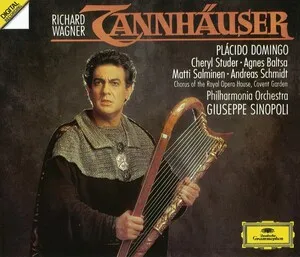
Tannhäuser
Richard Wagner
Romantische Oper
1968
2
/5
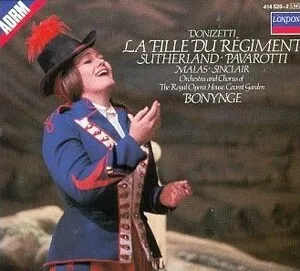
La fille du régiment
Gaetano Donizetti
Opéra Comique
Similar artists
3
/5
John Alldis Choir
Classical
Opera
Opera Chorus
4
/5
Berliner Philharmoniker
Classical
Romantic Classical
Romanticism
4
/5
Philharmonia Orchestra
Classical
Opera
Choral
4
/5
Claudio Abbado
Classical
Concerto
Impressionism
3
/5
Plácido Domingo
Classical
Opera
Opéra Comique
3
/5
Sir Georg Solti
Classical
Romantic Classical
Romanticism
2
/5
Agnes Baltsa
Classical
Requiem
Opera
2
/5
Marek Janowski
Classical
Opera
Opéra Comique
3
/5
Coro Del Teatro Alla Scala Di Milano
Classical
Opera
Opera Chorus
3
/5
The London Opera Chorus
Classical
Opera
Opera Chorus
Download our mobile app
Get the Melodigging app and start digging for new genres on the go
Download on the App Store
Get it on Google Play
© 2026 Melodigging
Give feedback
Legal
Melodding was created as a tribute to
Every Noise at Once
, which inspired us to help curious minds keep digging into music's ever-evolving genres.