Genres
Make Music
Artists
Albums
Challenges
Sign in
Sign in
Albums
By Meshuggah
Albums
By Meshuggah
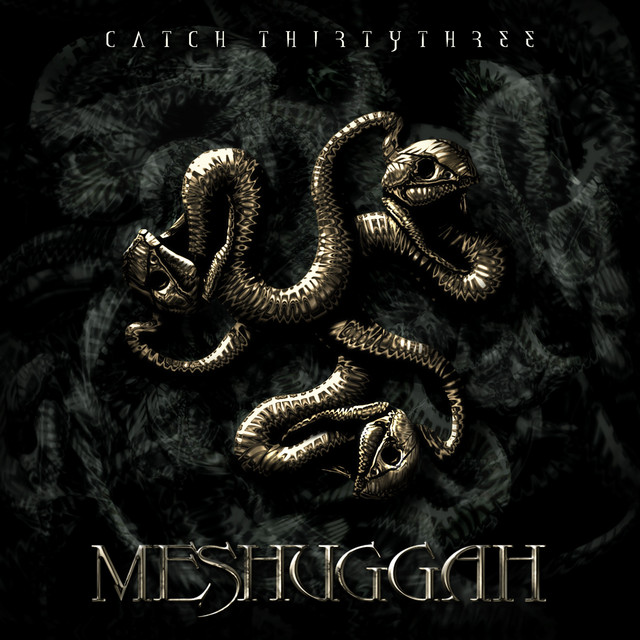
Catch Thirty Three
May 17, 2005
Listen
3
/5
Genres
Djent
Djent is a substyle of progressive metal defined by ultra-tight, low‑tuned, palm‑muted guitar riffs that create a percussive, onomatopoeic "djent" sound. It favors extended‑range instruments (7–9 strings), precise rhythmic subdivision, and a highly articulate, modern production aesthetic. Sonically, djent emphasizes polyrhythms, syncopation, and metric modulation, often pairing dense, chugging grooves with ambient clean guitars, spacious synth pads, and melodic choruses. Vocals range from harsh screams and growls to soaring cleans, while drums and bass lock tightly to the rhythmic grid, accenting the guitar’s staccato patterns. Although the term took off online in the late 2000s, the core rhythmic and timbral blueprint traces to the 1990s work of Swedish band Meshuggah.
Discover
Listen
Technical Groove Metal
Technical groove metal fuses the locked-in, head-nodding heft of groove metal with the intricate rhythmic thinking and precision of technical and progressive metal. Expect down-tuned, percussive riffing that emphasizes syncopation and polymeter, tight double-kick patterns, and sharply articulated accents that make complex ideas still feel visceral and body-moving. The guitars and drums often lock into repeating rhythmic cells that shift against the barline, creating a hypnotic push-and-pull that balances complexity with groove. Harmonically, it favors dissonant clusters, modal minor colors, and chromatic motion, while vocals tend toward harsh mid-to-low screams or barks. Production is typically dry, punchy, and surgical, highlighting rhythmic clarity and palm-muted impact.
Discover
Listen
Progressive Groove Metal
Progressive groove metal fuses the weighty, syncopated riffing of groove metal with the ambitious song forms, odd meters, and thematic depth of progressive metal. It typically features down‑tuned 6–8‑string guitars, palm‑muted chugs interlocking with polyrhythmic drum patterns, and bass lines that emphasize grit and articulation over sheer speed. Compared with straight groove metal, the progressive strain favors shifting time signatures, polymeter (e.g., 3:2, 5:4 overlays), dynamic contrasts, and longer arrangements that build narratives. Vocals range from harsh growls and barks to clean, soaring passages, while lyrics often address big‑picture topics—environmentalism, philosophy, psychology, and social critique—alongside personal struggle.
Discover
Listen
Technical Thrash
Technical thrash is a virtuosic, hyper-precise offshoot of thrash metal that emphasizes complex song structures, fast tempo shifts, and advanced musicianship. It fuses the speed and aggression of classic thrash with the rhythmic intricacy and harmonic adventurousness of progressive music and jazz-influenced playing. Expect staccato, palm‑muted riffing in odd meters, polymetric drum work, extended instrumental passages, and lead guitar work that blends neoclassical runs with outside-note phrasing. Lyrically, technical thrash often explores science fiction, technology, psychology, and social critique, matching its cerebral musical approach with equally concept-driven themes.
Discover
Listen
Heavy Metal
Heavy metal is a loud, guitar-driven style of rock defined by heavily distorted riffs, thunderous drums, and powerful vocals. Its musical language emphasizes minor modes, modal (Aeolian, Phrygian) riffing, and energy over groove, often featuring virtuosic guitar solos and dramatic dynamic contrasts. Emerging from late-1960s blues rock and psychedelic experimentation, heavy metal codified a darker, heavier sound with bands like Black Sabbath, Deep Purple, and Led Zeppelin. The genre values weight, intensity, and grandeur—whether through plodding, doom-laden tempos or galloping, high-energy rhythms—paired with themes that range from personal struggle and social critique to fantasy, mythology, and the occult.
Discover
Listen
Rock
Rock is a broad family of popular music centered on amplified instruments, a strong backbeat, and song forms that foreground riffs, choruses, and anthemic hooks. Emerging from mid‑20th‑century American styles like rhythm & blues, country, and gospel-inflected rock and roll, rock quickly expanded in scope—absorbing folk, blues, and psychedelic ideas—while shaping global youth culture. Core sonic markers include electric guitar (often overdriven), electric bass, drum kit emphasizing beats 2 and 4, and emotive lead vocals. Rock songs commonly use verse–chorus structures, blues-derived harmony, and memorable melodic motifs, ranging from intimate ballads to high‑energy, stadium‑sized performances.
Discover
Listen
Similar albums
2002
Nothing
Meshuggah
2002
Nothing
Meshuggah
2005
Catch Thirty Three
Meshuggah
2022
Immutable
Meshuggah
2012
Koloss
Meshuggah
1998
Chaosphere (25th Anniversary 2023 Remastered Edition)
Meshuggah
2014
The Ophidian Trek
Meshuggah
2011
Unto the Locust (Special Edition)
Machine Head
2016
Is There Anybody Out There?
Machine Head
2012
Koloss
Meshuggah
Download our mobile app
Get the Melodigging app and start digging for new genres on the go
Download on the App Store
Get it on Google Play
© 2026 Melodigging
Give feedback
Legal
Melodding was created as a tribute to
Every Noise at Once
, which inspired us to help curious minds keep digging into music's ever-evolving genres.