Your digging level
Description
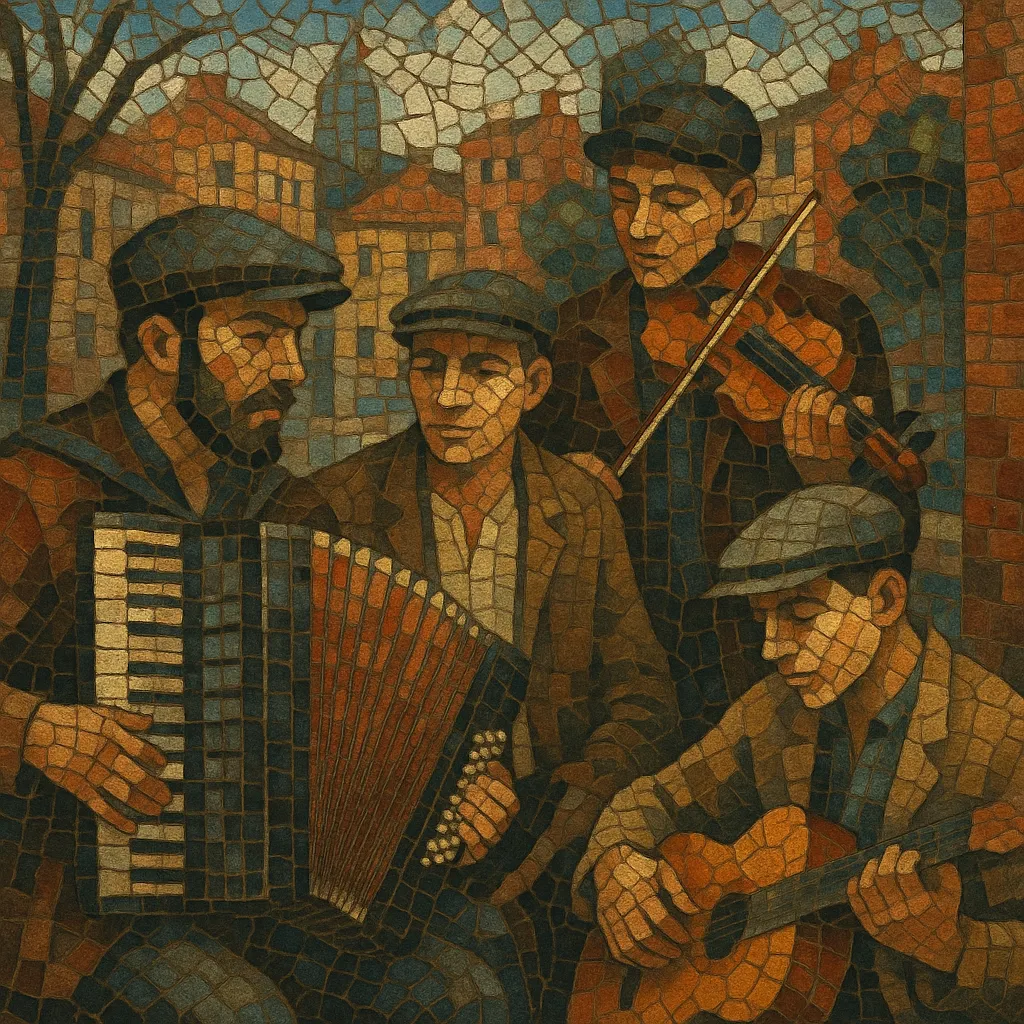
Warsaw city folk is an urban folk-song tradition from Poland’s capital that blends street ballad storytelling with danceable, old-time popular forms. It grew out of working‑class courtyards, markets, and small taverns, where songs were sung collectively and accompanied by portable instruments.
Musically it mixes simple, sing‑along melodies and I–IV–V (sometimes ii–V–I) harmonies with rhythms drawn from waltz, polka, and tango. Accordions, banjos, fiddles, guitars, clarinets and light percussion are common, with refrains built for audience call‑and‑response. Lyrically it uses Warsaw slang and vivid vignettes about love, hustle, neighborhood pride, and street wit—the archetypal “warszawski cwaniak” (savvy city rogue).
History
Warsaw city folk emerged from the multicultural streets of Warsaw, where Polish, Jewish, and other Central European communities interacted. Street vendors, courtyard gatherings, and small cafés fostered a repertoire of topical ballads and comic couplets set to portable, familiar dance rhythms.
The style crystallized between the World Wars. Popular dance forms like waltz, polka, and the era’s tango were adopted for local ballads using Warsaw slang and neighborhood stories. Songs circulated orally, via broadsides, and in intimate cabarets and garden cafés, becoming a musical emblem of the capital’s working‑class districts.
World War II devastated Warsaw’s musical life and communities. After the war, despite censorship and shifting cultural policies, the urban street‑song tradition survived in memory, informal gatherings, and on radio. Veteran singers and new ensembles began to preserve prewar repertoire.
Groups such as Kapela Czerniakowska, Kapela ze Chmielnej, and Kapela Praska revived courtyard songs with accordions, banjo, and fiddles, turning living street culture into a recognized heritage. Singers like Stanisław Grzesiuk—writer, raconteur, and performer—became icons of the Warsaw ballad style.
A new wave of artists has refreshed the canon. Projects like Szwagierkolaska and Projekt Warszawiak reworked classics with modern grooves, while Warsaw‑based acoustic ensembles (e.g., Warszawskie Combo Taneczne) emphasize historically rooted instrumentation. Festivals, neighborhood sings, and community archives continue to keep the repertoire alive.
Use portable street instruments: accordion (lead harmony and vamping), banjo or acoustic guitar (rhythmic strum), violin or clarinet (melodic fills), and simple percussion (washboard, spoons, small drum). Keep textures lean so vocals and lyrics remain central.
Alternate among 3/4 waltz lilt, brisk 2/4 polka bounce, and relaxed 4/4 tango/habanera sway. Favor straightforward, steady grooves that invite clapping and group singing. Short instrumental turnarounds connect sung verses and choruses.
Rely on diatonic I–IV–V progressions with occasional ii–V–I or secondary dominants for color. Melodies should be catchy, stepwise, and limited in range, with memorable refrains designed for audience call‑and‑response.
Write narrative verses in plain, colloquial language (sprinkle in Warsaw slang if appropriate), depicting neighborhood life, love affairs, scrapes with the law, and local pride. Balance humor and sentiment; the singer should sound like a street storyteller—confident, warm, and slightly cheeky.
Structure songs as verse–refrain with a strong sing‑along chorus and a final reprise. Invite audience participation on refrains, use brief spoken asides, and spotlight instrumental fills between vocal lines. Keep tempos danceable and the overall mood communal and direct.