Your digging level
Description
Folklor miejski is the Polish tradition of urban street song and backyard balladry that crystallized with the rapid growth of cities like Warsaw, Łódź, and Kraków. It blends the vernacular tone of working‑class neighborhoods with popular dance forms of the day, producing songs that are humorous and bittersweet, romantic and rough‑edged, often sung in local slang (gwara) and full of vivid city imagery.
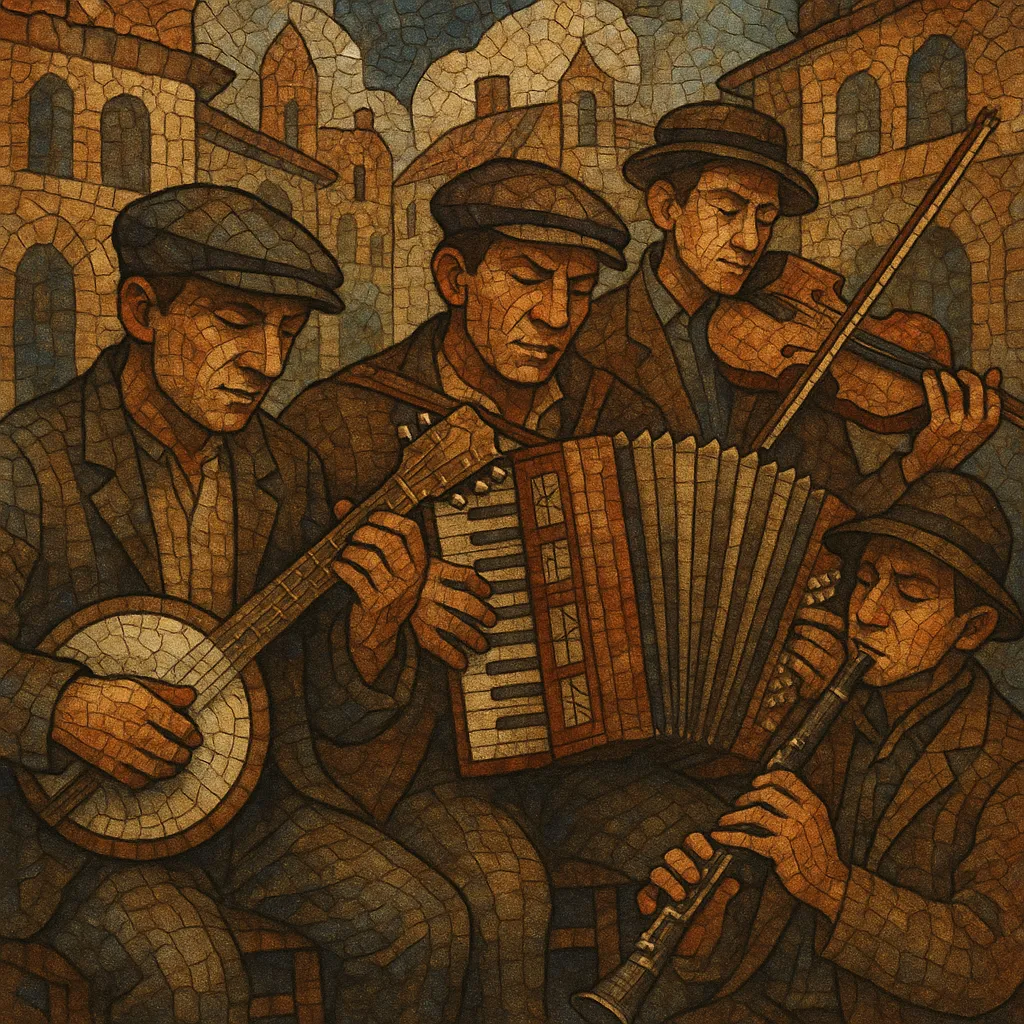
Stylistically it draws on tangos, polkas, waltzes, foxtrots, and marches, carried by portable instruments such as accordion, guitar or banjo, violin, and clarinet. Choruses are crafted for communal singing, and melodies are direct and memorable. The result is an urban folk music that feels both theatrical and intimate—half cabaret, half courtyard sing‑along.
History
With industrialization and migration to fast‑growing Polish cities, itinerant singers, street vendors, and courtyard ensembles began shaping a distinct body of urban songs. These pieces adapted rural Polish folk idioms to city life, using plainspoken storytelling, local slang, and portable instrumentation (accordion, fiddle, guitar/banjo). Early influences included klezmer bands and Central European salon/cabaret styles.
The interwar period in Warsaw and other cities brought a flowering of urban song in cafés, theaters, and cabarets. Tango and foxtrot rhythms entered the style, while music‑hall and kabarett stages gave it polish and visibility. Stars of the time popularized sentimental street ballads alongside witty, topical numbers, and many songs passed seamlessly between courtyards, dance halls, and the radio.
During WWII, street and backyard singing preserved community spirit and commentary. After the war, performers such as Stanisław Grzesiuk became emblematic, preserving prewar Warsaw repertoire and language while adding new songs about reconstruction and everyday hardship. Courtyard ensembles kept the participatory, communal feel alive.
From the 1970s, dedicated ensembles and collectors revived archival repertoires, while festivals and local initiatives helped anchor the tradition in neighborhood identity. Contemporary groups continue to perform classic songs, sometimes adding folk‑rock or theatrical elements, but retaining the core hallmarks: sing‑along refrains, danceable meters, and street‑level storytelling.
How to make a track in this genre
Use portable, street‑friendly instruments: accordion as the harmonic backbone, guitar or banjo for rhythm, violin or clarinet for melodic fills, and light percussion (spoons, frame drum, small snare) when available. Keep textures lean so lyrics remain clear and the chorus projects.
Alternate among danceable meters common to the style: 2/4 polka bounce, 3/4 waltz sway, and 4/4 tango or foxtrot pulse. Verses should be concise and narrative; build to a memorable, communal chorus. Call‑and‑response or shouted interjections work well in courtyards and pubs.
Favor diatonic progressions with quick turns: I–IV–V for polka/waltz numbers; for tangos, use minor keys with borrowed chords and chromatic approach tones (e.g., i–iv–V, occasional bII or diminished passing chords). Melodies should be singable, stepwise, and shaped to land emphatically on refrain hooks.
Write vivid street scenes: vendors’ cries, tenement life, love and jealousy, neighborhood pride, and wry humor about hardship. Sprinkle in local slang (gwara) and playful rhymes. Performance should be extroverted and conversational—half‑sung, half‑told—inviting the audience to join the refrain.
Open with a short instrumental vamp to set the dance feel, then alternate verse–chorus with a brief instrumental turnaround (accordion or clarinet line). Keep tempos moderate to encourage group singing, and allow slight rubato at cadences to highlight punchlines or sentimental lines.