Your digging level
Description
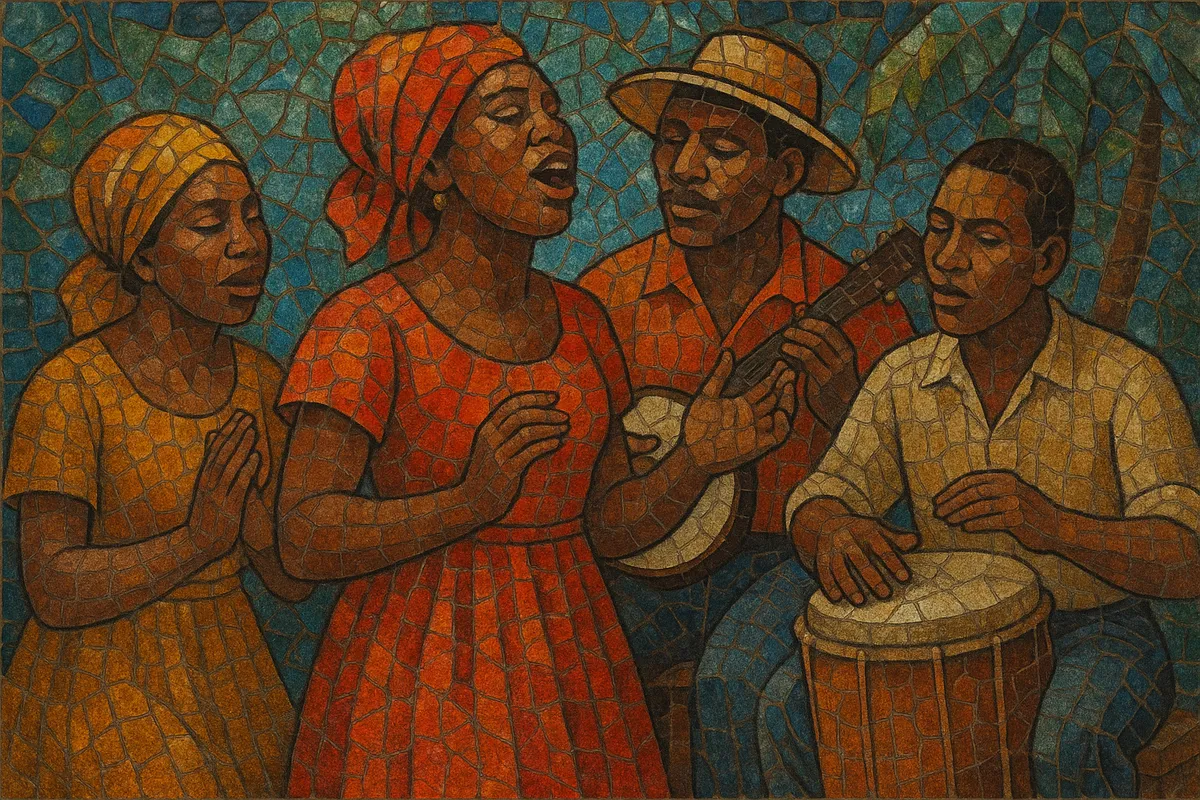
Virgin Islander cariso is a women’s folk-song tradition from the Virgin Islands, performed to the beat of one or two drums. Songs are led by a soloist and answered by a chorus, creating a vibrant call-and-response texture.
Historically topical and communal, cariso pieces commemorate local events, celebrate community life, and sometimes satirize social issues. The music’s African diasporic roots are evident in its polyrhythms, antiphonal form, and reliance on percussion rather than harmonic instruments. Performances often occur at community gatherings, festivals, and heritage events, where the songs function as living oral history.
History
Cariso developed among Afro-Caribbean communities in the Virgin Islands during the colonial era (then the Danish West Indies, later the U.S. Virgin Islands). Enslaved and later free women maintained a repertoire of topical and ceremonial songs that preserved stories, values, and memories. The tradition’s antiphonal (call-and-response) form, drum accompaniment, and improvisatory leadership reflect strong continuities with West African musical practice.
Cariso functioned as a vehicle for communal commentary and memory. A lead singer (often an elder woman) would improvise or recall verses about births, marriages, labor, disputes, natural disasters, and political change. The chorus of women would answer, reinforcing collective identity. Drums provided steady, danceable rhythms that supported procession, dance steps, and audience participation.
Through the 20th century, changing social life and the rise of popular styles (such as quelbe/scratch-band music and calypso) reduced the everyday contexts in which cariso was heard. However, cultural advocates, community ensembles, and schools helped maintain the tradition at festivals, folk heritage programs, and educational settings. Today, cariso endures as a symbol of Virgin Islander heritage—especially women’s custodianship of oral history and song.
Cariso typically uses one or two drums, steady duple or compound meters, and responsorial textures. Verses are modular and can be lengthened with additional topical lines. The performance emphasizes text delivery, clear rhythmic articulation, and collective participation over harmonic complexity or instrumental display.