Your digging level
Description
Vintage rockabilly is the earliest, raw form of rockabilly as it was recorded in the 1950s—an explosive fusion of country “hillbilly” music and African‑American rhythm & blues.
It features twangy electric guitars drenched in slapback echo, percussive slap upright bass, and snare‑forward drum grooves such as shuffles and train beats. Harmony is typically built on 12‑bar blues or simple I–IV–V progressions at brisk, danceable tempos. Vocals are spirited and stylized—often with hiccups, yelps, and sly glissandi—delivering teen‑oriented tales of love, cars, rebellion, and Saturday‑night dances.
As a studio sound, vintage rockabilly evokes Sun Studio aesthetics: mono recording, tape saturation, and short single‑delay slapback that adds urgency without obscuring clarity. The result is a lean, highly rhythmic style that bridges country drive with R&B grit.
History
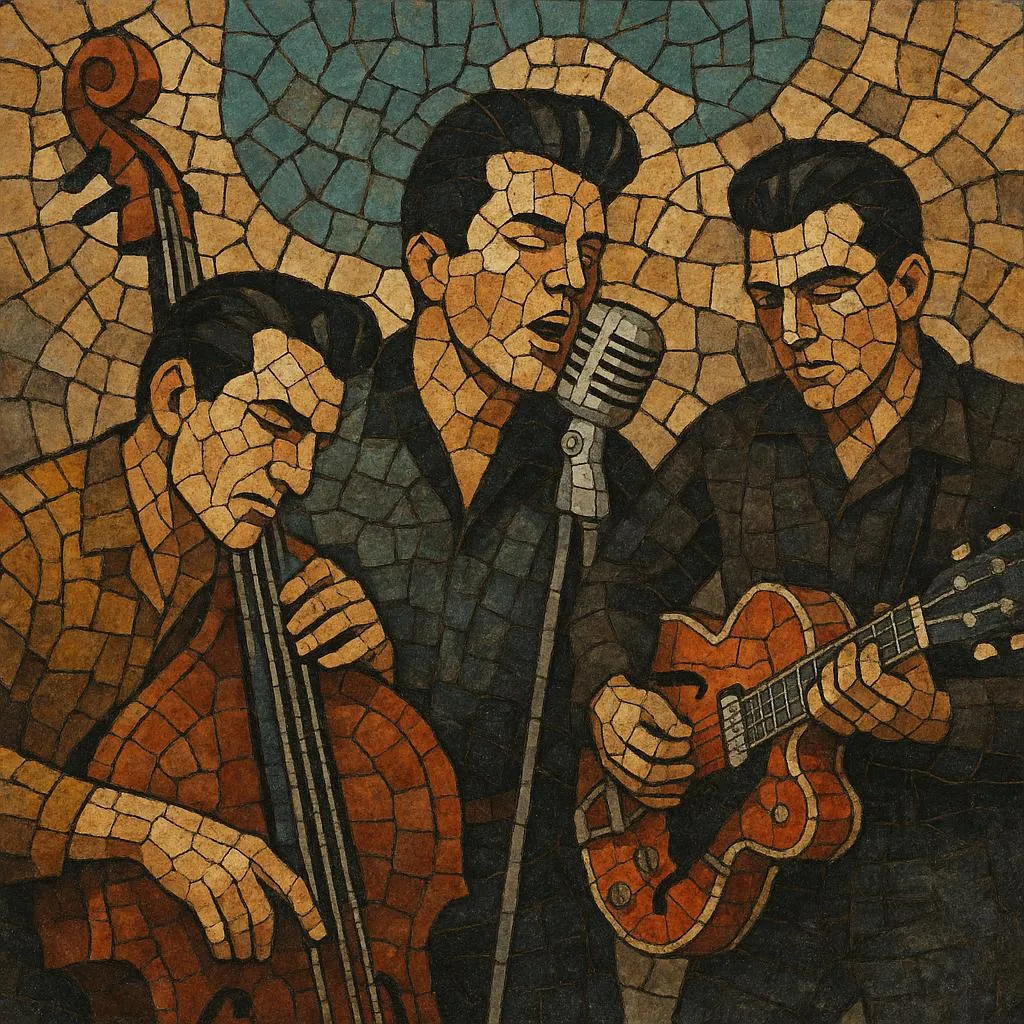
Rockabilly emerged in the Southern United States as young artists blended country/hillbilly music with rhythm & blues. Independent labels (most famously Sun Records in Memphis) encouraged cross‑racial musical exchange, capturing raw, live takes that emphasized groove and immediacy. The upright bass–guitar–drums trio format formed the sonic core, with slapback echo giving vocals and lead guitar a vivid, percussive snap.
By 1955–1957, rockabilly’s high‑energy recordings and rebellious image vaulted the style into the national spotlight. Its defining markers—12‑bar blues forms, I–IV–V harmony, train beats, slap bass, and twangy, echo‑kissed leads—became widely recognized. Stage presence (strutting, shouting, call‑and‑response) complemented the brash studio sound and helped turn regional singles into national hits.
Mainstream tastes broadened toward smoother pop and more polished rock ’n’ roll, while industry consolidation favored larger studios and lusher productions. Though rockabilly never vanished, it retreated to regional scenes and collectors’ circles, preserved by dedicated DJs, fan clubs, and rock ’n’ roll revival shows.
From the 1970s onward, rockabilly periodically resurged—fueling neo‑rockabilly bands, vintage‑gear scenes, and international festivals. Archivists reissued rare 45s, while musicians worldwide embraced the slapback aesthetic and upright‑bass theatrics. The genre’s DNA seeped into punk, garage rock, cowpunk, psychobilly, and broader roots‑rock movements.
Vintage rockabilly remains a cornerstone of American roots music: a template for lean, dance‑driven songwriting and a timeless studio/playback aesthetic (mono, tape saturation, short slapback) that continues to inspire producers and performers.