Your digging level
Description
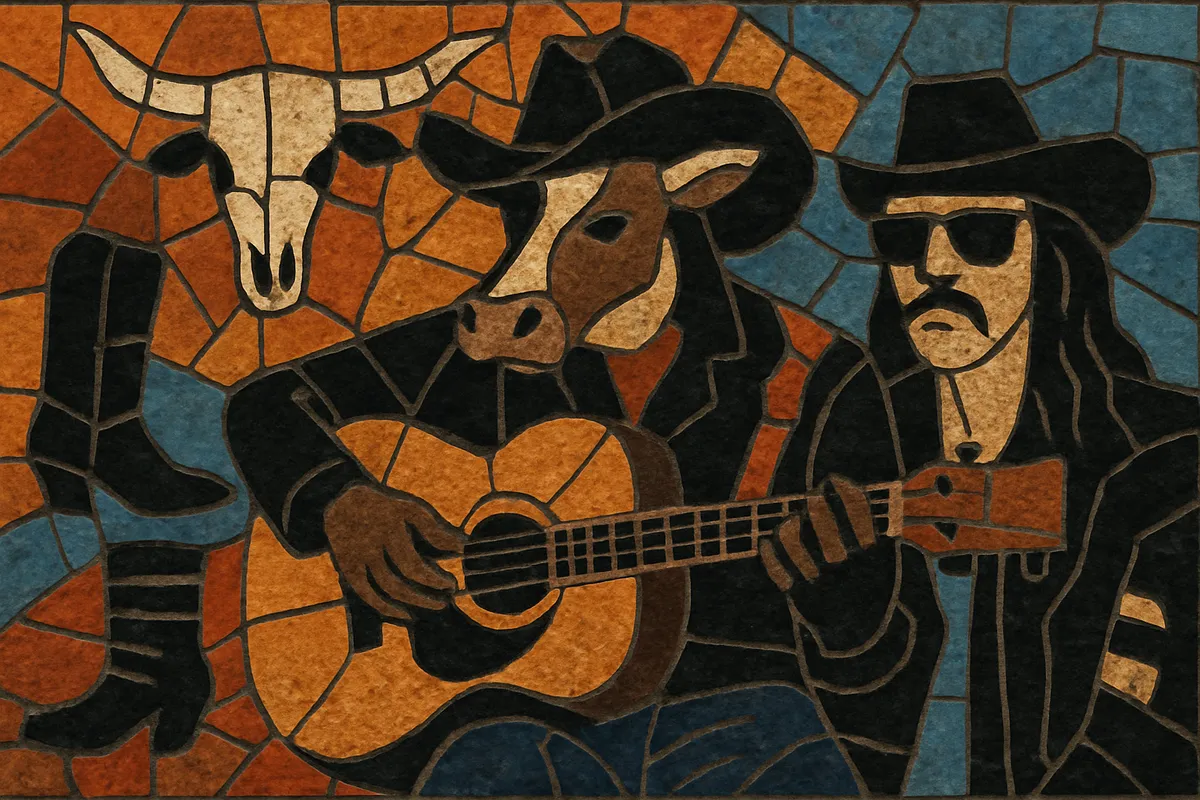
Cowpunk is a hybrid of country and punk that emerged at the turn of the 1980s, mixing the speed, grit, and DIY bluntness of punk rock or new wave with the twang, song forms, and storytelling of country, folk, rockabilly, and blues.
The style typically features overdriven guitars playing two-step and train-beat grooves, twangy leads, and bar-band immediacy, while lyrics lean on honky‑tonk themes (heartbreak, highways, workaday life, gallows humor) delivered with punk bite. It was cultivated concurrently in Southern California and the United Kingdom, with scenes that cross‑pollinated roots rock, rockabilly revivals, and post‑punk. Many of its key artists later paved the way for alternative country, Americana, and related roots‑minded punk offshoots.



History
Cowpunk took root in parallel scenes in Southern California and the United Kingdom. In LA and its surrounds, punks enamored with honky‑tonk, Bakersfield twang, and rockabilly began folding those sounds into high‑energy sets. In the UK, post‑punk and pub‑rock circles flirted with country swing, pedal‑steel textures, and narrative songwriting, yielding a raw, rootsy counterpoint to synth‑driven new wave.
Early bands fused punk backbeats and distorted guitars with country’s two‑step rhythms, train beats, shuffles, and 12‑bar/folk forms. Instrumentation often expanded beyond the standard punk quartet to include acoustic guitar, lap/pedal steel, fiddle, harmonica, and upright or slap bass. Vocals ranged from sneering yelps to country‑drawled croons, with lyrics that reimagined barroom laments through a wry, irreverent punk lens.
Throughout the 1980s, the style congealed around club circuits and independent labels. American groups in Los Angeles, Nashville, Austin, and New Orleans mingled with UK acts arising from the post‑punk and pub‑rock aftermath. Cowpunk shared stages with rockabilly revivals, roots rock, and garage punk, creating a loosely knit, tour‑hardened ecosystem rather than a single codified sound.
By the early 1990s, many leading figures moved toward (or directly inspired) alternative country and the broader Americana movement, maintaining punk’s DIY ethos while embracing classic country songwriting, acoustic textures, and storytelling. Cowpunk’s irreverence and willingness to collapse genre walls became a template for roots‑minded punk, country‑leaning indie rock, and later crossovers that treat tradition as a living, malleable vocabulary.
Cowpunk challenged assumptions about authenticity and genre boundaries, proving that country’s forms could carry punk’s urgency—and vice versa. Its fashion and stagecraft mixed thrift‑store western wear with leather and denim, while its recordings favored live, unfussy takes. The movement’s lasting impact is audible in alt‑country, Americana, and numerous punk/roots hybrids that keep one boot in the honky‑tonk and the other in the mosh pit.