Your digging level for this genre

0/8
🏆
Sign in, then listen to this genre to level up

Description

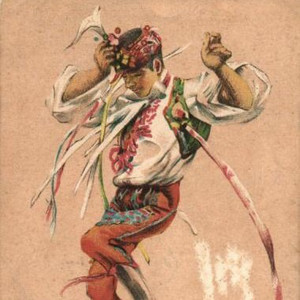
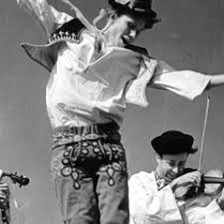
Verbunkos is a Hungarian dance-and-music style that originated as a military recruitment dance and blossomed into a distinctive national idiom. Its name derives from the German Werbung (recruitment), reflecting its original function of enticing young men to enlist through a captivating, virtuosic display.

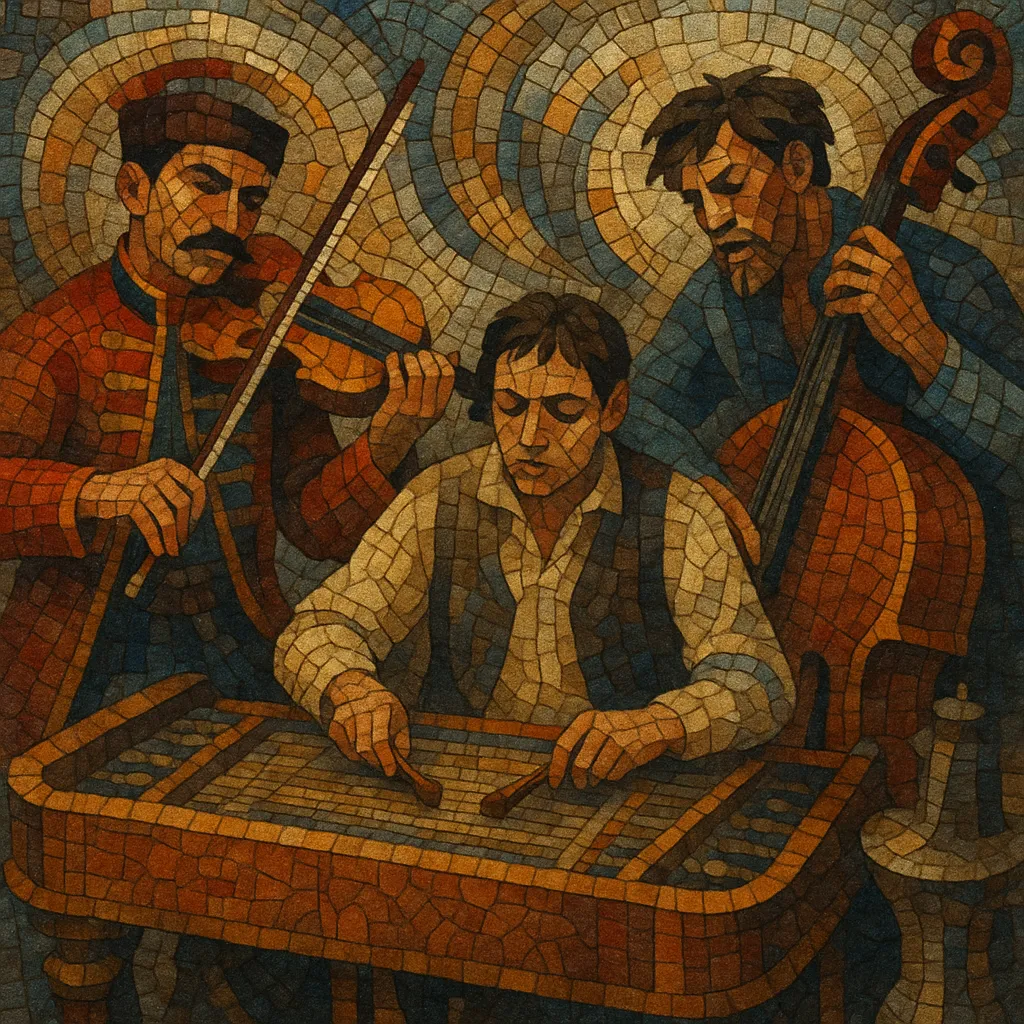
Musically, verbunkos is marked by an expressive alternation between lassú (slow, rhapsodic sections rich in rubato) and friss (fast, dance-driven sections), dotted and syncopated rhythms, and ornamental, improvisatory melodic lines. Typical ensembles feature a lead violin (prímás), cimbalom, viola/kontra, double bass, and often clarinet or tárogató. The style frequently employs Hungarian ("Gypsy") minor idioms with augmented seconds, dramatic dynamic contrasts, and rhetorical pauses, creating a blend of elegance, pathos, and kinetic drive.

History

Origins (18th century)

Verbunkos emerged in the late 18th century in the Habsburg-ruled Kingdom of Hungary as a recruitment (Werbung) dance. Roma (Romani) bandleaders and prímás violinists popularized the idiom, fusing Hungarian folk melodic turns with courtly and military display. The music’s function—persuading men to enlist—encouraged showy virtuosity, theatrical contrasts, and vividly stepped choreography.

Form and Aesthetics

By the turn of the 19th century, verbunkos solidified its hallmark alternation of lassú (slow, rubato, improvisatory) and friss (fast, rhythmically driving) sections. Dotted rhythms, syncopations, and stylized ornaments became signatures, as did the use of Hungarian minor inflections and augmented seconds. The Romani-led ensemble (violin, cimbalom, kontra, bass, clarinet/tárogató) shaped an instantly recognizable sonic palette.

19th-Century Flourishing and National Style

Between roughly 1800 and 1850, composers and prímás such as János Bihari, János Lavotta, Antal Csermák, Ferenc Rózsavölgyi, and others codified verbunkos into a celebrated national style. Its rhetoric and idioms entered art music through Ferenc Erkel’s operas and Franz Liszt’s Hungarian Rhapsodies, where verbunkos gestures served as emblems of Hungarian identity.

Legacy and Influence

After military recruiting practices changed in the mid-19th century, verbunkos continued as concert and salon music and fed directly into later Hungarian idioms, notably csárdás and nóta. Its rhythmic-melodic language remained a cornerstone of Hungarian national romanticism and a lasting resource for folk ensembles and classical composers alike.

How to make a track in this genre

Core Form and Gesture
•   Structure pieces in contrasting sections: begin with a lassú (slow, rubato, expressive) and follow with a friss (fast, danceable, energetic). Use fermatas and rhetorical pauses to heighten drama before launching into the friss. •   Emphasize dotted rhythms, snaps, and syncopations. Allow subtle tempo fluctuations (rubato) in the lassú, then lock into a firm pulse for the friss.
Melody and Harmony
•   Write ornamented, vocal-like violin melodies with slides, appoggiaturas, turns, and trills. Encourage the lead violin (prímás) to embellish freely. •   Favor Hungarian/Gypsy minor colors: harmonic minor, the so‑called Hungarian minor (1–2–♭3–#4–5–♭6–7), and augmented seconds to create a pungent national flavor. •   Harmonies are largely tonal; use dominant–tonic cadences, occasional modal inflections, and dramatic diminished chords to set up the friss.
Rhythm and Accompaniment
•   In the lassú, let accompaniment (cimbalom/kontra) breathe around the melody with arpeggios and tremolos; in the friss, switch to a clear, dance-forward groove with off‑beat accents. •   Employ call-and-response between violin and cimbalom or clarinet; build intensity through sequential phrases and accelerating figurations.
Instrumentation and Timbre
•   Typical ensemble: lead violin (prímás), cimbalom, viola/kontra (often strumming double-stops), double bass, and clarinet or tárogató. •   Aim for a bright, singing violin tone, percussive yet shimmering cimbalom patterns, and a grounded bass. Balance rubato freedom (melody) against steady, elastic support (accompaniment).
Performance Practice
•   Spotlight the prímás as a charismatic leader who shapes tempo, dynamics, and ornamentation. Gradually intensify dynamics and tempo toward climactic cadences in the friss. •   Keep choreography or dance feel in mind: phrase endings should invite steps, turns, and stamps.

Top tracks

Locked
Share your favorite track to unlock other users’ top tracks
Influenced by
Has influenced
Challenges
Digger Battle
Let's see who can find the best track in this genre
© 2025 Melodigging
Melodding was created as a tribute to Every Noise at Once, which inspired us to help curious minds keep digging into music's ever-evolving genres.
Buy me a coffee for Melodigging