Your digging level
Description
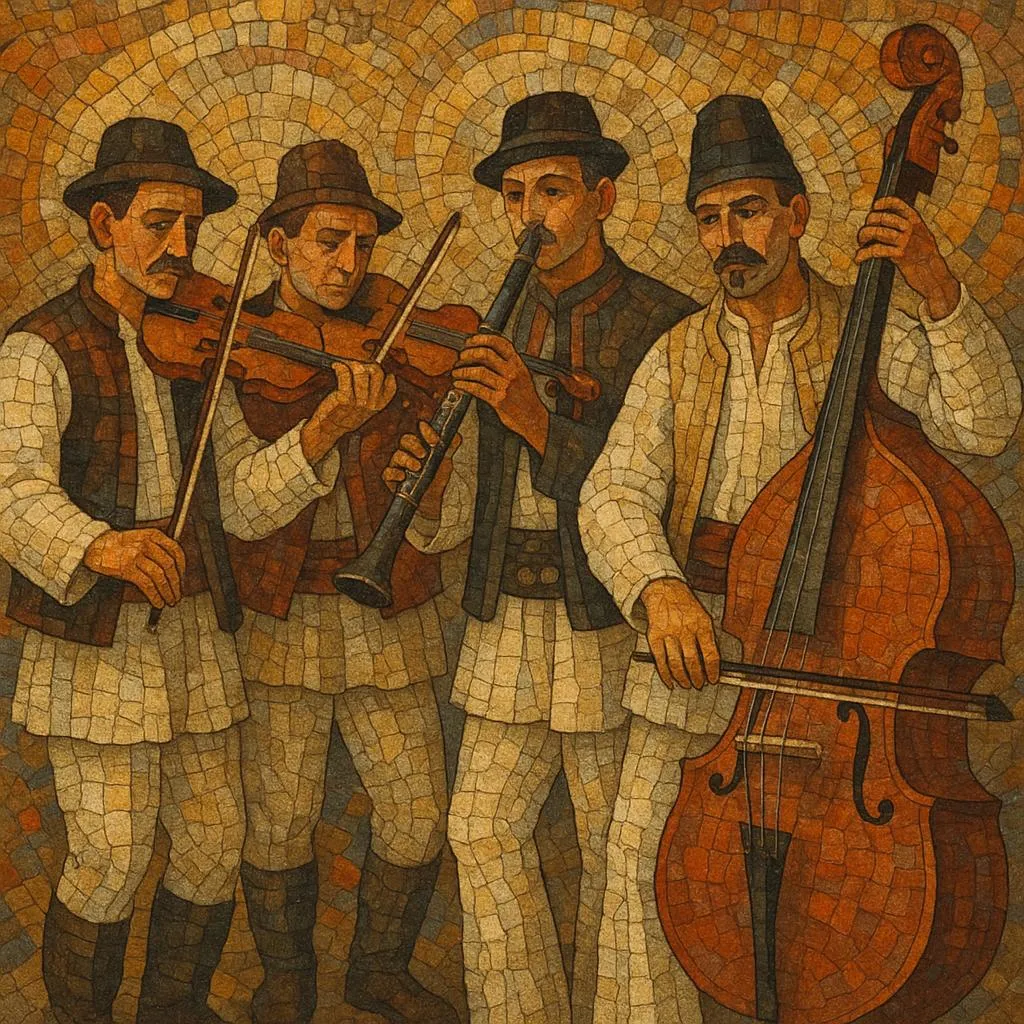
Muzica ardelenească is the traditional folk music of Transylvania (Ardeal) in Romania. It is distinguished by robust, dance‑driven ensembles built around strings (lead fiddle/ceteră, braci/alto fiddle, and a percussive bass—often the gordună), joined in many areas by the taragot (a conical‑bore single‑reed instrument), clarinet, and shepherd flutes. Vocals feature powerful delivery, ornamental slides, and shouted interjections (strigături) that cue dancers and energize the room.
Melodically the style favors modal scales (Dorian, Aeolian, and Mixolydian), frequent pentatonic turns in certain subregions (e.g., Kalotaszeg/Călata), and heterophonic textures where multiple voices ornament the same tune in parallel. Rhythms are predominantly duple and triple (2/4, 4/4, 3/4) with crisp off‑beats and bow articulations; iconic dances include învârtita (turning dance), hațegana, bătuta, joc bărbătesc/fecioreasca, and călușerul. Lyrics revolve around village life, courtship, weddings, heroic figures, pastoral imagery, and the Romanian affect of dor (longing).
History
Transylvanian village bands (cete/ceată, tarafuri) coalesced in the 18th–19th centuries around fiddle‑led, dance‑service ensembles hired for weddings and communal feasts. The region’s multiethnic fabric—Romanians, Hungarians (Magyars), Saxons, Székely, Roma (Lăutari), and Jewish communities—shaped a shared repertory of melodies and dance types while preserving distinct stylistic accents in ornament, rhythm, and vocal color.
During the late 1800s and early 1900s, collectors and composers (including Béla Bartók and Zoltán Kodály on the Hungarian side, and Romanian folklorists and lăutari) documented Transylvanian repertories, fixing many local variants into notated anthologies. The rise of the taragot (especially in Maramureș and northern Transylvania) became a regional hallmark. Interwar recordings brought village bands and singers to urban audiences.
After World War II, state folk ensembles, radio orchestras, and cultural houses standardized stage formats. While arrangements became more polished, village practice continued in parallel, preserving raw bowing styles, heterophony, and dance‑led pacing. Regional ensembles from Cluj, Alba, Bistrița‑Năsăud, Sălaj, and Maramureș helped codify an "Ardeal" identity within the national folk mosaic.
The 1990s onward saw revitalized festival circuits, intensive fieldwork, and a new wave of performers foregrounding village aesthetics. Parallel currents fused muzica ardelenească with pop instrumentation (so‑called "etno" and ethno‑pop), while heritage groups and community bands restored older forms (men’s dances, colinde carols, shepherd laments/doine) to contemporary stages and recordings.
Muzica ardelenească remains a living dance music, heard at weddings, community gatherings, and concerts. It thrives both in historically informed village bands and in modern productions, continuing to embody Transylvania’s layered, multiethnic musical ecology.