Your digging level

For this genre
0/8
🏆
Sign in, then listen to this genre to level up

Description

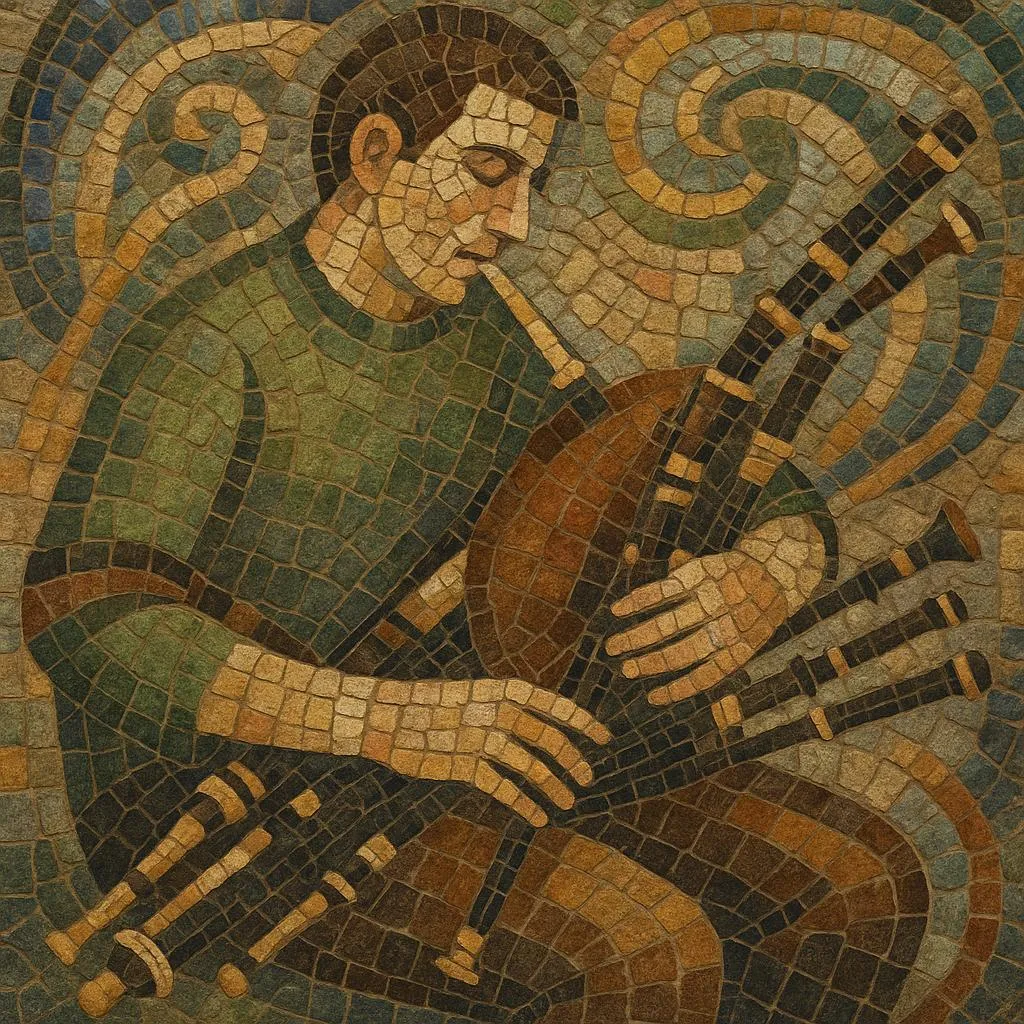
Uilleann pipes is both the name of a bellows-blown Irish bagpipe and a repertoire-centered performance practice within Irish traditional music. The instrument’s chanter, three drones, and up to three keyed regulators allow a uniquely lyrical, harmonically rich approach that differs markedly from other bagpipes.

The style ranges from highly rhythmic dance tunes (reels, jigs, hornpipes, slip jigs) to deeply expressive slow airs that mirror the cadences of sean-nós singing. Technique centers on a “closed” fingering approach, leg-stopping the chanter to articulate phrasing, and idiomatic ornaments such as rolls, cuts, taps, and the hallmark uilleann “cran.”

Because performers can accompany themselves with regulator chords, uilleann piping can sound simultaneously melodic and harmonized, making it a distinctive pillar of Irish traditional music and an expressive solo art in its own right.


Sources: Spotify, Wikipedia, Discogs, RYM, MB, user feedback and other online sources

History

Early development (18th–19th centuries)

The uilleann pipes evolved in Ireland from earlier bellows-blown pastoral/union pipes common in Britain and Ireland during the late 18th century. By the mid–19th century, Irish makers had stabilized the modern “full set” configuration—chanter, drones, and regulators—unlocking the instrument’s distinctive melodic and harmonic capacities.

Golden age and collectors (late 19th–early 20th centuries)

Master pipers and influential makers codified repertoire and technique, while collectors and early recordings began to document regional styles. The idiom’s technical fingerprints—closed chanter articulation, complex ornaments, and the use of regulator chords—became firmly identified with the “Irish” pipe sound.

Mid‑century preservation and revival (1930s–1970s)

Radio broadcasts, competitions, and teaching traditions helped sustain piping through lean decades. A major turning point came with organized efforts to teach, repair, and document pipes—most notably through community organizations that fostered maker training, archival recordings, and formal tuition. The broader folk revival brought the instrument back into session life, recordings, and international touring.

Modern era and global reach (1980s–present)

In the late 20th and early 21st centuries, uilleann piping expanded beyond its Irish base, supported by accessible tuition materials, workshops, digital archives, and a new generation of makers worldwide. The instrument now appears in settings ranging from historically grounded solo performances to cross‑genre collaborations in folk rock, new age, film music, and contemporary classical contexts, yet remains rooted in the idioms of Irish dance music and slow airs.

How to make a track in this genre

Core instrumentation and setup
•   Use a full set of uilleann pipes: chanter (melody), three drones (D typically), and regulators (tenor, baritone, bass) for chordal punctuations. •   Typical pitch is concert D; flat sets (C#, C, B) yield darker timbres and historically informed colors.
Scales, modes, and tonal centers
•   Common modes: D major, G major, A mixolydian, E dorian, and related pentatonic subsets drawn from Irish traditional repertoire. •   Compose within the chanter’s native range (roughly two octaves) and leverage modal shifts between dorian/mixolydian for variety.
Rhythm and tune types
•   Reels (4/4, driving, even), jigs (6/8, lilting), slip jigs (9/8), hornpipes (dotted swing), polkas (2/4), slides (12/8), and marches. •   Slow airs are rubato and speech-like; write melodically with ornamental anchors (grace clusters) rather than strict meter.
Ornaments and articulation (idiomatic to pipes)
•   Employ cuts, taps (strikes), rolls (long/short), crans (on the low note, typically D), triplets, and staccato articulation using closed-chanter leg-stopping. •   Phrase with frequent lifts and closures; avoid sustained tongued-like effects—articulation arises from fingerwork and chanter closing.
Harmony and accompaniment
•   Use regulator chords sparingly as rhythmic punctuation (e.g., off-beat stabs in reels, cadential emphasis in airs). •   External accompaniment (guitar, bouzouki, harp) should track modal centers, favor drones/pedal points, and avoid dense chord changes that fight the pipes’ drones.
Arrangement tips
•   Alternate dance tunes in sets (e.g., jig → jig in related modes) with key-compatible transitions. •   For studio or ensemble work, support the chanter’s midrange with light textures (fiddle, flute) and keep percussion subtle so as not to mask ornaments. •   In slow airs, prioritize breath-like phrases; let ornaments serve the melody’s rhetoric rather than sheer virtuosity.

Top tracks

Locked
Share your favorite track to unlock other users’ top tracks

Upcoming concerts

in this genre
Influenced by
Has influenced

Download our mobile app

Get the Melodigging app and start digging for new genres on the go
© 2026 Melodigging
Melodding was created as a tribute to Every Noise at Once, which inspired us to help curious minds keep digging into music's ever-evolving genres.
Buy me a coffee for Melodigging