Your digging level

For this genre
0/8
🏆
Sign in, then listen to this genre to level up

Description

Türk Sanat Müziği (Turkish Art/Classical Music) is the urban, courtly art music tradition of the Ottoman Empire and modern Turkey.

It is built on the makam system (a finely nuanced modal practice with characteristic scales, microtonal intervals and prescribed melodic routes, or seyir) and the usûl system (cyclical rhythmic patterns ranging from simple 4/4 to very large, asymmetrical cycles).

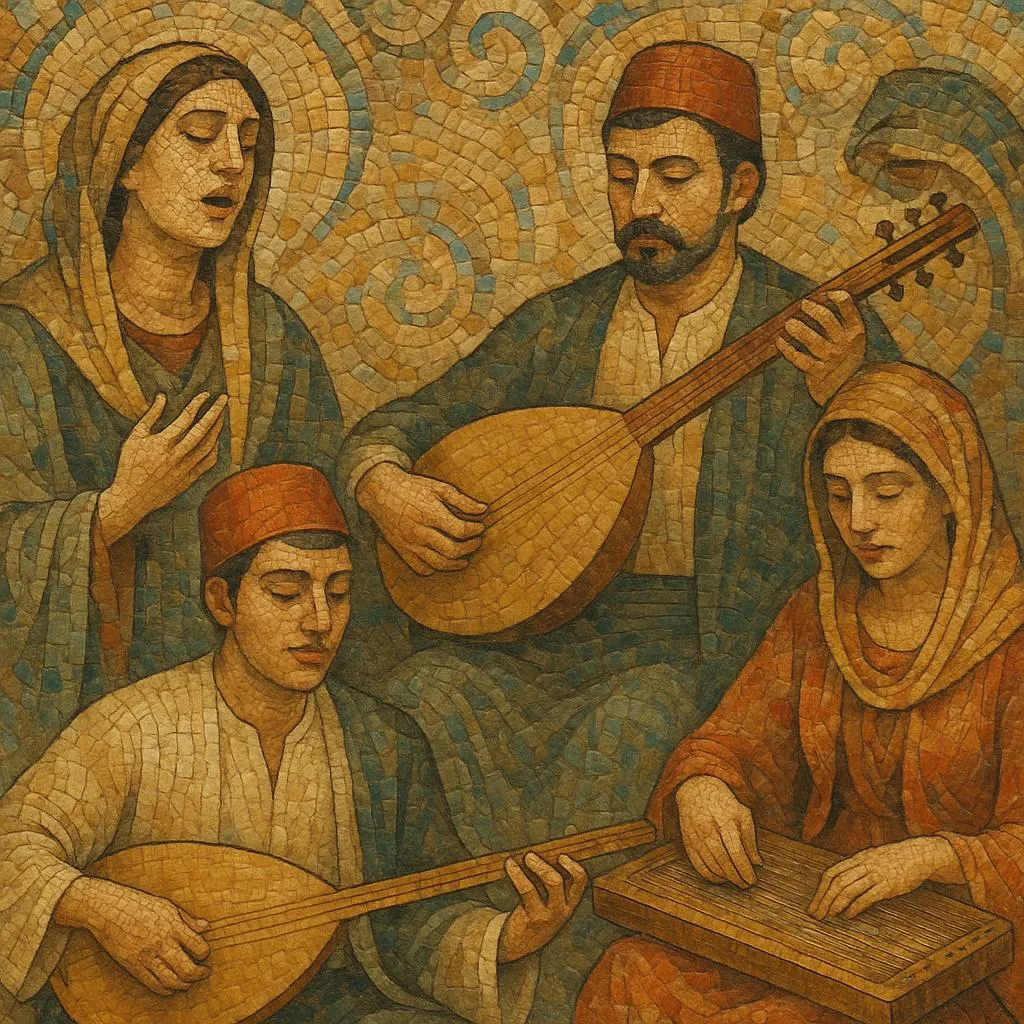
Typical instruments include tanbur (long‑necked lute), ud (oud), kanun (zither), ney (end‑blown reed flute), kemençe (spike fiddle), keman (violin), kudüm (small kettle drums) and various frame drums; voices are central and use ornate melisma and microtonal intonation.

Core forms include instrumental peşrev and saz semâî, free‑rhythm improvisation (taksim), long vocal forms such as kâr and beste, and the popular şarkı (strophic song). Suites (fasil) modulate through related makams while maintaining a chosen usûl.

Aesthetic values emphasize refined timbre, precise intonation (Arel–Ezgi–Uzdilek theory describes 24 unequal pitches per octave derived from small comma steps), graceful ornamentation, and expressive, often romantic or contemplative poetry.


Sources: Spotify, Wikipedia, Discogs, RYM, MB, user feedback and other online sources

History

Origins (15th–17th centuries)

Ottoman court and urban centers (Istanbul, Edirne, Bursa) nurtured a cosmopolitan art music drawing on Persian, Arabic and Byzantine learned traditions. Early modal theory, liturgical/Sufi practice (notably the Mevlevi order) and elite patronage shaped a repertoire of makams, usûls and forms.

Classical flowering (17th–19th centuries)

A "golden age" consolidated the core forms (kâr, beste, peşrev, saz semâî) and performance practice. Master composers such as Buhurizade Mustafa Itrî (17th c.) and Hammamizade İsmail Dede Efendi (18th–19th c.) codified sophisticated seyir, modulation and large rhythmic cycles. Notation advances included Hampartsoum (Hamparsum) notation at the Ottoman court. Sultan Selim III, himself a composer, fostered innovation and pedagogy.

Late Ottoman to Early Republic (late 19th–mid‑20th centuries)

Westernization introduced staff notation, conservatories and new instruments (e.g., violin), while urban salons popularized the şarkı song. After 1923 the Republic debated the role of Ottoman art music versus Western classicism; nevertheless, radio (TRT) and meşk (oral apprenticeship) sustained transmission. Stars like Münir Nurettin Selçuk and Müzeyyen Senar bridged classical technique and modern audiences, and the term “Türk Sanat Müziği” became the common label.

Modern era (late 20th century–present)

Conservatories standardized theory (Arel–Ezgi–Uzdilek), ensembles revived historical instruments, and archival recordings informed performance practice. The tradition continues in fasıl houses, Sufi lodges, concert halls and media, while influencing Turkish pop, arabesk and jazz fusions. Contemporary artists revisit classic makams, integrate new poetry and experiment with cross‑genre projects, keeping the lineage vibrant.

How to make a track in this genre

Choose makam and usûl
•   Select a makam (e.g., Rast, Hicaz, Uşşak, Segâh). Study its scale, key microtones, pivotal notes (durak/karar/güçlü) and seyir (melodic path). •   Pick an usûl (e.g., Sofyan 4/4; Düyek 8/8; Aksak semâî 10/8 = 3+2+2+3; Yürük semâî 6/8; Devr‑i kebîr 28‑beat) to define rhythmic architecture.
Structure and forms
•   For an instrumental suite (fasil), begin with a peşrev in the principal makam, proceed to taksim (free improvisation), then vocal forms (kâr/beste/şarkı), finish with a saz semâî (often in 10/8 aksak semâî). •   For a şarkı, use strophic verses with a refrain; align cadences with usûl cycles and the makam’s characteristic cadential tones.
Melody and modulation
•   Outline the seyir: start near the durak, explore ascent/descent patterns, emphasize the güçlü, and cadence firmly on the karar. •   Introduce short modulations (geçki) to related makams, returning clearly to the principal makam.
Rhythm and phrasing
•   Let melodic sentences span full or half usûl cycles; place cadences at strong beats of the cycle. •   Use ornamental pickups and syncopations that respect the usûl’s inner subdivisions.
Intonation, ornamentation, text setting
•   Intone microtones per Turkish practice (Arel–Ezgi–Uzdilek’s 24 unequal pitches with comma‑based accidentals); avoid equal‑tempered approximations when possible. •   Apply tasteful melismas, grace notes, slides (kaydırma), trills and subtle vibrato. •   For vocal works, set classical Ottoman/Turkish poetry (gazel, murabba) with clear diction; match prosody to rhythmic stress.
Instrumentation and ensemble practice
•   Typical ensemble: tanbur and/or ud for melodic backbone, ney for lyrical color, kanun for arpeggiated filigree, kemençe/keman for sustained lines, kudüm/def for usûl marking. •   Include taksim (solo improvisations) between movements to prepare new modal areas.
Notation and learning
•   Compose in staff notation with Turkish accidentals or learn via meşk (aural apprenticeship). Study canonical pieces to internalize seyir, usûl and phrasing before innovating.

Top tracks

Locked
Share your favorite track to unlock other users’ top tracks

Upcoming concerts

in this genre
Influenced by

Download our mobile app

Get the Melodigging app and start digging for new genres on the go
© 2026 Melodigging
Melodding was created as a tribute to Every Noise at Once, which inspired us to help curious minds keep digging into music's ever-evolving genres.
Buy me a coffee for Melodigging