Your digging level
Description
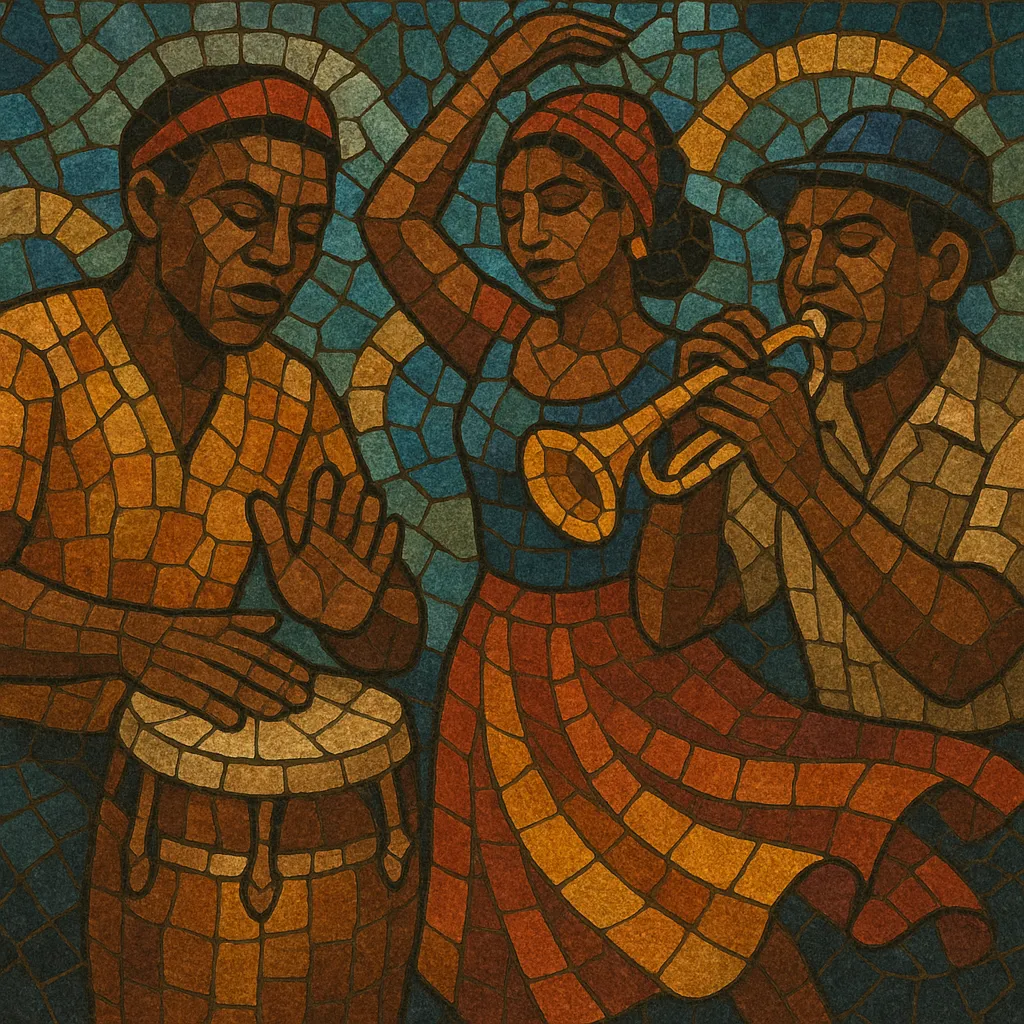
Tumba is a lively Afro-Caribbean musical form native to Curaçao, Aruba, and Bonaire in the Dutch Caribbean. Its name traces to Bantu usage in the Congo region, reflecting its African origin.
Brought by enslaved Africans in the 17th century and reshaped over centuries on the islands, tumba blends African polyrhythmic percussion with Caribbean dance sensibilities and European harmonic touches. Lyrics—often in Papiamentu—can be witty, satirical, or explicitly risqué, and the music is a centerpiece of Carnival festivities.
In contemporary practice, tumba absorbs strong influences from merengue and Latin jazz, favoring brisk tempos, driving cowbell/conga patterns, and punchy horns that energize crowds for dancing.
History
Tumba arrived in the ABC islands (Aruba, Bonaire, Curaçao) with enslaved Africans in the 1600s, carrying Bantu-derived rhythmic concepts and call-and-response practices. On Curaçao in particular, these elements intertwined with European colonial musical habits (dance forms and harmony), creating a distinct creole style for social dance and celebration.
A turning point came in the 19th century when Curaçao-born composer Jan Gerard Palm began notating and composing formalized tumba pieces, helping to codify the genre’s contours while keeping its African rhythmic core and communal spirit intact.
Throughout the 20th century, tumba grew into a primary festive and dance style on the islands. Bands expanded instrumentation—piano, horns, and modern percussion—while lyrics in Papiamentu became renowned for double entendre, topical humor, and even stark explicitness. Recordings and radio amplified the music’s reach, and family lineages of island composers/performers (notably the Palm family) sustained and developed the repertoire.
Today, tumba is closely tied to Carnival. Annual competitions (such as Curaçao’s Tumba Festival) crown a Tumba King/Queen and produce anthems that define each Carnival season. Contemporary ensembles fold in merengue’s two-beat drive, Latin jazz harmonies and solos, and salsa/Caribbean arranging to keep tumba current—yet its essence remains: African-style percussion, call-and-response hooks, and irresistible dance energy.

%2C%20Cover%20art.webp)