Your digging level
Description
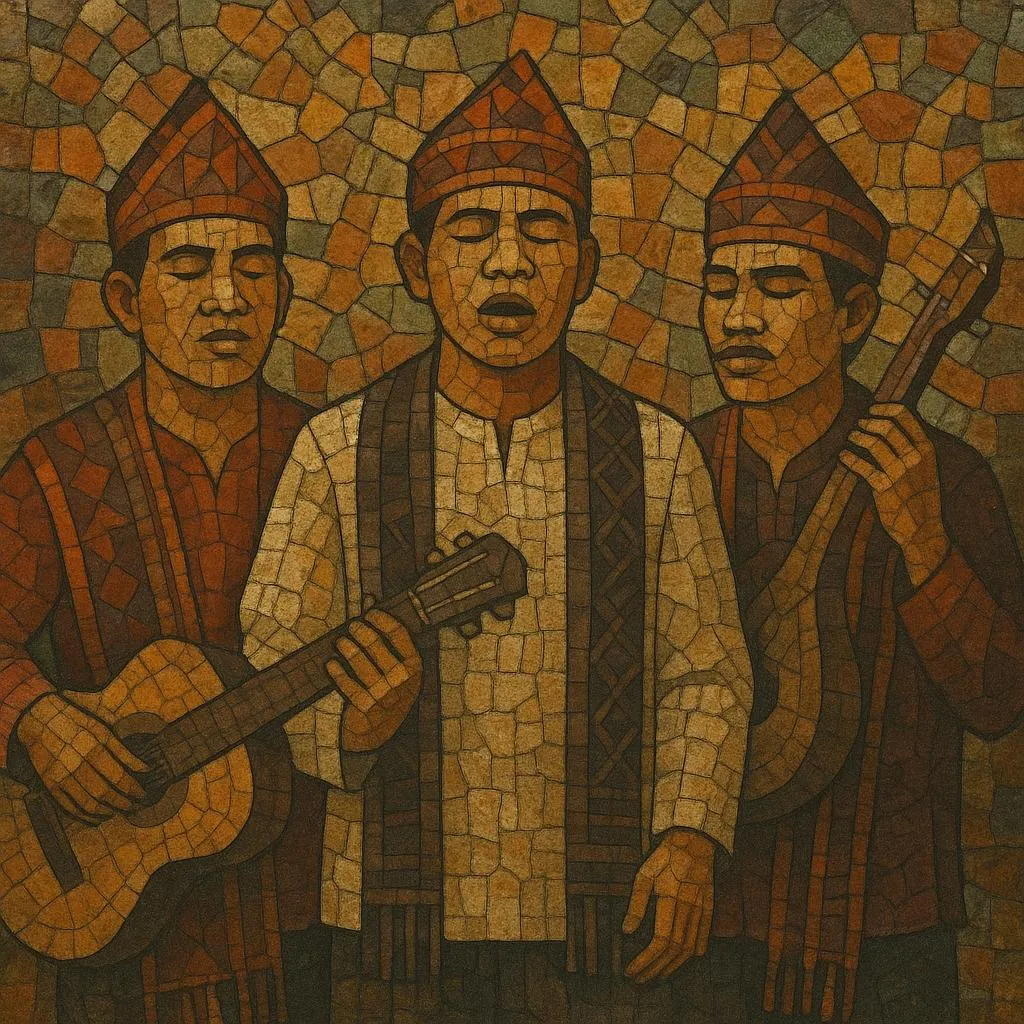
Trio Batak is a North Sumatran (Indonesia) popular-vocal style built around three-part harmony singing in the Batak (especially Toba Batak) language. The core sound is a tight male trio (often T–T–B or T–B–B voicings) performing folk-derived melodies with hymn-like harmonizations.
Performances range from unaccompanied a cappella to light accompaniment on guitar, hasapi (Batak lute), or small "gondang" rhythm sections at weddings and community gatherings. Lyrical themes center on kinship (Dalihan Na Tolu), migration and homesickness, Christian devotion, love, and praise for Lake Toba and ancestral homelands.
While rooted in local ritual and church-choir practice, Trio Batak crystallized as a cassette-era popular form in the late 1960s–1970s, becoming a key vehicle for Batak diasporic identity across Indonesia’s cities and overseas communities.
History
Batak vocal traditions—lament (andung), ceremonial singing associated with tortor dance, and multi-part Christian hymnody introduced by missionaries—laid the foundation for small-ensemble harmony singing. By the mid‑20th century, church choirs and student groups in Medan and around Lake Toba normalized three-part arrangements and vernacular devotional repertoire.
With rapid urbanization to Medan and Jakarta and the rise of cassette culture, three‑voice acts began to brand themselves as “Trio Batak,” recording folk songs in close harmony with light guitar/hasapi backing. The format suited living‑room listening and festive functions (weddings, horas-parties), and it traveled well with Batak diasporas. The sound’s blend of hymnlike voice-leading and regional melodies made it both familiar and distinct within Indonesian pop.
Trio Batak groups professionalized, performing on regional TV, at cultural festivals, and for the growing Batak congregations in Indonesian cities and abroad (Malaysia, Singapore, Europe). Repertoires expanded with newer compositions while retaining canonical songs, call‑and‑response refrains, and kinship toasts.
Digital platforms revived catalog favorites and enabled new ensembles to circulate performance videos from weddings and church halls. Some acts experiment with modern pop, light EDM pads, or acoustic band textures, but the signature remains: three firmly blended male voices in Batak language, hymn‑tinged harmonies, and melodies rooted in Lake Toba folk memory.