Your digging level
Description
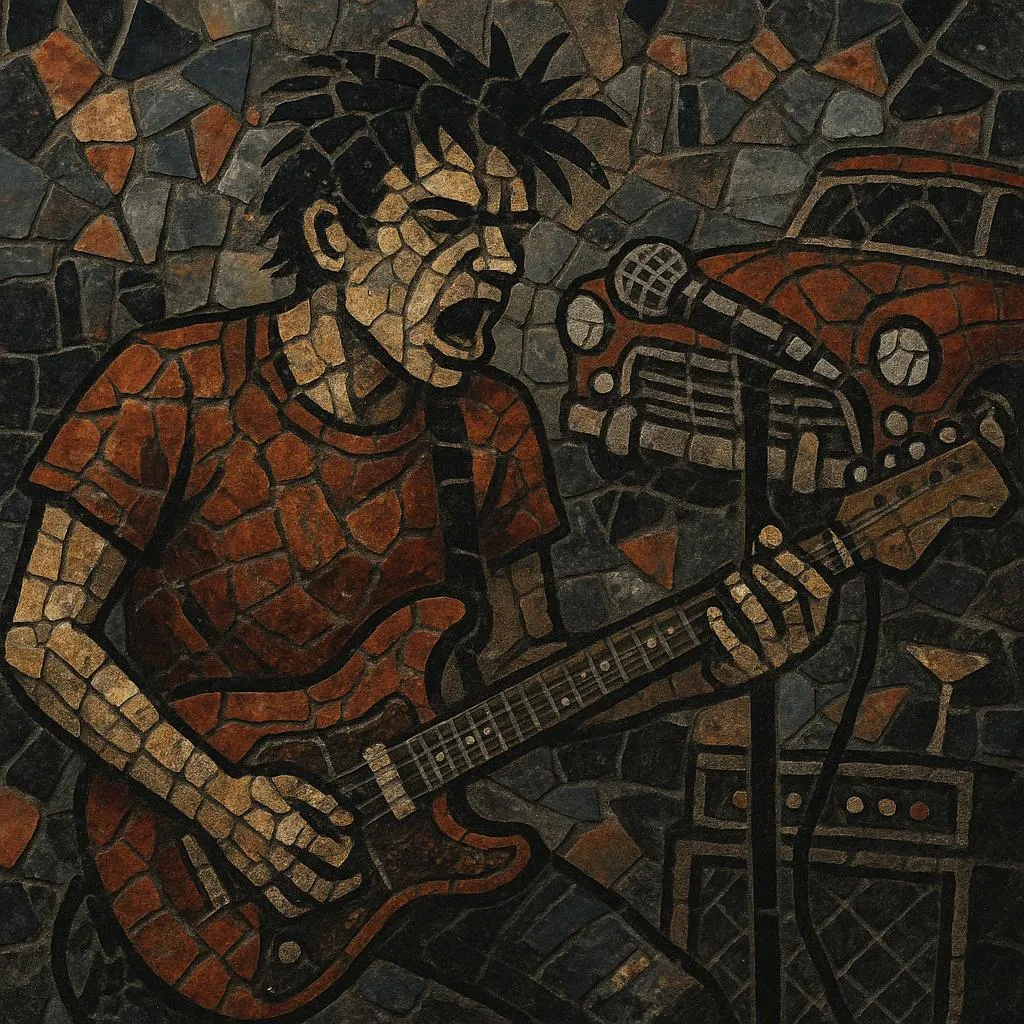
Trash rock is a raw, raucous strain of garage-rooted rock ’n’ roll that revels in low‑fidelity recording, overdriven guitars, and unpretentious, party-forward energy. It embraces the “trash” aesthetic in both sound and imagery: fuzzed-out riffs, pounding two-and-four backbeats, Farfisa/organ stabs or honking sax, shout‑along choruses, and a blown‑speaker mix that feels more like a basement or dive bar than a pristine studio.
Stylistically, it pulls heavily from 1950s rock and roll, 1960s garage, surf, and frat rock, filtered through the attitude of late-1970s/1980s punk and proto‑punk. Songs are short, hooky, and deliberately primitive—often built on I–IV–V changes, blues scales, and stomping rhythms—while lyrics celebrate B‑movies, hot rods, lust, mischief, and general teenage delinquency. The result is a high-octane, danceable, and gloriously unrefined form of rock made for sweaty rooms and wild nights.
History
Trash rock’s DNA is classic: the back-to-basics thump of 1950s rock and roll and R&B, the distorted amateur fury of 1960s garage and frat rock, and the sneer and speed of 1970s punk and proto‑punk. Early touchstones—from budget recordings to fuzz-and-far-out surf instrumentals—established the crude sonics and teenage bravado that trash rock later embraced as a core aesthetic.
Although the ingredients were decades old, the specific “trash” ethos coalesced in the 1980s United States, where underground bands and zines valorized lo‑fi grit, kitschy pulp culture, and feral stagecraft. Acts connected to garage-punk, psychobilly, and rockabilly revivals put distortion, reverb, and tape saturation front and center, flipping limited resources into a badge of authenticity.
The 1990s saw a flourishing of “budget rock”—a term often overlapping with trash rock—via small labels, 7" singles, and relentless touring of basements and bars. Bands doubled down on primitive recording (mono mixes, hot mics, cassette decks), emphasizing immediacy over polish. The scene’s DIY infrastructure (indie labels, college radio, mail-order distros) helped codify a shared sound and attitude.
From the 2000s onward, Spain, Italy, France, the UK, and Switzerland nurtured lively trash rock communities, supported by boutique labels, crate-digging DJs, and retro weekender festivals. These scenes blended 60s beat and yé‑yé flair with punk urgency, yielding a pan‑European variant that remained fiercely danceable and defiantly unvarnished. Simultaneously, North American and Asian bands kept the flame burning, trading splits and touring internationally.
Today, trash rock remains a dependable underground constant—synonymous with sweat‑soaked clubs, thrift-store aesthetics, and fuzz-on-the-red recordings. Digital platforms widened access, but the genre still thrives most in the physical: 45s, tape hiss, battered amps, and unapologetically wild shows.

Top albums