Description
Tintinnabuli is a compositional style built around the relationship between two kinds of musical line. A tintinnabular voice traces the notes of the tonic triad, while another moves through a diatonic scale, mostly in steps. Their close coordination gives the music a sense of unity rather than a conventional division between melody and accompaniment.
The style is often slow, meditative and spare in both notation and performance. Its name evokes bells: Arvo Pärt compared the three notes of a triad to their sound.

How Arvo Pärt Tintinnabulates
Classical Nerd

Pärt's Fratres, tintinnabuli construction
Jon Anderson

A look at Arvo Pärt's Compositional Technique
David Bennett Thomas

Tintinnabuli
Nathan Baker
History
A new style
The Estonian composer Arvo Pärt introduced tintinnabuli in Für Alina in 1976. Its simplicity was influenced by his mystical experiences with chant music.
Further works and development
Pärt used the style again in Spiegel im Spiegel in 1978; Cantus in Memoriam Benjamin Britten is another early example. His compositional approach subsequently expanded, while retaining much of the style’s overall effect.
Establish two voices
Choose a tonic triad for a tintinnabular voice, using its notes to create an arpeggiated line. Set a second voice against it that moves through a diatonic scale, favoring motion by step. Treat the lines as closely connected parts of one texture rather than an elaborate melody over changing chords.
Make the relationship consistent
You could devise a simple rule for selecting a triad note for each melodic note, then apply it consistently. Listen to how the resulting intervals change as the melody moves while the triad remains the point of reference.
Keep the presentation spare
Try a slow, meditative pace and a restrained performance. Use a small number of musical ideas and allow the interaction of the two voices to carry the piece, rather than adding layers of decoration.

How to compose like Arvo Pärt, tintinnabuli style
Galen DeGraf

Arvo Pärt - Tintinnabuli style. How to use it.
Paul Wilkinson - Musician

How can you use Tintinnabuli to compose your own music?
Any Old Music

Beautiful Minimalist Piano. Arvo Pärt's tintinnabulation
Implied Music



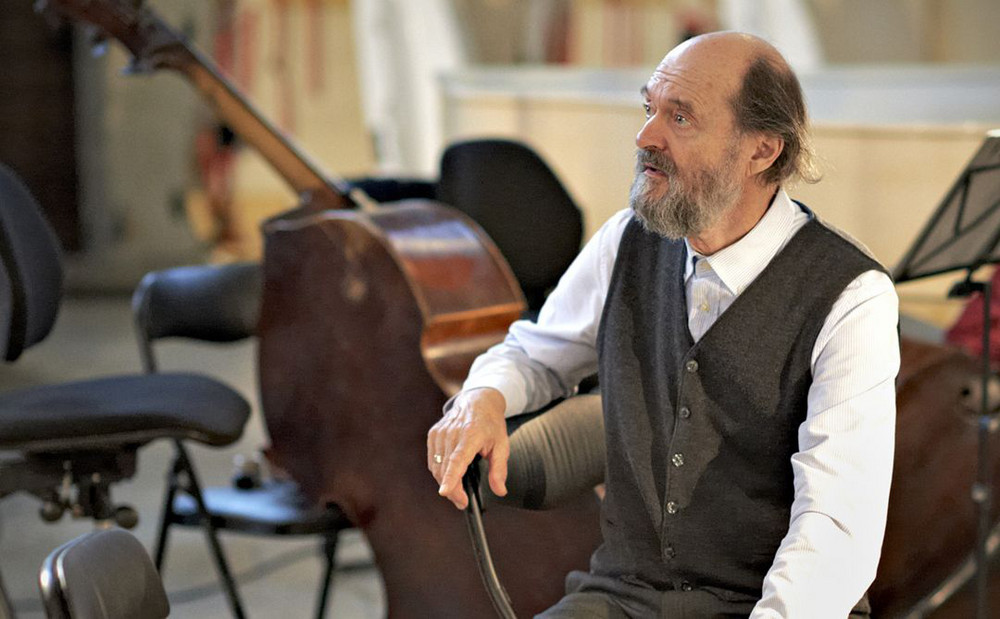
Best playlists
Tintinnabuli - Arvo Pärt
Marie Frödeberg
Arvo Pärt complete tintinnabuli
Christian Fecteau

Arvo Pärt : Silentium
Sylvain Moore

Tintinnabuli: Arvo Pärt & Jeroen van Veen
Brilliant Classics

TINTINNABULI!
The Philharmonic Chamber Choir Singapore
Influenced by