Your digging level
Description
Tembang Cianjuran (also called Tembang Sunda or seni mamaos cianjuran) is a refined Sundanese classical vocal art from the Priangan highlands of West Java, Indonesia.
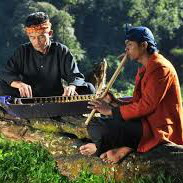
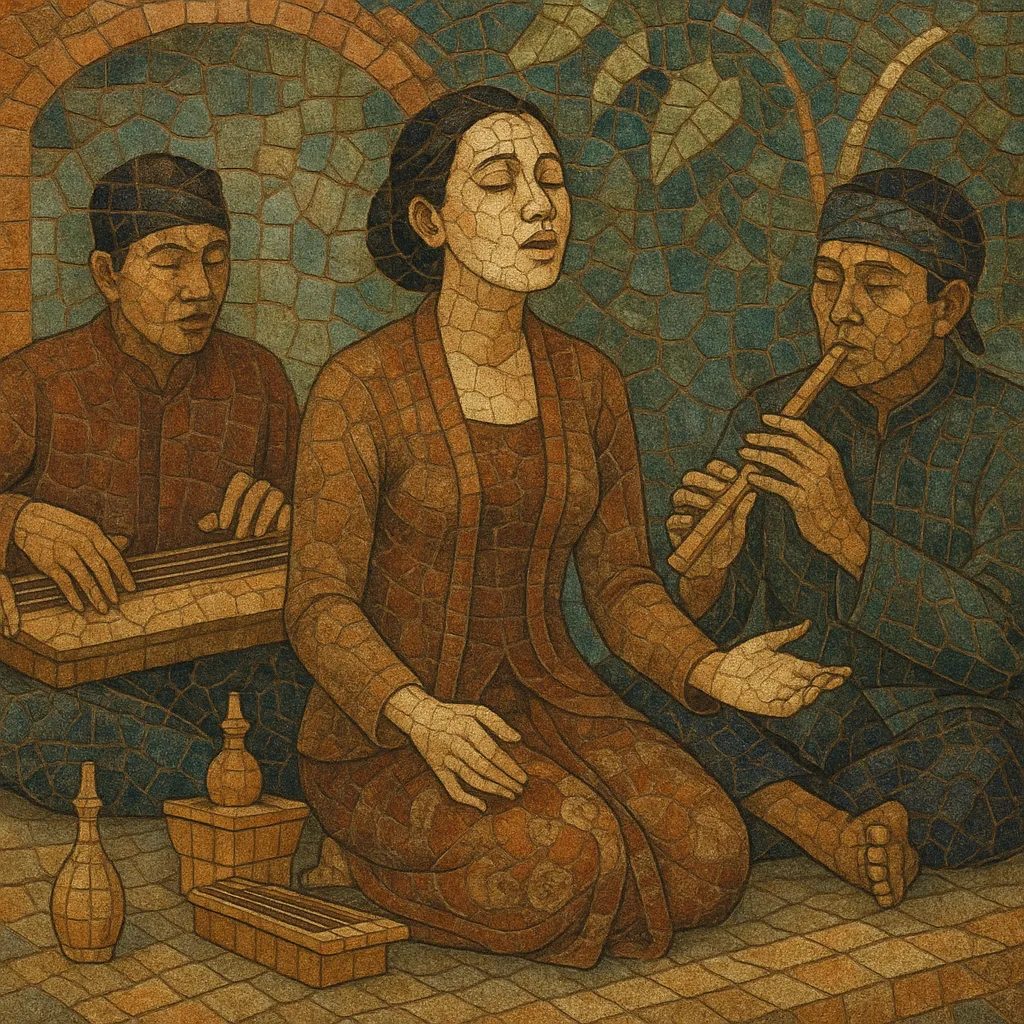
Unlike Sundanese gamelan repertoire, it crystallized in the 19th century court of the Regent of Cianjur during the Dutch colonial era. A solo vocalist sings free‑verse Sundanese poetry (often papantunan), accompanied by a mellow Kacapi Suling ensemble: the kacapi indung (large zither) lays out the modal framework, the kacapi rincik (small zither) provides filigree, the suling (bamboo flute) adds breathy ornamentation, and, in some traditions, a soft rebab (spike fiddle/violin) doubles or comments on the vocal line.
Two complementary lyric styles are common: the older, rubato, non‑metrical songs (papantunan) and the later, metrical panambih pieces. The overall aesthetic is intimate, restrained, and highly ornamented, favoring subtle timbre, flexible rhythm, and rich Sundanese modal nuance (laras) over overt virtuosity.
History
Tembang Cianjuran emerged in the mid‑1800s in the courtly environment of Kabupaten Cianjur (West Java) under Dutch colonial rule. Court poets and musicians cultivated sung Sundanese verse accompanied by kacapi and suling, shaping a chamber‑like idiom distinct from louder, dance‑oriented Sundanese gamelan genres. The repertory centered on free‑verse poetic delivery (papantunan), whose elastic rhythm encouraged rubato singing and intricate melodic decoration.
By the late 19th century, the pairing of a lead kacapi (kacapi indung), a smaller ornamental zither (kacapi rincik), and a suling became normative, with occasional rebab doubling. Singers cultivated a refined head‑voice, controlled vibrato, and cengkok (ornamental turns) within Sundanese modal frameworks (laras). A newer, metrical sub‑genre, panambih, later complemented the older free‑rhythm songs, broadening the textual and rhythmic palette while preserving the intimate timbre and contemplative ethos.
In the radio era (mid‑1900s), Cianjuran spread beyond courts and salons via RRI broadcasts and commercial recordings. Conservatories and arts academies in Bandung formalized teaching of technique, modes, and poetry, and notable singer‑instrumentalists codified performance practice without losing the music’s flexible, improvisatory character.
An instrumental offshoot, kacapi suling, distilled Cianjuran’s sound world into wordless zither‑and‑flute textures and gained national popularity. Elements of Cianjuran timbre and modality have influenced Sundanese popular and “pop sunda” recordings. Today, Tembang Cianjuran is performed in concerts, salons, community gatherings, and on recordings; master singers and kacapi players continue to mentor younger artists, keeping both papantunan and panambih alive.