Your digging level
Description
Lagu Sunda refers to Sundanese-language songs and vocal styles from West Java (Tatar Sunda), Indonesia. It spans a continuum from courtly and aristocratic vocal art (such as Tembang Sunda/Cianjuran) to modern popular Sundanese song (often called Pop Sunda), as well as repertoire associated with social dance traditions and degung ensembles.
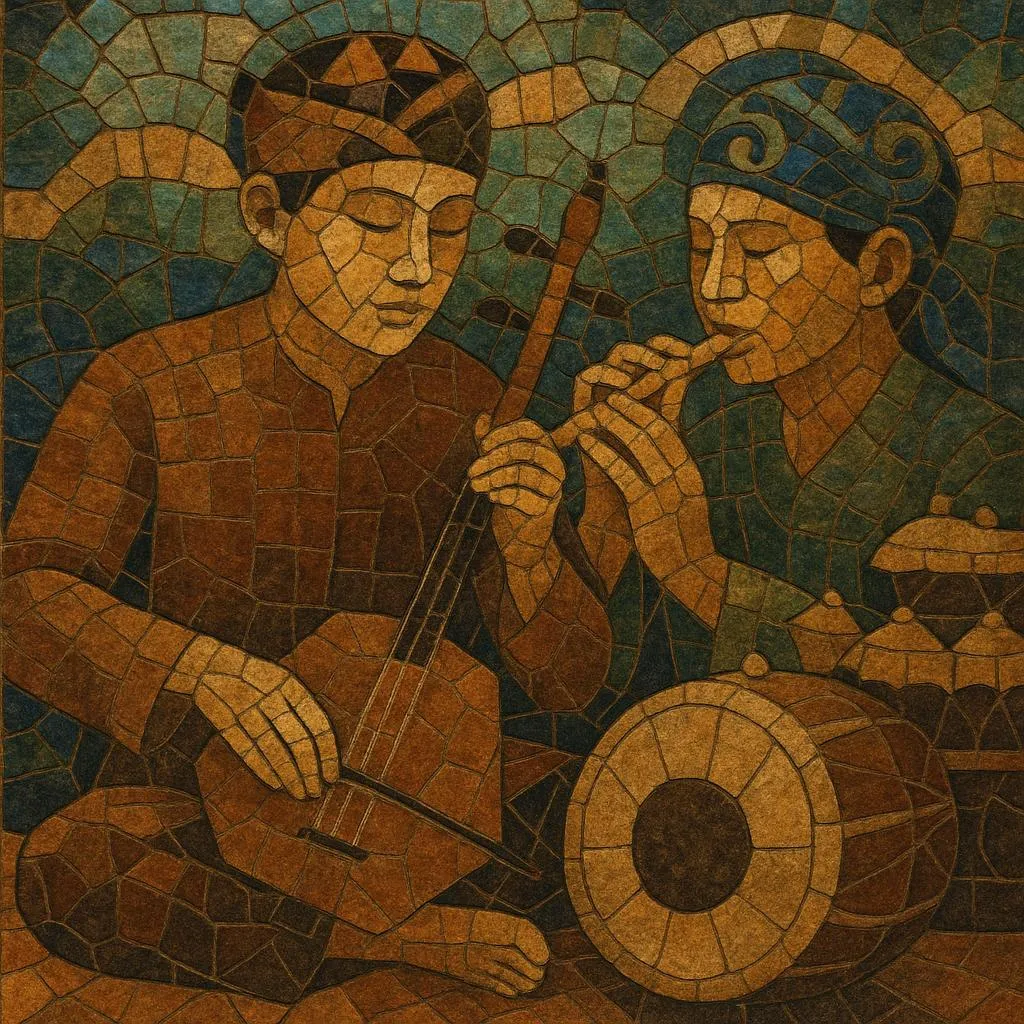
Musically, Lagu Sunda favors supple, ornamented melodies sung over pentatonic Sundanese tunings (saléndro) and heptatonic/degung-related modes (pélog/degung, sorog/madenda). Typical timbres include the shimmering kacapi (zithers), breathy bamboo suling flute, resonant rebab spike fiddle, and gong–kendang drum cycles. Lyrically, songs draw on pupuh poetic meters, pantun-style couplets, and themes of nature, longing, romance, moral reflection, and wistful nostalgia—all conveyed in the Sundanese language.
In contemporary practice, Lagu Sunda coexists with dance-derived grooves (e.g., jaipongan roots), studio pop aesthetics, and hybrid bands that integrate kacapi-suling or degung colors with guitars, keyboards, and drum kits.
History
Tembang Sunda (also known as Cianjuran) took shape in the mid‑1800s within Sundanese aristocratic circles of West Java. Sung in Sundanese with refined poetics, it paired melismatic vocals with kacapi zithers (kacapi indung and kacapi rincik) and suling bamboo flute, elaborating modal frameworks such as pélog/degung and sorog/madenda. This cultivated art song tradition established the modal language, vocal ornamentation, and poetic aesthetics that underpin Lagu Sunda.
With the advent of gramophone records and urban radio in Bandung and other West Javanese centers, Sundanese songs traveled beyond courtly venues. Repertoires from folk social dance (ketuk tilu), ceremonial music, and degung ensembles fed a widening public sphere. Keroncong and early Indonesian popular styles also intersected with local song craft.
Degung performance moved from courts to public stages, and kacapi‑suling duos became emblematic of Sundanese sound. Composer–arrangers such as Mang Koko (Koko Koswara) and Nano S. shaped new songbooks, while singers brought Sundanese lyrics to modern arrangements. By the late 1970s–1980s, the emergence of jaipongan’s drum‑driven dance groove energized regional identity, and Pop Sunda crystallized on cassettes and TV—retaining Sundanese melody and language while adopting band instrumentation and studio polish.
Lagu Sunda now encompasses traditional tembang, kacapi‑suling, degung, and Pop Sunda. Artists continue to set pantun and pupuh meters, while others fuse Sundanese modes with pop, rock, and electronic textures. The genre thrives in education, community radio, weddings, and digital platforms, and its vocabulary informs crossovers in Indonesian indie and world‑music contexts.